

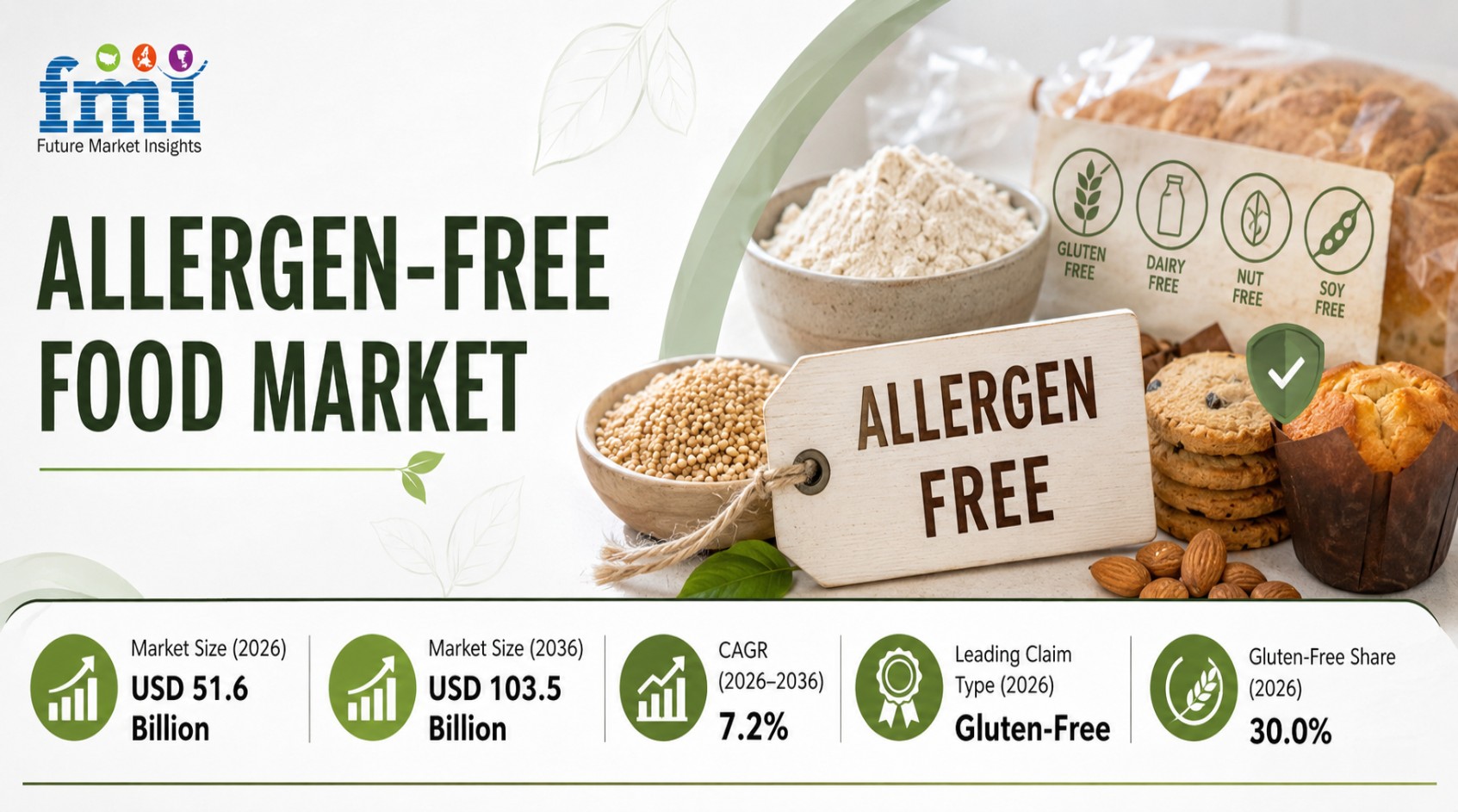
The global allergen-free food market is evolving from a consumer-driven niche into a manufacturing-intensive category where operational discipline determines long-term commercial success. While growing awareness of food allergies, intolerances, and clean-label nutrition continues expanding demand, the ability to scale allergen-free production depends far more on validated manufacturing systems than on removing a single ingredient from a recipe.
As private-label retailers expand their allergen-free portfolios and specialty manufacturers continue investing in dedicated production capabilities, competition is shifting toward production reliability, ingredient traceability, cross-contact prevention, and consistent product quality. The companies that succeed will not simply market allergen-free claims they will build manufacturing ecosystems capable of delivering those claims with confidence across every production batch.
Featured Snippet: Key Market Answer
Q: Why is dedicated manufacturing becoming critical in the allergen-free food market?
A: Dedicated manufacturing minimizes cross-contact risks while supporting consistent allergen-free production. Unlike conventional food manufacturing, allergen-free products require validated ingredient sourcing, segregated storage, specialized cleaning protocols, supplier documentation, routine allergen testing, and controlled production environments. These systems allow manufacturers to scale safely while maintaining consumer trust and meeting retailer expectations for reliable, repeatable products.
Quick Stats of the Allergen-Free Food Market
- Core Growth Theme: Manufacturing Excellence Through Cross-Contact Prevention
- Leading Claim Type: Gluten-Free (30.0% market share in 2026)
- Largest Product Category: Bakery & Snacks (28.0% market share in 2026)
- Primary Sales Channel: Retail & Supermarkets (26.0% market share in 2026)
- Critical Operational Variable: Validated allergen segregation throughout the production process
Market Overview: Manufacturing Discipline Defines Market Leadership
The allergen-free food market has matured beyond product innovation into an operationally complex manufacturing category. Consumers increasingly expect products that deliver both safety and eating quality without compromise, while retailers demand dependable supply chains capable of maintaining strict allergen controls.
Unlike many food categories where innovation centers on flavor or convenience, allergen-free manufacturing begins with process design. Every stage from raw material qualification to finished-product packaging must support claim integrity and minimize cross-contact risks.
This operational reality has elevated manufacturing capability into one of the industry’s strongest competitive advantages.
Key Growth Drivers Across Allergen-Free Foods
Growing Consumer Demand for Trusted Nutrition
Rising diagnosis of food allergies, intolerances, and dietary sensitivities continues expanding the consumer base for allergen-free products. Families increasingly seek foods that combine nutritional quality, safety, and everyday convenience without requiring constant ingredient verification.
Mainstream Retail Expands Product Availability
Supermarkets and mass retailers continue integrating allergen-free products into mainstream grocery assortments rather than limiting them to specialty sections. This broader distribution increases commercial opportunities while raising expectations for supply consistency and manufacturing reliability.
Product Quality Becomes a Competitive Priority
Consumers increasingly compare allergen-free foods with conventional products rather than accepting quality compromises. Manufacturers therefore invest heavily in formulation science to improve texture, taste, appearance, and shelf stability alongside allergen safety.
Multi-Allergen Formulation Increases Complexity
Growing demand for products free from multiple allergens including gluten, dairy, soy, eggs, and nuts requires increasingly sophisticated formulation strategies and production systems capable of managing multiple exclusion requirements simultaneously.
Technical & Manufacturing Economics Behind Allergen-Free Production
Commercial success depends on integrating formulation expertise with rigorous manufacturing controls.
- Ingredient Qualification: Allergen-free production begins with carefully qualified suppliers capable of providing traceable raw materials, documented specifications, and verified processing practices that support finished-product claims.
- Cross-Contact Prevention: Segregated storage, dedicated production lines, validated cleaning procedures, controlled material flow, airborne contamination management, and packaging separation collectively protect product integrity throughout manufacturing.
- Verification Through Testing: Routine allergen testing confirms that manufacturing controls remain effective while providing documentation required by retailers, regulatory authorities, and quality assurance programs.
- Process Consistency: Reliable production minimizes formulation variability, maintains sensory quality, and strengthens long-term consumer confidence in allergen-free product performance.
Segment Deep Dive: Why Bakery and Snacks Present the Greatest Manufacturing Challenge
Gluten-Free Products: The Market’s Largest Claim Category
Gluten-free products continue leading the allergen-free market because they span multiple everyday food categories including bread, pasta, biscuits, breakfast cereals, snacks, baking mixes, and ready meals.
Broad consumer familiarity creates strong commercial demand while simultaneously increasing expectations regarding product quality and manufacturing reliability.
Bakery: Rebuilding Functionality Without Gluten
Bakery products represent one of the industry’s most technically demanding applications.
Removing gluten eliminates the protein network responsible for dough elasticity, gas retention, structure, and volume. Manufacturers must therefore rebuild these characteristics through carefully balanced combinations of starches, fibers, hydrocolloids, proteins, enzymes, and optimized processing techniques.
Success depends on maintaining conventional eating quality while preserving allergen-free integrity.
Snack Foods: High Volume with High Operational Expectations
Snacks represent frequent household purchases, making consistency particularly important.
Consumers expect allergen-free crackers, cookies, chips, cereal bars, and baked snacks to deliver familiar taste and texture while maintaining transparent labeling and dependable safety standards across every purchase.
Ready Meals and Everyday Convenience Foods
Prepared meals increasingly expand allergen-free options beyond specialty diets.
However, these products introduce additional complexity because multiple ingredients, sauces, seasonings, and processing steps require coordinated allergen management throughout manufacturing.
Regional Market Dynamics
North America
North America continues leading allergen-free product innovation through advanced manufacturing capabilities, growing consumer awareness, strong retailer participation, and increasing investment in dedicated production facilities.
Europe
European manufacturers emphasize regulatory compliance, ingredient transparency, traceability, and rigorous quality management systems. Dedicated allergen-control programs increasingly differentiate premium manufacturers across the region.
Asia-Pacific
Growing urbanization, rising awareness of food sensitivities, expanding organized retail, and increasing availability of specialty foods continue creating new opportunities for allergen-free product development throughout Asia-Pacific.
Competitive Differentiation Strategies
Manufacturers increasingly compete through operational excellence rather than product claims alone.
- Dedicated Manufacturing Facilities: Separate production lines reduce cross-contact risks while improving manufacturing confidence and regulatory compliance.
- Comprehensive Allergen Testing Programs: Routine analytical verification strengthens retailer relationships and reinforces consumer trust through documented manufacturing performance.
- Supplier Qualification Systems: Close collaboration with raw material suppliers improves ingredient traceability, specification consistency, and procurement reliability.
- Advanced Formulation Science: Investment in texture optimization, ingredient functionality, and sensory improvement enables allergen-free products to compete directly with conventional alternatives.
- Private-Label Manufacturing Expertise: Contract manufacturers capable of producing retailer-exclusive allergen-free products under rigorous quality systems continue expanding commercial partnerships with supermarkets and retail chains.
Industry FAQs
Why is manufacturing more important than product claims in allergen-free foods?
Removing an allergenic ingredient represents only one aspect of allergen-free production. Manufacturers must also prevent cross-contact through validated sourcing, dedicated facilities, cleaning protocols, testing, packaging controls, and continuous quality verification.
Why does gluten-free remain the largest allergen-free category?
Gluten-free products apply across numerous everyday food categories including bakery, snacks, pasta, breakfast foods, and ready meals. Broad consumer recognition and widespread dietary adoption continue supporting strong commercial demand.
Why are bakery products especially difficult to manufacture?
Gluten provides dough structure, elasticity, and texture. Removing it requires sophisticated formulation techniques using alternative starches, fibers, proteins, enzymes, and hydrocolloids to recreate familiar eating characteristics.
How do retailers influence allergen-free manufacturing?
Large retailers require suppliers capable of delivering consistent product quality, reliable allergen controls, documented testing programs, and uninterrupted supply. Manufacturing capability therefore becomes essential for maintaining long-term retail partnerships.
How are manufacturers differentiating themselves in the allergen-free market?
Leading companies increasingly invest in dedicated production facilities, validated allergen management systems, supplier qualification programs, advanced formulation technologies, comprehensive testing, and transparent labeling practices that strengthen consumer trust.
Conclusion
The future growth of the allergen-free food market will be determined not simply by rising consumer demand but by manufacturers’ ability to deliver safe, consistent, and high-quality products at commercial scale. Dedicated production systems, validated allergen controls, rigorous testing, and disciplined supplier management have become essential competitive assets rather than optional quality measures.
As private-label expansion accelerates and specialty manufacturers continue investing in advanced production capabilities, the industry’s strongest performers will be those capable of combining manufacturing excellence with product innovation and transparent quality assurance.
Ultimately, allergen-free food capacity is measured not by production volume alone but by the ability to deliver reliable, repeatable, and trusted products that consumers can confidently purchase as part of their everyday diets.
Related Research Reports
- Food Allergen Testing Market – Strategic assessment of analytical technologies, testing protocols, and quality assurance systems supporting allergen-free manufacturing.
- Food Allergy Market – Market intelligence covering allergy prevalence, consumer behavior, diagnosis, and food industry implications.
- Food Intolerance Products Market – Analysis of intolerance-friendly foods, free-from product innovation, and evolving dietary preferences.
- Gluten-Free Bakery Premix Market – Evaluation of formulation technologies, bakery ingredient innovation, and gluten-free manufacturing solutions.
FMI Custom Research: Strategic Intelligence for Confident Decision-Making
In today’s rapidly evolving business environment, leadership teams need more than market data they need clear, actionable intelligence tailored to their strategic objectives. FMI’s Custom Research solutions are designed around the specific business questions organizations need answered, enabling executives to evaluate growth opportunities, validate investments, assess competitive dynamics, and reduce uncertainty before making critical decisions. By combining deep industry expertise, primary research, and proprietary market intelligence, FMI delivers insights that help organizations move from assumptions to evidence-based strategies with greater speed and confidence.
Key Executive Benefits
- Decision-Ready Insights: Research tailored to your specific business challenges, growth plans, and investment priorities.
- Reduced Strategic Risk: Validate market opportunities, customer demand, and competitive positioning before committing resources.
- Market Entry Confidence: Assess opportunity size, regulatory barriers, channel dynamics, and competitive landscapes with precision.
- Competitive Advantage: Gain proprietary intelligence unavailable through syndicated reports or internal datasets.
- Faster Growth Decisions: Accelerate expansion, product development, portfolio optimization, and investment planning.
- Primary Market Validation: Access real-world customer, buyer, and stakeholder insights that support high-confidence decision-making.
- Global Industry Expertise: Powered by 100+ analysts, 20,000+ published reports, and 1.6 million+ hours of research experience.
- Proven Track Record: Over 7,000 market-entry engagements completed across six regions and 14 industry sectors with strong client retention.
Business Impact
FMI helps organizations transform market complexity into strategic clarity, enabling leadership teams to identify growth opportunities faster, optimize resource allocation, strengthen competitive positioning, and make high-stakes business decisions with confidence.
To explore how FMI Custom Research can support your strategic priorities, please connect with our team at – sales@futuremarketinsights.com
About Future Market Insights (FMI)
Future Market Insights is a leading provider of market intelligence, consulting services, and syndicated research reports. FMI delivers actionable insights across food and beverage, healthcare, consumer goods, biotechnology, chemicals, industrial products, and emerging technologies, helping organizations identify growth opportunities and make informed strategic decisions in evolving global markets.
Contact Us:
Future Market Insights Inc.
Christiana Corporate, 200 Continental Drive,
Suite 401, Newark, Delaware – 19713, USA
T: +1-347-918-3531
Why FMI: https://www.futuremarketinsights.com/why-fmi
For Sales Enquiries: sales@futuremarketinsights.com
Website: https://www.futuremarketinsights.com