

The global dehydrated onions market is entering a competitive phase where private-label expansion is becoming one of the strongest commercial forces influencing pricing, product positioning, and supplier relationships. As retailers continue strengthening their own food brands, dehydrated onions particularly powders, flakes, granules, minced, and chopped formats are increasingly viewed as standardized pantry essentials rather than highly differentiated culinary ingredients.
Unlike specialty seasonings that rely on unique flavor profiles or proprietary formulations, dehydrated onions fit naturally into retail spice assortments, meal preparation kits, seasoning blends, soups, sauces, and convenience foods. Their familiarity, long shelf life, and straightforward packaging requirements make them attractive candidates for store-brand expansion. As a result, manufacturers can no longer rely solely on brand recognition; they must demonstrate measurable advantages in flavor quality, food safety, moisture control, packaging performance, and application consistency.
Featured Snippet: Key Market Answer
Q: Why are private-label brands becoming a major competitive force in the dehydrated onions market?
A: Dehydrated onions are widely recognized pantry ingredients that require minimal consumer education and fit easily into retail spice portfolios. Powders, flakes, granules, and minced onions can be packaged efficiently under store brands while offering comparable functionality at lower prices. As retailers expand private-label food ranges, branded suppliers must differentiate through stronger flavor intensity, consistent quality, moisture control, food safety certifications, origin transparency, and superior packaging rather than relying on brand identity alone.
Quick Stats of the Dehydrated Onions Market
- Core Growth Theme: Private-Label Expansion Across Shelf-Stable Aromatics
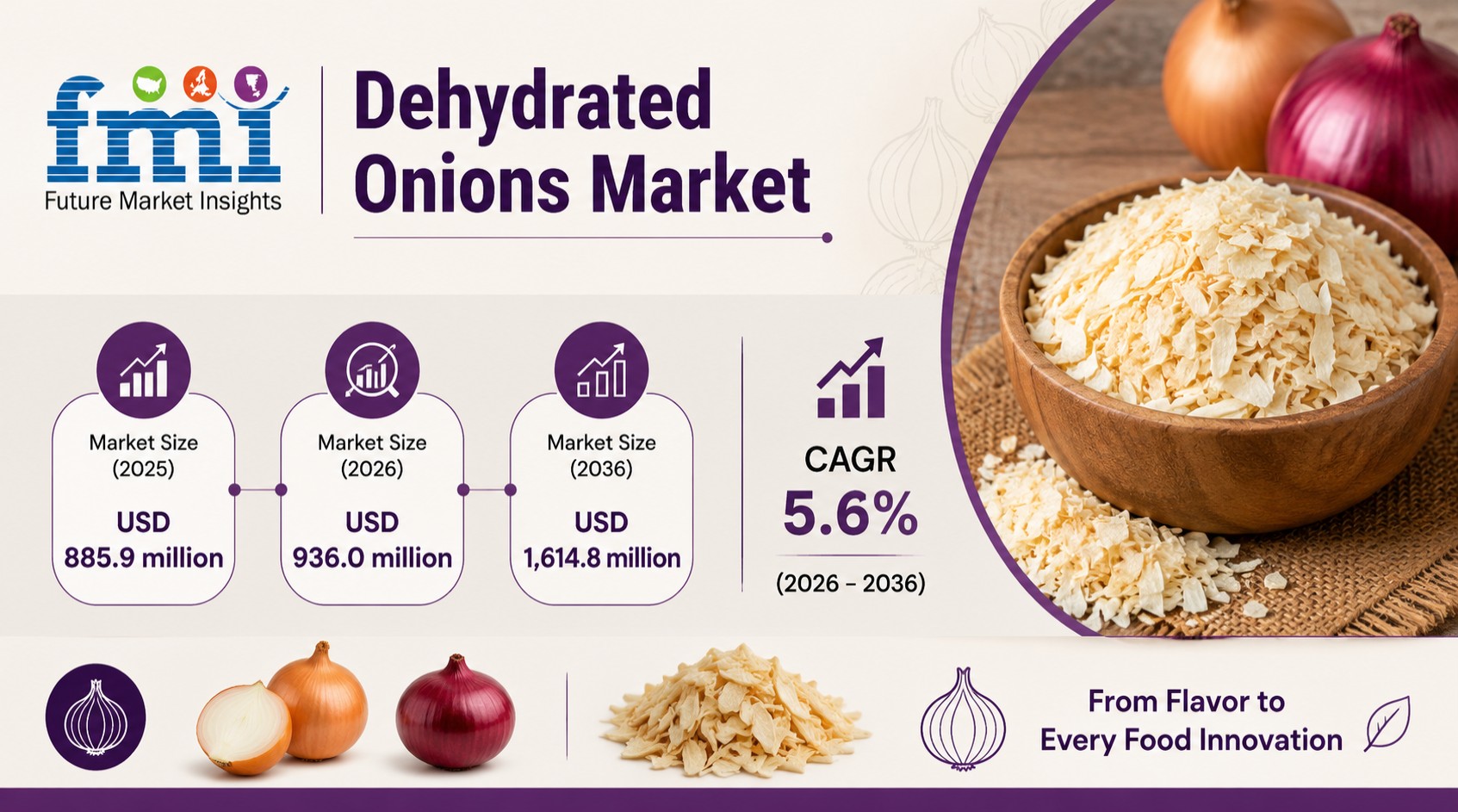
- Leading Product Form: Onion Powder (29.9% market share in 2026)
- Dominant Onion Variety: White Onion (58.3% market share in 2026)
- Largest Commercial Opportunity: Retail spices, seasoning blends, and convenience food ingredients
- Critical Competitive Variable: Product differentiation beyond price
Market Overview: Standardization Increases Private-Label Opportunity
The dehydrated onions market is increasingly characterized by standardized ingredient specifications, long shelf life, and broad application versatility. These characteristics create favorable conditions for private-label expansion because retailers can introduce comparable products without requiring significant consumer behavior changes.
Unlike premium culinary ingredients that depend on regional identity or specialized processing, dehydrated onions are primarily purchased for functional purposes. Consumers expect consistent flavor, reliable performance, and convenient storage. When competing products deliver similar cooking results, purchasing decisions frequently shift toward value, pack size, and price.
This commercial environment allows retailers to leverage established private-label programs while negotiating aggressively with ingredient suppliers to support competitive pricing.
Key Growth Drivers Behind Private-Label Expansion
Pantry Staples Encourage Store-Brand Adoption
Onion powder, flakes, granules, chopped onions, and minced onions have become essential pantry ingredients used across home cooking, seasoning blends, soups, sauces, marinades, and snack applications. Their familiarity reduces consumer resistance to private-label alternatives.
Retailers Continue Expanding Private-Label Food Portfolios
Many retailers already operate successful private-label programs across herbs, spices, baking ingredients, oils, and packaged foods. Dehydrated onions naturally extend these portfolios while benefiting from existing packaging, merchandising, and distribution infrastructure.
Convenience Foods Increase Ingredient Standardization
Ready meals, instant noodles, soups, sauces, snack seasonings, and meal kits increasingly utilize dehydrated onions because of their long shelf life and consistent flavor contribution. As retailers expand private-label convenience foods, they also gain greater influence over ingredient sourcing and specification requirements.
Cost-Conscious Consumer Purchasing
During periods of economic uncertainty, consumers increasingly compare pantry staples based on value rather than brand familiarity. Standardized dehydrated onion products become particularly vulnerable to private-label substitution when quality differences remain difficult to perceive.
Technical & Product Economics Behind Private-Label Competitiveness
The commercial attractiveness of private-label dehydrated onions extends beyond retail branding into manufacturing economics.
- Standardized Ingredient Performance: Onion powders and flakes offer predictable functionality across seasoning blends, sauces, soups, snack coatings, and dry mixes. This consistency simplifies formulation for both retailers and food manufacturers.
- White Onion Supports Large-Scale Standardization: White onions remain the preferred variety because they deliver balanced flavor while maintaining visual compatibility across light-colored sauces, soups, dry mixes, and seasoning applications. Their versatility supports high-volume commercial production.
- Efficient Packaging Economics: Shelf-stable formats package easily into jars, pouches, refill packs, shaker containers, sachets, and club-store sizes without requiring specialized storage or distribution systems.
- B2B Procurement Alignment: Large food manufacturers increasingly purchase dehydrated onions according to standardized quality specifications rather than brand identity, encouraging competitive supplier bidding and private-label sourcing.
Segment Deep Dive: Where Private Label Creates the Greatest Pressure
Onion Powder: The Most Vulnerable Format
Powder remains the leading product form because it integrates easily into spice blends, soups, sauces, marinades, snack seasonings, and processed foods.
Its fine particle size, broad functionality, and standardized appearance make differentiation challenging, increasing private-label competitiveness within retail spice aisles.
White Onion Products: Broad Commercial Appeal
White onion continues leading commercial demand because of its neutral appearance and versatile flavor profile.
Manufacturers use white onion extensively across processed foods, seasoning systems, dry mixes, dressings, and convenience meals, making it particularly attractive for standardized retail and foodservice applications.
Ready-to-Cook and Processed Foods
Private-label influence extends beyond retail spice shelves into retailer-owned ready meals, soups, instant noodles, frozen foods, sauces, and snack products.
When retailers control both finished-product branding and ingredient sourcing, they gain greater negotiating power over dehydrated onion suppliers while reinforcing private-label market share.
Food Manufacturing and Industrial Applications
Large-scale food processors increasingly purchase dehydrated onions according to technical specifications including moisture content, microbiological standards, particle size, flavor consistency, and food safety certifications.
This specification-driven purchasing environment places additional pricing pressure on suppliers competing for high-volume contracts.
Regional Market Dynamics
North America
North American retailers continue expanding private-label grocery programs across pantry staples, seasonings, and convenience foods. Dehydrated onions increasingly benefit from established consumer acceptance of retailer-owned brands.
Europe
European demand remains heavily influenced by food processing and business-to-business ingredient procurement. Large-scale processors prioritize standardized quality, reliable supply, and competitive pricing, reinforcing opportunities for private-label ingredient sourcing.
Asia-Pacific
Growing packaged food consumption, expanding modern retail formats, and increasing demand for shelf-stable cooking ingredients continue supporting both branded and private-label dehydrated onion products across emerging markets.
Competitive Differentiation Strategies
Branded suppliers increasingly compete by creating measurable quality differences rather than relying solely on brand recognition.
- Superior Flavor Performance: Higher aroma retention, optimized drying processes, and stronger flavor intensity improve culinary performance across food applications.
- Advanced Moisture Management: Lower residual moisture levels, improved processing controls, and high-barrier packaging help preserve freshness while reducing clumping and flavor degradation.
- Food Safety & Traceability: Comprehensive quality certifications, origin transparency, contaminant monitoring, and documented manufacturing standards strengthen customer confidence.
- Premium Product Innovation: Organic products, non-GMO certification, chef-grade ingredients, toasted onions, specialty cuts, and single-origin sourcing create differentiation beyond commodity pricing.
- Packaging Innovation: Resealable pouches, refill systems, moisture-resistant containers, and convenient dispensing formats improve consumer experience while reinforcing premium positioning.
Industry FAQs
Why are dehydrated onions particularly vulnerable to private-label competition?
They are familiar pantry ingredients with standardized functionality, making it easier for retailers to introduce comparable products at competitive prices without requiring significant consumer education.
Why does onion powder experience the greatest private-label pressure?
Onion powder integrates across numerous food applications including spice blends, soups, sauces, snacks, marinades, and processed foods. Its standardized appearance and broad functionality make product differentiation more difficult.
How can branded manufacturers defend against private-label competition?
Companies increasingly differentiate through stronger flavor retention, lower moisture content, food safety certifications, traceable sourcing, premium packaging, and specialized product formats that deliver measurable performance advantages.
Why is packaging becoming more important in the dehydrated onions market?
Effective moisture-barrier packaging preserves aroma, prevents clumping, extends shelf life, and improves consumer convenience. Superior packaging can create meaningful product differentiation even within standardized ingredient categories.
Does private-label competition affect only retail products?
No. Retailers increasingly influence ingredient sourcing for private-label ready meals, soups, sauces, snacks, and processed foods. This extends pricing pressure into business-to-business procurement and industrial ingredient specifications.
Conclusion
The dehydrated onions market is becoming increasingly influenced by private-label expansion as retailers strengthen their presence across pantry staples, seasonings, and convenience foods. Standardized product formats, broad culinary applications, and established consumer familiarity make onion powders, flakes, granules, and chopped onions particularly attractive for retailer-owned brands.
However, commoditization is not inevitable. Manufacturers capable of demonstrating superior flavor performance, consistent quality, advanced moisture control, packaging innovation, transparent sourcing, and food safety excellence can continue protecting premium market positions despite growing price competition.
The next stage of competition will therefore depend less on brand recognition alone and more on delivering verifiable product quality that justifies differentiation in an increasingly standardized marketplace.
Related Research Reports
- Dehydrated Vegetables Market – Strategic analysis of dehydrated vegetable demand, ingredient applications, and food processing opportunities.
- Demand for Dehydrated Onions in EU – Market intelligence covering European food processing, B2B procurement, and regional demand dynamics.
- Organic Spices Market – Strategic overview of premium spice positioning, organic certification, and value-added ingredient differentiation.
FMI Custom Research: Strategic Intelligence for Confident Decision-Making
In today’s rapidly evolving business environment, leadership teams need more than market data they need clear, actionable intelligence tailored to their strategic objectives. FMI’s Custom Research solutions are designed around the specific business questions organizations need answered, enabling executives to evaluate growth opportunities, validate investments, assess competitive dynamics, and reduce uncertainty before making critical decisions. By combining deep industry expertise, primary research, and proprietary market intelligence, FMI delivers insights that help organizations move from assumptions to evidence-based strategies with greater speed and confidence.
Key Executive Benefits
- Decision-Ready Insights: Research tailored to your specific business challenges, growth plans, and investment priorities.
- Reduced Strategic Risk: Validate market opportunities, customer demand, and competitive positioning before committing resources.
- Market Entry Confidence: Assess opportunity size, regulatory barriers, channel dynamics, and competitive landscapes with precision.
- Competitive Advantage: Gain proprietary intelligence unavailable through syndicated reports or internal datasets.
- Faster Growth Decisions: Accelerate expansion, product development, portfolio optimization, and investment planning.
- Primary Market Validation: Access real-world customer, buyer, and stakeholder insights that support high-confidence decision-making.
- Global Industry Expertise: Powered by 100+ analysts, 20,000+ published reports, and 1.6 million+ hours of research experience.
- Proven Track Record: Over 7,000 market-entry engagements completed across six regions and 14 industry sectors with strong client retention.
Business Impact
FMI helps organizations transform market complexity into strategic clarity, enabling leadership teams to identify growth opportunities faster, optimize resource allocation, strengthen competitive positioning, and make high-stakes business decisions with confidence.
To explore how FMI Custom Research can support your strategic priorities, please connect with our team at – sales@futuremarketinsights.com
About Future Market Insights (FMI)
Future Market Insights is a leading provider of market intelligence, consulting services, and syndicated research reports. FMI delivers actionable insights across food and beverage, healthcare, consumer goods, biotechnology, chemicals, industrial products, and emerging technologies, helping organizations identify growth opportunities and make informed strategic decisions in evolving global markets.
Contact Us:
Future Market Insights Inc.
Christiana Corporate, 200 Continental Drive,
Suite 401, Newark, Delaware – 19713, USA
T: +1-347-918-3531
Why FMI: https://www.futuremarketinsights.com/why-fmi
For Sales Enquiries: sales@futuremarketinsights.com
Website: https://www.futuremarketinsights.com