

The global animal feed alternative protein market is transitioning from an innovation-driven industry into a procurement-focused market where purchasing decisions are increasingly shaped by ingredient economics rather than sustainability narratives alone. As livestock producers and feed manufacturers seek alternatives to conventional protein meals, plant-based proteins continue to lead commercial adoption by offering scalable supply, established nutritional profiles, competitive pricing, and formulation flexibility across poultry, aquaculture, swine, and ruminant nutrition.
Although insect proteins, algae, microbial proteins, and single-cell proteins continue attracting investment and technological attention, feed manufacturers remain focused on ingredients that can be sourced consistently, incorporated into existing feed systems, and deliver predictable animal performance at commercially acceptable costs. This practical buying logic explains why plant-derived proteins remain the foundation of the alternative protein landscape.
Featured Snippet: Key Market Answer
Q: Why do plant-based proteins continue to dominate the animal feed alternative protein market?
A: Plant-based proteins remain the preferred choice because they combine reliable global supply, competitive pricing, established digestibility data, familiar formulation practices, and scalable production. Feed manufacturers prioritize ingredients that improve feed economics without compromising animal performance. While insect, algae, and microbial proteins offer important long-term opportunities, plant proteins currently provide the strongest balance between nutritional value, commercial availability, and cost efficiency.
Quick Stats of the Animal Feed Alternative Protein Market
- Core Growth Theme: Cost-Efficient Protein Diversification for Livestock Nutrition
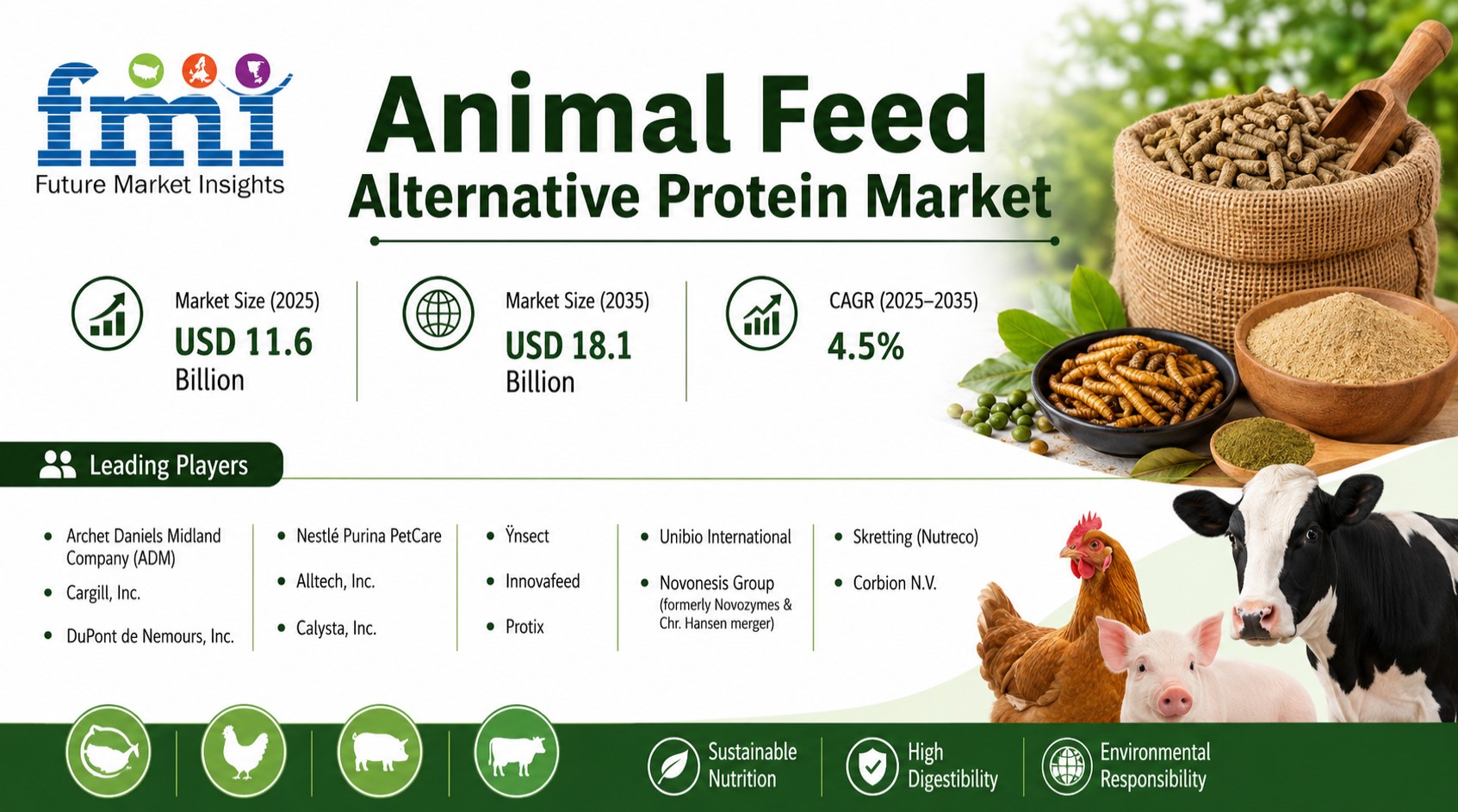
- 2025 Market Size: USD 11.6 Billion
- 2035 Market Size: USD 18.1 Billion
- Forecast CAGR (2025–2035):5%
- Leading Protein Category: Plant-Based Proteins (35% market share in 2025)
- Largest Livestock Application: Poultry (31% demand share in 2025)
- Critical Purchasing Variable: Cost per ton combined with digestibility and feed conversion performance
Market Overview: Practical Feed Economics Drive Protein Selection
The animal feed alternative protein market has evolved beyond searching for direct replacements to conventional protein meals. Instead, manufacturers increasingly build diversified protein portfolios designed to improve supply security, reduce procurement risk, optimize formulation costs, and enhance nutritional flexibility.
This shift has strengthened the position of plant-based proteins because they integrate seamlessly into existing feed production systems. Soy protein concentrates, pea protein, canola meal, sunflower protein, corn protein, and other vegetable-derived ingredients already possess mature supply chains, standardized quality specifications, and extensive nutritional documentation.
Rather than relying on novelty, these ingredients compete through operational familiarity and predictable commercial performance.
Key Growth Drivers Across Alternative Feed Proteins
Supply Security Encourages Protein Diversification
Feed manufacturers increasingly diversify protein sourcing to reduce exposure to commodity volatility, geopolitical disruptions, climate-related crop risks, and fluctuating global trade patterns. Plant-derived alternatives provide immediate opportunities to broaden procurement strategies while maintaining production continuity.
Feed Cost Optimization Remains the Primary Objective
Feed accounts for one of the largest operating expenses in livestock and aquaculture production. Consequently, buyers prioritize protein ingredients capable of supporting feed conversion efficiency, animal growth, and nutritional balance without significantly increasing ration costs.
Expanding Demand for Sustainable Nutrition
Environmental considerations continue influencing ingredient selection. However, sustainability alone rarely determines purchasing decisions. Feed manufacturers increasingly prefer ingredients that combine lower environmental impact with measurable economic and nutritional benefits.
Regional Protein Production Supports Market Growth
Locally produced plant proteins help reduce dependence on imported protein meals while improving supply chain resilience. Regional crop availability increasingly creates opportunities for diversified protein sourcing across global feed markets.
Technical & Ingredient Economics Behind Plant Protein Leadership
Commercial leadership reflects more than production volume. Plant proteins continue dominating because they align with the operational requirements of industrial feed manufacturing.
- Established Procurement Systems: Feed mills already possess extensive experience purchasing, storing, transporting, and formulating plant-derived protein ingredients. Existing infrastructure reduces implementation costs and operational complexity.
- Documented Nutritional Performance: Soy, pea, canola, sunflower, and corn proteins offer well-characterized amino acid profiles, digestibility data, and formulation guidelines, allowing nutritionists to optimize feed formulations with greater confidence.
- Competitive Production Economics: Mature agricultural production systems, established processing capacity, and global trading networks enable plant proteins to achieve economies of scale that remain challenging for many emerging alternative protein technologies.
- Formulation Flexibility: Plant proteins integrate effectively across multiple livestock species while allowing manufacturers to adjust inclusion rates according to nutritional requirements, ingredient availability, and market pricing.
Segment Deep Dive: Why Plant Proteins Remain the Commercial Benchmark
Soy Protein: The Global Reference Standard
Soy continues serving as the industry’s primary benchmark because of its high protein concentration, favorable amino acid profile, extensive research foundation, and well-established global supply chain.
Its widespread acceptance allows feed manufacturers to compare emerging protein ingredients against a proven commercial standard.
Pea, Canola, and Regional Plant Proteins
Growing interest in protein diversification continues expanding opportunities for pea protein, canola protein, sunflower protein, and other regionally produced crop proteins.
These ingredients help reduce dependence on individual commodities while improving supply chain flexibility and supporting localized agricultural production.
Poultry: The Largest Demand Driver
Poultry remains one of the most significant commercial applications for alternative feed proteins due to its scale, rapid production cycles, and strong emphasis on feed conversion efficiency.
Nutritionists evaluate plant proteins according to digestibility, amino acid balance, growth performance, and formulation economics. Ingredients capable of maintaining productivity while controlling costs gain the strongest commercial acceptance.
Blended Protein Systems
Rather than replacing conventional ingredients entirely, many feed manufacturers increasingly combine plant proteins with insect meal, microbial proteins, algae, amino acid supplementation, enzymes, and functional additives.
Within these blended formulations, plant proteins frequently provide the cost-effective volume foundation while specialty ingredients deliver targeted nutritional or sustainability benefits.
Regional Market Dynamics
North America
North American feed manufacturers continue investing in diversified protein sourcing strategies supported by advanced feed formulation technologies, large-scale livestock production, and growing demand for sustainable agricultural practices.
Europe
European markets increasingly emphasize traceability, sustainable sourcing, reduced environmental impact, and alternative protein innovation. Plant-derived proteins remain central to these objectives because of their established commercial infrastructure and evolving sustainability certifications.
Asia-Pacific
Rapid expansion of poultry, aquaculture, and livestock production continues driving demand for affordable, scalable protein ingredients throughout Asia-Pacific. Regional production of plant proteins supports growing feed requirements while reducing reliance on imported protein meals.
Competitive Differentiation Strategies
Leading plant protein suppliers increasingly compete through technical performance rather than commodity positioning alone.
- Comprehensive Nutritional Documentation: Detailed amino acid profiles, digestibility studies, contaminant testing, and species-specific feeding data strengthen customer confidence.
- Supply Chain Reliability: Consistent availability, regional production capacity, and diversified sourcing reduce procurement risk for feed manufacturers.
- Quality Standardization: Stable protein concentration, reduced anti-nutritional factors, and consistent processing quality improve formulation accuracy across commercial feed operations.
- Application-Specific Formulation Support: Technical assistance, feed optimization guidance, and species-specific recommendations help customers maximize nutritional performance while controlling production costs.
- Sustainability with Economic Value: Suppliers increasingly combine traceable sourcing, responsible agricultural practices, and environmental documentation with competitive pricing rather than relying solely on sustainability messaging.
Industry FAQs
Why do plant-based proteins remain the largest segment in alternative animal feed proteins?
Plant proteins combine proven nutritional performance, mature supply chains, competitive pricing, established formulation practices, and large-scale production capacity, making them the most commercially practical alternative protein source.
Why is poultry the leading application for alternative feed proteins?
Poultry production depends heavily on feed efficiency, making nutritionists highly focused on protein digestibility, amino acid balance, growth performance, and formulation economics. Plant proteins align well with these commercial requirements.
Can insect and microbial proteins replace plant proteins completely?
Current market trends suggest they will complement rather than replace plant proteins. Emerging protein sources offer valuable functionality in specialized applications, but plant proteins continue providing the volume foundation required for large-scale commercial feed production.
Why is cost per ton still more important than sustainability?
Feed represents one of the largest production expenses in livestock farming. Buyers therefore prioritize ingredients that maintain animal performance while supporting competitive feed costs. Sustainability gains greater value when combined with measurable economic benefits.
How are suppliers strengthening their competitive position?
Manufacturers increasingly differentiate through technical documentation, digestibility research, quality consistency, reliable supply chains, regional sourcing capabilities, and formulation support that improves customer confidence and production efficiency.
Conclusion
The future development of the animal feed alternative protein market will continue reflecting practical feed economics rather than technological excitement alone. Plant-based proteins remain the commercial backbone of the industry because they address the most immediate priorities of feed manufacturers: reliable supply, predictable pricing, nutritional consistency, and scalable formulation.
While insect proteins, algae, microbial proteins, and precision fermentation ingredients will continue expanding into specialized applications, plant-derived proteins are expected to retain their leadership by providing the cost-effective foundation for diversified feed protein strategies.
Manufacturers capable of combining nutritional performance, supply chain resilience, comprehensive technical documentation, and sustainable sourcing with competitive economics will be best positioned to lead the next phase of alternative protein adoption across global animal nutrition.
Related Research Reports
- Animal Feed Ingredients Market – Market intelligence covering feed additives, protein sources, formulation technologies, and ingredient innovation.
- Alternative Protein Market – Evaluation of plant-based, microbial, insect, and fermentation-derived protein developments across food and feed industries.
- Algae-Based Animal Feed Market – Strategic overview of algae-derived feed ingredients, functional nutrition, and sustainable protein applications.
FMI Custom Research: Strategic Intelligence for Confident Decision-Making
In today’s rapidly evolving business environment, leadership teams need more than market data they need clear, actionable intelligence tailored to their strategic objectives. FMI’s Custom Research solutions are designed around the specific business questions organizations need answered, enabling executives to evaluate growth opportunities, validate investments, assess competitive dynamics, and reduce uncertainty before making critical decisions. By combining deep industry expertise, primary research, and proprietary market intelligence, FMI delivers insights that help organizations move from assumptions to evidence-based strategies with greater speed and confidence.
Key Executive Benefits
- Decision-Ready Insights: Research tailored to your specific business challenges, growth plans, and investment priorities.
- Reduced Strategic Risk: Validate market opportunities, customer demand, and competitive positioning before committing resources.
- Market Entry Confidence: Assess opportunity size, regulatory barriers, channel dynamics, and competitive landscapes with precision.
- Competitive Advantage: Gain proprietary intelligence unavailable through syndicated reports or internal datasets.
- Faster Growth Decisions: Accelerate expansion, product development, portfolio optimization, and investment planning.
- Primary Market Validation: Access real-world customer, buyer, and stakeholder insights that support high-confidence decision-making.
- Global Industry Expertise: Powered by 100+ analysts, 20,000+ published reports, and 1.6 million+ hours of research experience.
- Proven Track Record: Over 7,000 market-entry engagements completed across six regions and 14 industry sectors with strong client retention.
Business Impact
FMI helps organizations transform market complexity into strategic clarity, enabling leadership teams to identify growth opportunities faster, optimize resource allocation, strengthen competitive positioning, and make high-stakes business decisions with confidence.
To explore how FMI Custom Research can support your strategic priorities, please connect with our team at – sales@futuremarketinsights.com
About Future Market Insights (FMI)
Future Market Insights is a leading provider of market intelligence, consulting services, and syndicated research reports. FMI delivers actionable insights across food and beverage, healthcare, consumer goods, biotechnology, chemicals, industrial products, and emerging technologies, helping organizations identify growth opportunities and make informed strategic decisions in evolving global markets.
Contact Us:
Future Market Insights Inc.
Christiana Corporate, 200 Continental Drive,
Suite 401, Newark, Delaware – 19713, USA
T: +1-347-918-3531
Why FMI: https://www.futuremarketinsights.com/why-fmi
For Sales Enquiries: sales@futuremarketinsights.com
Website: https://www.futuremarketinsights.com