

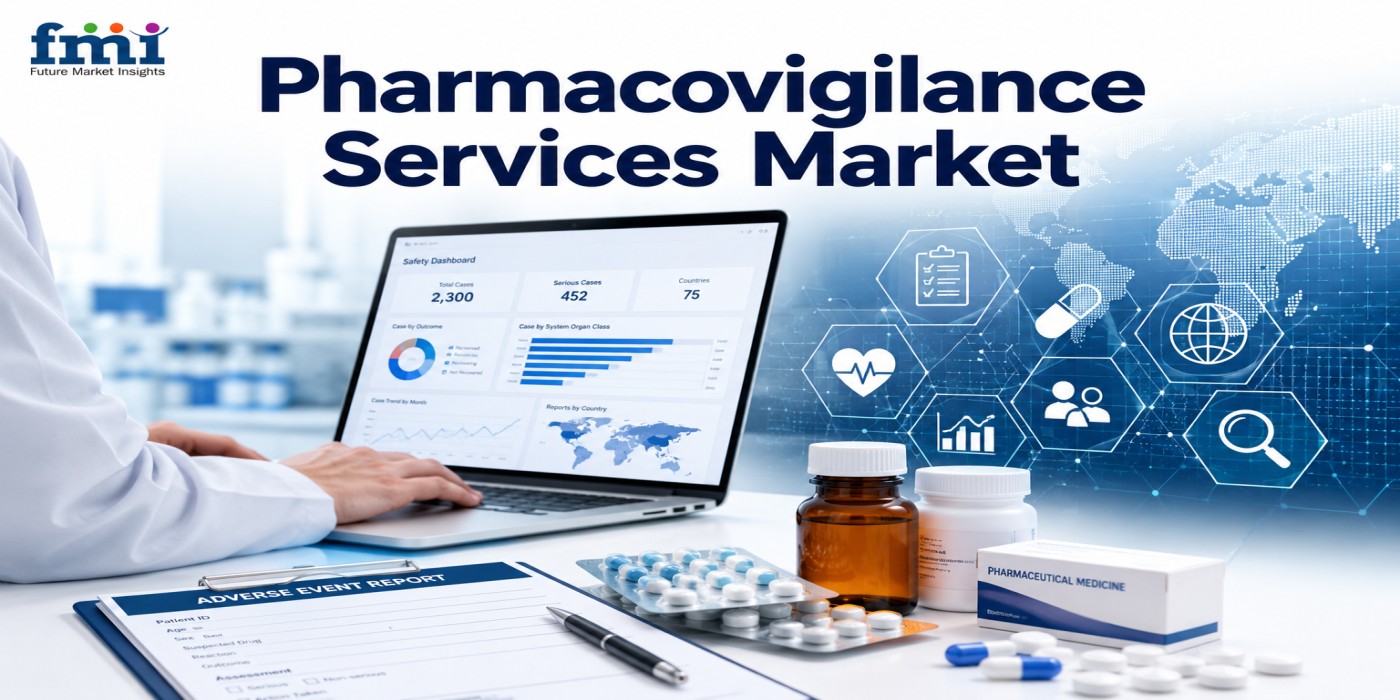
The global pharmacovigilance services market is experiencing sustained expansion as pharmaceutical and biotechnology companies increasingly prioritize patient safety monitoring, regulatory compliance, and efficient post-market surveillance capabilities.
Pharmacovigilance services have evolved from basic adverse event reporting activities into sophisticated safety management ecosystems involving artificial intelligence, automated case processing, signal detection platforms, regulatory intelligence, and global compliance operations.
As drug development pipelines expand, regulatory expectations become more stringent, and pharmaceutical companies operate across multiple international markets, outsourcing pharmacovigilance activities has become a strategic necessity rather than a cost-saving decision.
Key Takeaways
Pharmacovigilance services pricing is primarily influenced by regulatory compliance infrastructure, specialized technology platforms, expert personnel, and global operational capabilities rather than basic adverse event processing volumes. Pharmaceutical companies must continuously invest in safety monitoring systems regardless of product sales performance due to mandatory regulatory obligations.
Service delivery has transitioned from traditional manual reporting workflows toward advanced AI-powered pharmacovigilance ecosystems requiring proprietary safety databases, machine learning capabilities, automated workflows, and integrated regulatory submission platforms. These technology requirements create significant entry barriers and strengthen the position of established service providers.
Why Are Pharmaceutical Companies Increasingly Outsourcing Pharmacovigilance Functions Despite Rising Service Costs?
The growing adoption of outsourced pharmacovigilance services reflects a fundamental shift in how pharmaceutical companies evaluate internal capabilities versus specialized external expertise. Maintaining an internal pharmacovigilance department requires significant investments in qualified personnel, advanced technology systems, regulatory knowledge, and continuous compliance management.
Internal pharmacovigilance operations require experienced safety scientists, qualified persons responsible for pharmacovigilance (QPPVs), regulatory specialists, medical reviewers, and database professionals. These professionals require continuous training as global safety regulations evolve, creating ongoing operational expenses that increase with regulatory complexity.
Developing and maintaining these systems internally requires substantial capital investment, software licensing costs, cybersecurity measures, validation procedures, and continuous upgrades to meet changing regulatory expectations.
Where Do Established Pharmacovigilance Service Providers Capture the Highest Margins?
Established Service Providers Capture The Highest Margins Through Technology, Expertise, And Global Infrastructure
Leading pharmacovigilance service providers generate strong margins by offering integrated safety solutions that extend beyond basic adverse event management. Their competitive advantage is built around regulatory knowledge, proprietary platforms, operational scale, and comprehensive service portfolios.
Regulatory expertise remains one of the most valuable components of pharmacovigilance services. Established providers maintain teams with deep experience in global safety regulations, regulatory authority expectations, inspection readiness, and compliance strategy.
This expertise enables providers to support pharmaceutical companies in complex safety scenarios, including risk management planning, signal evaluation, regulatory submissions, and post-marketing surveillance strategies.
These platforms create significant switching costs for pharmaceutical clients because changing providers may require complex data migration, system validation, employee retraining, and regulatory reassessment.
Why Do Smaller Pharmacovigilance Providers Struggle to Compete Despite Lower Pricing?
Small and medium-sized pharmacovigilance providers often compete through cost advantages and specialized offerings, but structural limitations restrict their ability to challenge large global providers in complex projects.
Technology investment represents one of the largest barriers. Advanced pharmacovigilance platforms require significant upfront investment, ongoing maintenance, cybersecurity capabilities, and regulatory validation. Smaller companies often struggle to justify these investments without large client portfolios.
Regulatory expertise is another critical challenge. Pharmacovigilance requires highly specialized knowledge of evolving global regulations. The limited availability of experienced safety professionals makes recruitment and retention difficult for smaller providers.
Global service delivery capabilities also create disadvantages for smaller organizations. Pharmaceutical companies increasingly require 24/7 safety monitoring, multilingual support, and regional regulatory expertise. Maintaining these capabilities requires substantial infrastructure investment.
AI and Automation Reshape Pharmacovigilance Service Economics
Artificial intelligence and automation are transforming pharmacovigilance operations by improving efficiency, reducing manual workloads, and enhancing safety signal identification.
AI-powered systems can support automated adverse event classification, duplicate case detection, medical coding, literature screening, and predictive safety analysis. These capabilities allow service providers to process increasing volumes of safety data while maintaining compliance standards.
The future competitive landscape will increasingly depend on the ability of providers to combine human regulatory expertise with advanced automation technologies.
Regulatory Complexity Continues Driving Market Expansion
Increasing regulatory scrutiny remains one of the strongest growth drivers for the pharmacovigilance services market. Regulatory authorities worldwide continue strengthening requirements related to adverse event reporting, risk management, data transparency, and patient safety monitoring.
Pharmaceutical companies must continuously adapt to changing regulations throughout the product lifecycle. These requirements increase demand for specialized service providers capable of managing compliance obligations efficiently.
Key Facts
- Pharmacovigilance service pricing is shaped by regulatory compliance infrastructure, technology investments, and specialized expertise rather than only case processing volumes.
- Established providers maintain competitive advantages through global operations, proprietary safety platforms, regulatory knowledge, and integrated service offerings.
- AI-powered automation is improving pharmacovigilance efficiency while increasing technology requirements for service providers.
- Smaller providers face challenges related to technology investment, regulatory expertise availability, quality requirements, and global delivery capabilities.
- Growing regulatory expectations and expanding pharmaceutical pipelines continue increasing demand for outsourced pharmacovigilance solutions.
Future Outlook: Technology-Driven Compliance Will Define Pharmacovigilance Market Growth
The pharmacovigilance services market is entering a technology-driven growth phase where regulatory expertise, automation capabilities, and global compliance infrastructure will determine competitive success.
While outsourcing demand continues rising due to increasing regulatory complexity and pharmaceutical innovation, service providers must continuously invest in artificial intelligence, advanced analytics, cybersecurity, and regulatory intelligence capabilities.
Large providers are expected to maintain leadership through integrated service models combining technology platforms, global operations, and specialized regulatory expertise. Meanwhile, smaller companies will continue finding opportunities through niche specialization, flexible delivery models, and targeted safety solutions.
Explore More Related Studies Published by FMI Research:
https://www.openpr.com/news/4522973/ai-in-laboratory-solution-market-surges-across-china-india-led
https://www.openpr.com/news/4522976/mobility-aids-and-transportation-equipment-market-grows
https://www.openpr.com/news/4522979/nephrology-and-urology-incontinence-devices-market-advances
About Future Market Insights (FMI)
Future Market Insights, Inc. (FMI) is an ESOMAR-certified, ISO 9001:2015 market research and consulting organization trusted by Fortune 500 companies and global enterprises. With operations across the United States, United Kingdom, India, and Dubai, FMI delivers data-driven market intelligence, strategic consulting, and actionable insights across more than 30 industries and 1,200 markets worldwide.