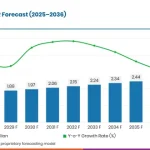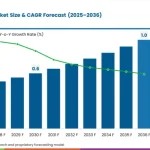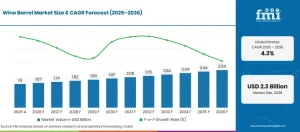


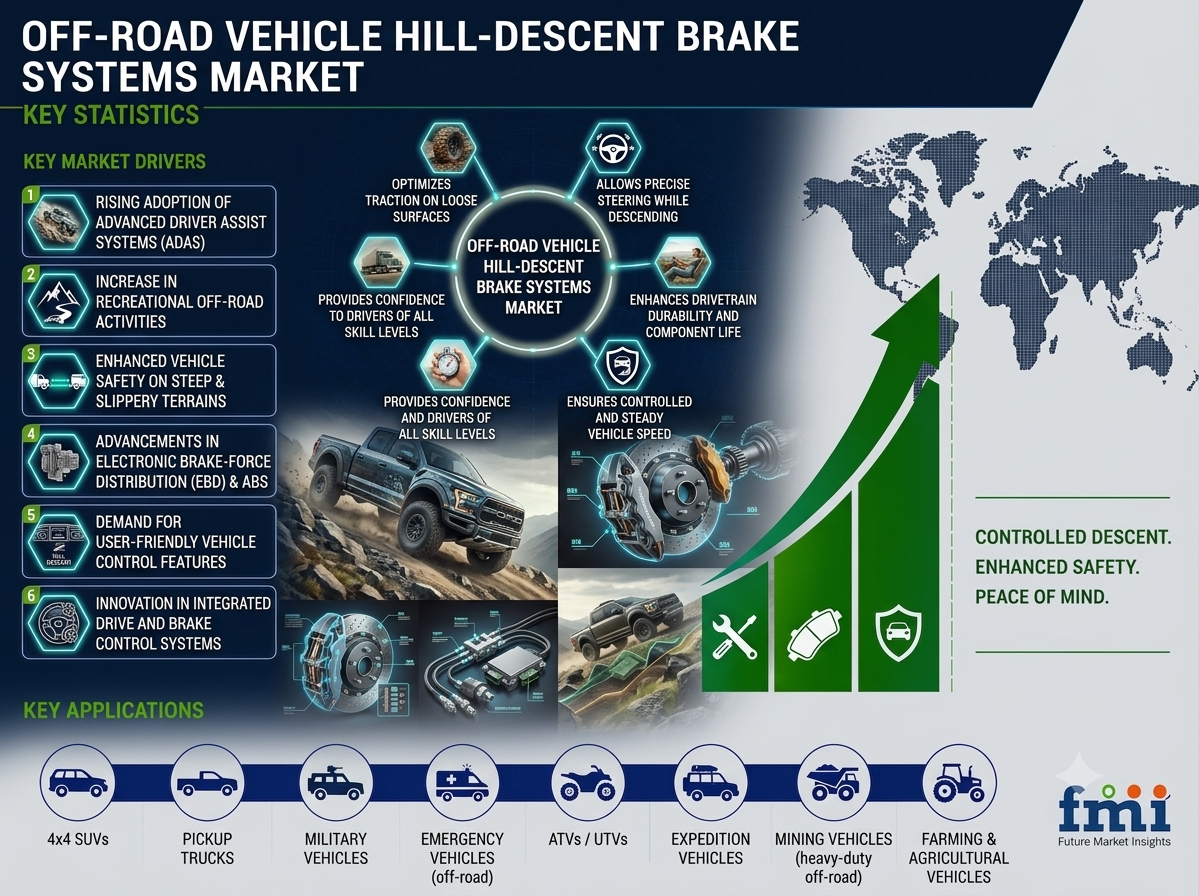
The global Off-Road Vehicle Hill-Descent Brake Systems Market is projected to grow from USD 1.2 billion in 2025 to USD 2.5 billion by 2036, registering a compound annual growth rate (CAGR) of 6.8% during the forecast period. Rising consumer demand for safer off-road driving, increasing adoption of terrain management systems in SUVs and pickup trucks, and rapid advances in electronic braking technologies are expected to drive market expansion through 2036.
Hill-descent control systems have evolved from premium off-road features into essential driver-assistance technologies that enable vehicles to maintain a controlled speed while descending steep or loose terrain. By automatically regulating brake pressure and wheel speed, these systems improve vehicle stability, reduce driver workload, and enhance confidence during challenging off-road conditions.
Growing Popularity of Off-Road SUVs Fuels Market Growth
The continued growth of the global SUV and pickup truck market is creating strong demand for advanced off-road safety technologies.
Modern consumers increasingly expect vehicles to perform confidently across a variety of driving environments, including gravel roads, rocky trails, muddy tracks, and steep descents. Hill-descent brake systems address these challenges by automatically controlling braking force without requiring constant pedal input from the driver.
As recreational off-roading, overlanding, adventure tourism, and outdoor lifestyles gain popularity worldwide, manufacturers are integrating hill-descent control into broader terrain management systems that improve vehicle capability while enhancing overall driving safety.
Terrain Management Systems Accelerate Adoption
Automakers are increasingly packaging hill-descent control alongside selectable terrain modes, electronic stability control (ESC), traction control, and all-wheel-drive technologies.
Rather than functioning as a standalone feature, hill-descent braking has become part of intelligent vehicle dynamics systems capable of automatically adjusting brake pressure, throttle response, drivetrain behavior, and traction management according to changing terrain conditions.
This integrated approach delivers smoother vehicle control on steep slopes while reducing the likelihood of wheel lock or uncontrolled acceleration during downhill driving.
The growing adoption of software-defined vehicle architectures is further enabling manufacturers to introduce increasingly sophisticated terrain-control capabilities across multiple vehicle segments.
OEM Fitment Remains the Preferred Sales Channel
Original equipment manufacturer (OEM) installations are expected to account for 67.5% of the global market in 2026, reflecting the highly integrated nature of modern hill-descent braking systems.
Because braking performance depends on vehicle weight, suspension characteristics, tire specifications, and electronic control calibration, manufacturers typically validate hill-descent functionality during vehicle development.
Factory-installed systems offer superior reliability, optimized software calibration, and seamless integration with ABS, ESC, traction control, and powertrain management systems, making OEM fitment the preferred deployment strategy.
While retrofit solutions exist for certain vehicle platforms, widespread adoption remains limited due to the complexity of integrating braking software into existing electronic control architectures.
ESC-Integrated Systems Lead Technology Adoption
ESC-integrated hill-descent systems are expected to capture 46.7% of the market in 2026, making them the leading system type.
These solutions leverage existing electronic stability control hardware, including wheel-speed sensors, brake pressure modulators, and control units, eliminating the need for additional dedicated braking hardware.
By utilizing established vehicle control systems, manufacturers can reduce costs while delivering consistent downhill braking performance across a wide range of operating conditions.
Meanwhile, brake-by-wire hill-descent systems are gaining momentum within premium off-road vehicles, offering faster response times, more precise brake modulation, and greater flexibility for future software updates.
Passenger SUVs Continue to Dominate Demand
Passenger SUVs are forecast to account for 54.8% of global demand in 2026, supported by their expanding role as both family transportation and recreational adventure vehicles.
Consumers increasingly expect SUVs to combine everyday comfort with genuine off-road capability. Hill-descent control enhances driver confidence by maintaining low, consistent speeds on steep terrain without requiring continuous braking input.
Pickup trucks also represent a significant growth segment, particularly among customers involved in towing, trail driving, construction, agriculture, and outdoor recreation. Utility task vehicles (UTVs) and specialized off-road commercial vehicles are also adopting advanced braking technologies to improve operator safety in demanding environments.
Internal Combustion Engine Platforms Maintain Leadership
Internal combustion engine (ICE) vehicles are projected to represent 56.4% of the market in 2026, reflecting the continued dominance of gasoline and diesel-powered off-road vehicles.
Traditional engine braking complements electronic hill-descent systems, providing additional vehicle control during steep descents.
At the same time, hybrid and electric off-road vehicles are creating new engineering opportunities. These platforms require sophisticated coordination between regenerative braking and conventional friction braking to ensure smooth, predictable downhill performance while maximizing energy recovery.
As electrification expands into off-road segments, advanced brake software capable of seamlessly blending regenerative and hydraulic braking is expected to become increasingly important.
Recreational Off-Roading Drives Market Opportunities
Recreational off-road use is expected to account for 42.6% of the terrain-use segment in 2026.
Growing participation in overlanding, off-road tourism, camping, and adventure sports has increased consumer demand for technologies that improve vehicle control across challenging terrain.
Beyond recreational applications, hill-descent systems are also finding greater use in construction vehicles, mining support equipment, agricultural vehicles, and defense mobility platforms operating on uneven or sloped terrain where controlled downhill braking enhances operational safety.
Technological Advancements Strengthen Competitive Positioning
Advances in electronic braking systems are transforming hill-descent control capabilities.
Brake-by-wire technology enables faster brake response, more accurate wheel-level control, and improved integration with intelligent chassis management systems. Modern vehicle motion management platforms coordinate braking, suspension, steering, and drivetrain functions simultaneously to deliver greater stability across complex terrain.
Extensive validation and software calibration are also becoming key competitive differentiators as manufacturers seek to ensure reliable braking performance across diverse climates, road surfaces, vehicle loads, and tire configurations.
Suppliers with expertise in electronic stability control software, brake-by-wire systems, sensor integration, and real-world vehicle testing are expected to secure stronger partnerships with global automotive OEMs.
Asia-Pacific Leads Future Market Growth
Asia-Pacific is projected to remain the fastest-growing regional market as SUV ownership and off-road vehicle demand continue expanding.
India is expected to register the highest growth globally, with a CAGR of 8.3% through 2036, driven by increasing SUV adoption, expanding rural mobility, and rising demand for advanced safety technologies.
China follows closely with a projected 7.9% CAGR, supported by rapid growth in domestic SUV production, increasing consumer interest in adventure vehicles, and continued investment in intelligent vehicle technologies.
North America remains a major market due to its strong demand for pickup trucks, off-road SUVs, and recreational vehicles used for towing, trail driving, and outdoor activities.
Competitive Landscape
The competitive landscape is characterized by collaboration between automotive OEMs, brake system manufacturers, electronic control software developers, and sensor technology providers.
Manufacturers are investing heavily in brake-by-wire architectures, advanced ESC software, terrain management systems, and intelligent vehicle dynamics platforms capable of delivering highly responsive downhill braking performance. Companies that combine robust software calibration, comprehensive vehicle testing, and seamless integration with existing safety systems are expected to strengthen their competitive advantage.
As software-defined vehicles become increasingly common, electronic braking solutions are expected to play an even greater role in future off-road vehicle development.
Future Outlook
The outlook for the off-road vehicle hill-descent brake systems market remains highly positive as consumer expectations for vehicle safety, off-road capability, and intelligent driver assistance continue to evolve.
Growing adoption of software-controlled braking, expanding SUV and pickup truck production, increasing vehicle electrification, and ongoing innovation in terrain management technologies will continue driving market growth through 2036.
Manufacturers capable of delivering highly integrated hill-descent systems that combine precise brake control, advanced software calibration, and compatibility with next-generation electronic vehicle architectures are expected to lead the future evolution of off-road mobility.