

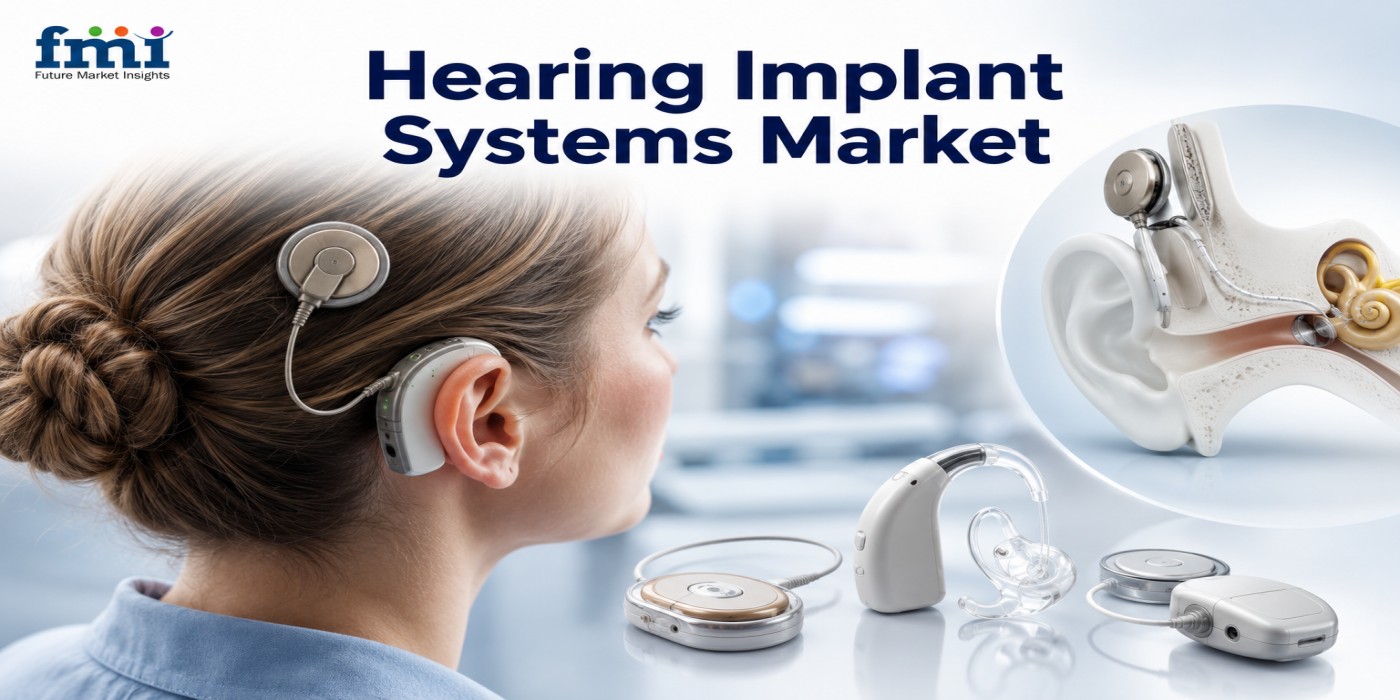
The global hearing implant systems market continues to experience steady growth as advances in auditory technologies, expanding reimbursement support, and improved clinical outcomes encourage wider adoption among patients with severe hearing loss. Hearing implant systems have become an essential treatment option for individuals who receive limited benefit from conventional hearing aids, offering significant improvements in speech perception, communication, and quality of life across pediatric and adult populations.
As healthcare systems increasingly prioritize early diagnosis of hearing impairment and specialist-led intervention, the market is evolving beyond device innovation toward comprehensive patient management that includes clinical assessment, surgical implantation, audiological rehabilitation, and long-term device support.
Manufacturers are also differentiating their product portfolios through enhanced signal processing, MRI compatibility, implant reliability, and digital connectivity, strengthening the value proposition for healthcare providers and patients alike.
Market Outlook
The hearing implant systems market is expected to expand steadily throughout the forecast period, supported by growing awareness of hearing disorders, improvements in newborn hearing screening programs, favorable reimbursement policies, and continuous advancements in implant technologies.
Future market expansion will be driven not only by increasing diagnosis of severe hearing impairment but also by broader investments in specialized ENT services, audiological care infrastructure, and long-term rehabilitation programs. As aging populations continue to increase worldwide and governments place greater emphasis on improving hearing healthcare, demand for advanced hearing implant systems is expected to strengthen across both developed and emerging healthcare markets.
Cochlear Implants Continue to Lead Clinical Adoption
Cochlear implants remain the dominant product category within the hearing implant systems market, serving patients with severe to profound sensorineural hearing loss who derive minimal benefit from conventional hearing aids.
Clinical candidacy is determined through comprehensive audiological evaluations, speech recognition testing, and specialist assessment. Patients demonstrating significant hearing loss together with poor aided speech perception represent the largest eligible population for cochlear implantation.
Pediatric patients continue to represent a particularly important growth segment. Universal ewborn hearing screening programs have significantly improved early diagnosis rates, enabling implantation during critical stages of speech and language development.
Adult implantation also continues to expand, particularly among individuals experiencing hearing loss due to aging, meningitis, ototoxic medications, sudden sensorineural hearing loss, and progressive cochlear degeneration. Early intervention has become increasingly important, as prolonged auditory deprivation can negatively affect rehabilitation outcomes.
Bone Conduction Hearing Implants Expand Treatment Options
Beyond cochlear implants, bone conduction hearing systems continue to strengthen their role in treating conductive hearing loss, mixed hearing loss, and single-sided deafness.
Unlike cochlear implants, bone conduction devices bypass damaged middle ear structures by transmitting sound vibrations directly to the functioning inner ear through cranial bone conduction. These systems provide effective treatment for patients with congenital ear malformations, chronic ear disease, ossicular abnormalities, and hearing loss following tumor surgery.
Clinical Eligibility Continues to Shape Market Demand
One of the defining characteristics of the hearing implant systems market is the highly specialized patient selection process.
Unlike many medical device markets driven primarily by broad disease prevalence, hearing implant adoption depends upon carefully established clinical eligibility criteria. Comprehensive evaluations conducted by multidisciplinary teams—including ENT surgeons, audiologists, speech therapists, and psychologists—ensure that only appropriate candidates undergo implantation.
Public Reimbursement Policies Strengthen Market Expansion
Reimbursement continues to represent one of the most influential factors affecting hearing implant adoption worldwide.
Countries operating universal healthcare systems have established reimbursement pathways that significantly improve patient access by covering implant devices, surgical procedures, rehabilitation services, and long-term follow-up care.
Comprehensive reimbursement programs across several developed healthcare markets have substantially increased implantation rates among eligible patients. Conversely, regions lacking structured reimbursement frameworks continue to experience slower adoption despite considerable unmet clinical need.
Health technology assessments increasingly evaluate hearing implants not only on clinical effectiveness but also on long-term economic benefits, including improved educational outcomes, workforce participation, communication ability, and overall quality of life.
Technology Innovation Accelerates Product Differentiation
Technology continues to reshape competition across the hearing implant systems market.
Manufacturers are investing heavily in next-generation sound processing algorithms that improve speech recognition, particularly within challenging listening environments containing significant background noise.
Advancements in electrode array design are also improving surgical outcomes. Modern electrode systems are engineered to minimize cochlear trauma during insertion while preserving residual hearing wherever possible. Different array configurations allow surgeons to select implantation approaches based on patient anatomy and clinical objectives.
MRI compatibility has emerged as another increasingly important competitive differentiator. New-generation implant systems incorporate rotating or removable magnet designs that permit high-strength MRI examinations without requiring additional surgical procedures, providing significant long-term benefits for both pediatric and adult patients.
Manufacturers are simultaneously enhancing implant reliability through improved hermetic sealing, impact resistance, and long-term device durability, reducing revision surgery requirements while strengthening clinician confidence.
Surgical Infrastructure and Specialist Availability Influence Market Growth
Despite strong clinical demand, market expansion remains closely linked to the availability of specialized surgical and audiological infrastructure.
Cochlear implantation requires highly trained ENT surgeons with expertise in otology and microsurgical techniques. In many regions, implant programs are concentrated in large urban medical centers, creating access challenges for patients living in rural or underserved areas.
Audiological support is equally critical. Patients require extensive preoperative assessment, postoperative device activation, mapping sessions, rehabilitation, and long-term follow-up care. Healthcare systems that invest in comprehensive implant programs generally achieve higher adoption rates and better patient outcomes.
Long-Term Service and Upgrade Cycles Create Recurring Revenue Opportunities
The hearing implant systems market differs from many medical device sectors because patient relationships often continue for decades after the initial implantation procedure.
External sound processors typically undergo technological upgrades every several years, providing patients with access to improved sound processing, wireless connectivity, and enhanced usability without replacing the implanted component.
Manufacturers also generate recurring revenue through processor replacements, accessories, software updates, service contracts, and ongoing technical support. This long-term service model strengthens customer retention while creating stable revenue streams beyond initial device sales.
Regional Trends
North America continues to hold a significant position in the global hearing implant systems market, supported by advanced healthcare infrastructure, favorable reimbursement policies, strong specialist networks, and high awareness of hearing loss treatment options.
Europe remains an important market as universal healthcare systems, established cochlear implant programs, and expanding pediatric screening initiatives support consistent adoption across major countries.
Asia-Pacific is emerging as one of the fastest-growing regional markets. Rapid healthcare infrastructure development, increasing healthcare expenditure, growing awareness of hearing impairment, and expanding access to specialized ENT services are creating substantial growth opportunities across several developing economies.
Competitive Landscape and Future Outlook
The hearing implant systems market remains highly specialized, with manufacturers competing through clinical performance, technological innovation, surgeon support programs, and long-term patient service capabilities.
Leading companies continue to invest in advanced sound processing platforms, minimally traumatic electrode designs, MRI-compatible implants, remote programming technologies, and connected hearing ecosystems that integrate smartphones and digital health applications.
Rather than competing solely on device hardware, manufacturers are increasingly positioning themselves as providers of comprehensive hearing restoration solutions encompassing implantation, rehabilitation, remote care, and lifetime technology upgrades.
Conclusion: Technology, Access, and Clinical Infrastructure Define the Future of the Hearing Implant Systems Market
The hearing implant systems market is evolving from a niche surgical device segment into a comprehensive hearing restoration ecosystem.
While cochlear implants continue to dominate adoption among patients with severe to profound sensorineural hearing loss, bone conduction systems are expanding treatment options for conductive and single-sided hearing loss populations.
Manufacturers that successfully combine advanced auditory technologies with strong clinical support, upgrade flexibility, and patient-centered care are expected to be best positioned to capitalize on the next generation of growth opportunities in the global hearing implant systems market.
Explore More Related Studies Published by FMI Research:
Electrocautery-Enhanced Delivery System Market
Laband Syndrome Therapeutics Market
About Future Market Insights (FMI)
Future Market Insights, Inc. (FMI) is an ESOMAR-certified, ISO 9001:2015 market research and consulting organization trusted by Fortune 500 companies and global enterprises. With operations across the United States, United Kingdom, India, and Dubai, FMI delivers data-driven market intelligence, strategic consulting, and actionable insights across more than 30 industries and 1,200 markets worldwide.