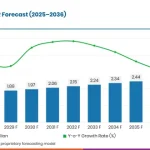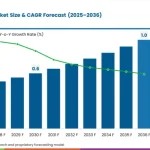


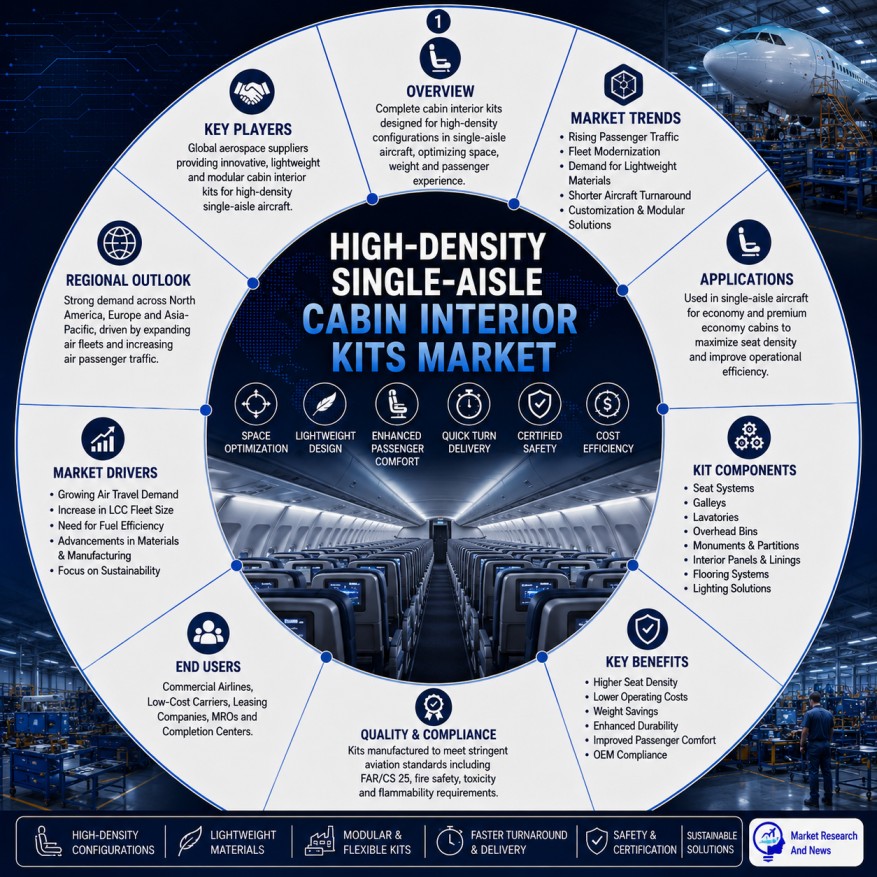
The global High-Density Single-Aisle Cabin Interior Kits Market is projected to grow from USD 960.0 million in 2026 to USD 1.89 billion by 2036, expanding at a compound annual growth rate (CAGR) of 7.0% during the forecast period. The market is being driven by increasing airline efforts to maximize passenger capacity, prolonged aircraft delivery timelines, and rising investments in cabin retrofit programs that enhance operational efficiency without requiring fleet expansion.
As airlines continue to face strong passenger demand and delayed deliveries of new aircraft, many operators are opting to upgrade existing narrow-body fleets with certified high-density cabin interior kits. These retrofit solutions enable airlines to add seating capacity, improve cabin layouts, and increase revenue per flight while minimizing aircraft downtime.
Airlines Turn to Cabin Retrofits to Improve Fleet Utilization
Single-aisle aircraft remain the backbone of global short- and medium-haul aviation, serving the majority of commercial passenger routes. However, ongoing production backlogs and supply chain constraints have delayed deliveries of new aircraft, prompting airlines to extract greater value from their existing fleets.
High-density cabin interior kits—including slimline seating, compact galleys, space-efficient lavatories, larger overhead bins, and modern cabin lighting systems—allow operators to increase seat counts while maintaining compliance with aviation safety regulations.
Rather than replacing aircraft, airlines are increasingly incorporating these cabin modifications during scheduled heavy maintenance checks, reducing operational disruption and extending the economic life of existing fleets.
Retrofit Installations Dominate Market Demand
Retrofit installations are expected to account for 53.7% of the global market in 2026, making them the leading installation type.
Many airlines are integrating cabin upgrades into planned maintenance schedules, allowing comprehensive interior modernization without significantly increasing aircraft downtime. Bundled retrofit kits simplify certification, reduce engineering complexity, and accelerate installation compared with piecemeal cabin modifications.
The growing availability of certified retrofit packages has also increased airline confidence in adopting higher-density cabin configurations across mature fleets.
Low-Cost Carriers Lead Adoption
Low-cost carriers (LCCs) are projected to represent 47.8% of the market in 2026, reflecting their continued focus on maximizing seating capacity and lowering operating costs per passenger.
For budget airlines, increasing seat density directly improves revenue potential while helping maintain competitive fare structures on short-haul routes. Slimline seating, optimized galley layouts, and space-saving lavatory designs enable carriers to accommodate additional passengers without significantly compromising cabin functionality.
As global air travel demand continues to recover and expand, LCCs are expected to remain the primary adopters of high-density cabin interior solutions.
Airbus A320 Family Continues to Drive Demand
Among aircraft platforms, the Airbus A320 Family is forecast to capture 42.6% of the global market, supported by its extensive worldwide fleet and ongoing retrofit activity.
With thousands of A320-family aircraft in active commercial service, airlines continue investing in cabin modernization programs to improve passenger capacity and operational efficiency. Similar retrofit demand is also emerging across Boeing 737 fleets, Airbus A220 aircraft, Embraer E-Jets, and the growing Comac C919 fleet.
The large installed base of narrow-body aircraft ensures a steady pipeline of cabin upgrade opportunities throughout the forecast period.
Growing Aircraft Demand Supports Long-Term Market Expansion
Long-term commercial aviation forecasts continue to reinforce strong demand for single-aisle aircraft.
Industry projections indicate that more than 34,000 new passenger single-aisle aircraft will be required globally over the next two decades, reflecting sustained growth in domestic and regional air travel. At the same time, high passenger load factors are encouraging airlines to optimize existing fleets while waiting for new aircraft deliveries.
Recent cabin upgrade programs further illustrate this trend. Hundreds of Airbus A320 and Boeing 737 aircraft are being equipped with next-generation slimline seating platforms, while several airlines have selected advanced seating solutions for expanding A320neo fleets. These initiatives demonstrate the industry’s growing preference for certified cabin packages that improve seating density and operational efficiency.
Product Innovation Enhances Cabin Performance
Manufacturers continue introducing lightweight, modular cabin interior kits designed to reduce aircraft weight while maximizing usable cabin space.
Slimline seat kits remain one of the fastest-growing product categories, enabling airlines to increase passenger capacity without significantly reducing comfort. Compact galley modules, optimized lavatory designs, larger overhead storage bins, and energy-efficient cabin lighting systems are also becoming increasingly popular as airlines seek to improve both passenger experience and operational performance.
The use of lightweight composite materials, advanced thermoplastics, aluminum alloys, and fire-retardant textiles further supports fuel efficiency and long-term durability.
Asia-Pacific Emerges as a Major Growth Region
Asia-Pacific is expected to remain one of the fastest-growing markets for high-density cabin interior kits.
India is forecast to register the highest growth, with a CAGR of 8.4% through 2036, driven by rapid expansion of low-cost airlines, rising domestic passenger traffic, and growing investment in fleet modernization.
China is also expected to experience strong growth as domestic aviation expands and narrow-body aircraft programs continue to accelerate. Increasing investments in maintenance, repair, and overhaul (MRO) infrastructure across the region are expected to further support retrofit activity.
Competitive Landscape
The market is characterized by competition among leading aircraft interior suppliers, seating manufacturers, and cabin engineering specialists focused on certified retrofit solutions.
Manufacturers are strengthening their market position by developing integrated cabin packages that combine slimline seating, optimized monuments, lightweight materials, and streamlined certification support. Companies offering complete engineering documentation, rapid installation solutions, and regulatory compliance are increasingly becoming preferred partners for airlines seeking efficient fleet upgrades.
The competitive environment continues to encourage innovation in cabin design, lightweight construction, modular installations, and passenger capacity optimization.
Future Outlook
The outlook for the high-density single-aisle cabin interior kits market remains highly positive as airlines continue balancing rising passenger demand with limited aircraft availability.
Growing narrow-body fleet utilization, increasing retrofit activity, expanding low-cost carrier operations, and continued investment in lightweight cabin technologies will sustain market growth over the next decade. Airlines are expected to increasingly favor integrated cabin interior kits that minimize installation time, simplify certification, and maximize seating capacity.
As commercial aviation continues to prioritize operational efficiency, fleet modernization, and cost optimization, high-density cabin interior kits will play an increasingly important role in helping airlines improve profitability while meeting evolving passenger demand.