


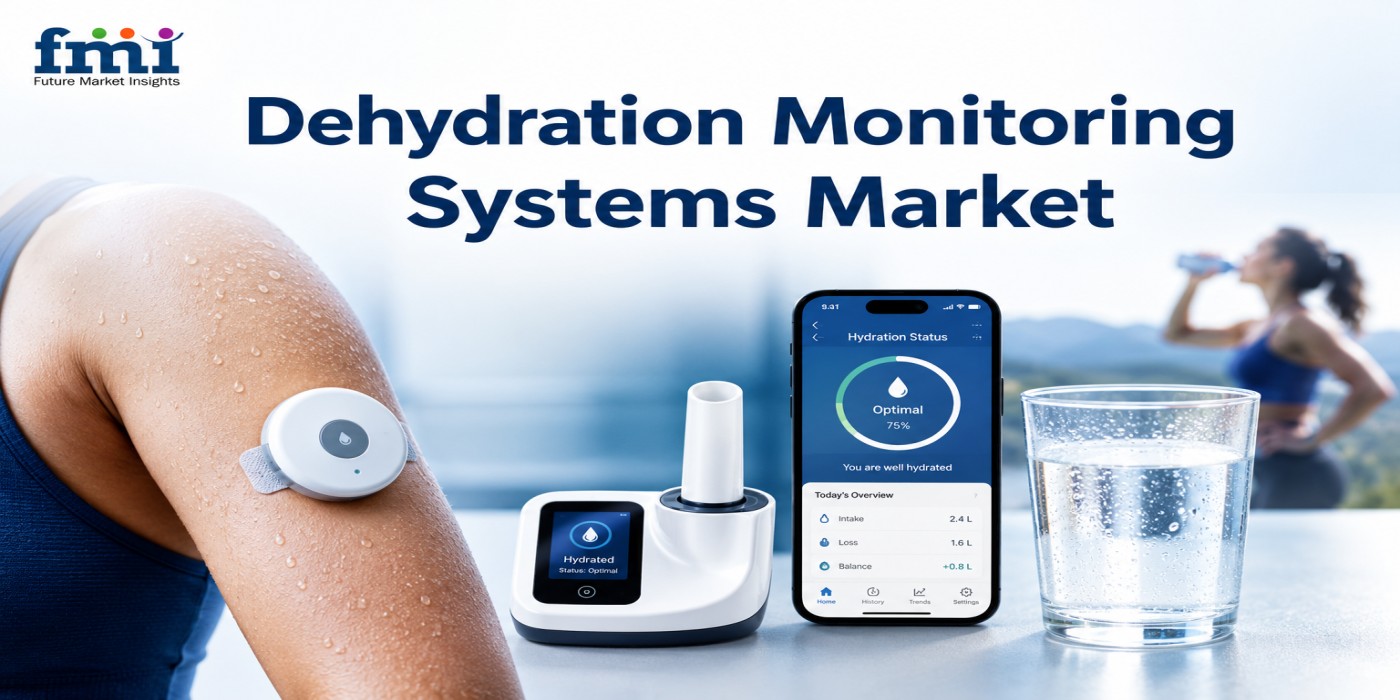
The global dehydration monitoring systems market is experiencing steady growth as healthcare providers increasingly emphasize preventive care, remote patient monitoring (RPM), and continuous physiological assessment across hospitals, homecare settings, elderly care facilities, and sports medicine. Once considered supplementary diagnostic tools, dehydration monitoring systems are now becoming an integral component of patient management by enabling early detection of fluid imbalance, reducing hospital readmissions, and supporting personalized treatment decisions.
As healthcare systems transition toward value-based care, providers are increasingly seeking technologies that improve clinical outcomes while reducing overall treatment costs. Continuous hydration assessment is gaining importance across intensive care units (ICUs), chronic disease management programs, post-operative recovery, dialysis centers, and home healthcare, where timely intervention can significantly improve patient safety.
Market Outlook
The dehydration monitoring systems market is projected to witness consistent growth throughout the forecast period, driven by expanding adoption of preventive healthcare technologies, increasing investments in remote patient monitoring, and rising awareness of dehydration-related complications among aging populations and patients with chronic illnesses.
The market is expected to grow from USD 639.7 million in 2026 to USD 1,156.4 million by 2036, registering a CAGR of 6.1% during the forecast period. Unlike earlier growth phases that focused primarily on hospital-based monitoring, future demand is increasingly supported by home healthcare, digital health ecosystems, wearable technologies, and integrated remote patient monitoring platforms.
Preventive Care Drives Adoption Across Healthcare Settings
One of the primary factors accelerating market expansion is the growing emphasis on preventive healthcare and early intervention.
Healthcare providers are increasingly recognizing that dehydration contributes to numerous medical complications, including kidney injury, cardiovascular events, electrolyte imbalance, and prolonged hospital stays.
Hospitals, outpatient clinics, elderly care facilities, and rehabilitation centers are incorporating dehydration monitoring into broader patient management strategies aimed at reducing preventable complications and improving long-term patient outcomes.
Remote Patient Monitoring Expands Clinical Applications
The rapid expansion of remote patient monitoring programs continues to create significant opportunities for dehydration monitoring technologies.
Healthcare providers increasingly integrate hydration monitoring into comprehensive RPM platforms designed for chronic disease management, heart failure monitoring, renal care, post-operative recovery, and elderly patient supervision.
This integrated approach enables clinicians to remotely monitor vulnerable patients while reducing unnecessary hospital visits and improving continuity of care.
Reimbursement Pressure Influences Procurement Decisions
Although clinical demand continues to rise, reimbursement dynamics remain one of the most significant structural challenges affecting market adoption.
Unlike imaging equipment or major diagnostic systems, dehydration monitoring devices typically do not qualify for dedicated reimbursement as standalone technologies. Instead, their adoption depends on broader reimbursement pathways covering remote patient monitoring, chronic disease management, emergency care, and post-operative recovery.
As reimbursement rates remain under pressure across many healthcare systems, hospitals often prioritize essential diagnostic equipment and critical care infrastructure over supplemental monitoring technologies.
Consequently, procurement decisions increasingly favor solutions that integrate seamlessly into reimbursable clinical workflows.
Hospitals Shift Toward Integrated Monitoring Platforms
Healthcare providers are increasingly moving away from standalone hydration monitoring devices in favor of comprehensive patient monitoring ecosystems.
Integrated monitoring platforms allow hospitals to assess multiple physiological parameters simultaneously, improving operational efficiency while strengthening reimbursement eligibility under remote patient monitoring and chronic care programs.
This trend enables providers to maximize the clinical value of monitoring investments while simplifying patient management across emergency departments, intensive care units, and long-term care facilities.
Wearable Technologies Support Home Healthcare Growth
Wearable dehydration monitoring technologies continue to gain traction as healthcare increasingly shifts toward decentralized care delivery.
Home healthcare providers, elderly care organizations, and chronic disease management programs are adopting wearable hydration monitoring devices that enable continuous observation outside traditional clinical environments.
Outcome-Based Value Models Reshape Market Strategy
Manufacturers are increasingly aligning product development and commercialization strategies with value-based healthcare objectives.
Rather than emphasizing device specifications alone, vendors are demonstrating measurable clinical benefits such as reduced hospital readmissions, improved ICU fluid management, lower incidence of dehydration-related complications, shorter post-operative recovery times, and enhanced chronic disease management.
Healthcare Digitization Accelerates Innovation
Technological innovation continues to strengthen the competitive landscape of the dehydration monitoring systems market.
Manufacturers are investing in wearable biosensors, wireless connectivity, artificial intelligence, cloud-based analytics, and real-time patient monitoring platforms capable of delivering continuous hydration assessment with improved accuracy and clinical usability.
Integration with electronic health records (EHRs), mobile health applications, and digital healthcare platforms is further expanding the role of dehydration monitoring within connected healthcare ecosystems, enabling clinicians to make faster, data-driven treatment decisions.
Challenges Facing the Market
Despite favorable long-term growth prospects, several factors continue to influence market expansion.
Healthcare reimbursement constraints remain a significant barrier, particularly for standalone hydration monitoring devices that lack dedicated payment pathways. Budget limitations within hospitals often delay technology upgrades as providers prioritize essential clinical infrastructure over supplementary monitoring equipment.
Emerging healthcare systems face additional challenges, including constrained public healthcare budgets, extended procurement cycles, and slower adoption of advanced monitoring technologies.
Market Highlights
Preventive healthcare continues to serve as one of the strongest growth drivers, encouraging earlier detection and management of dehydration-related complications across diverse patient populations.
Remote patient monitoring programs are significantly expanding adoption opportunities by incorporating hydration assessment into broader chronic disease management and home healthcare platforms.
Regional Trends
North America continues to hold a leading position in the dehydration monitoring systems market, supported by widespread adoption of remote patient monitoring, advanced healthcare infrastructure, expanding value-based care initiatives, and increasing investments in digital health technologies.
Europe remains a significant market as aging populations, preventive healthcare policies, and growing healthcare digitization encourage broader implementation of continuous physiological monitoring solutions across hospitals and community healthcare systems.
Asia-Pacific is expected to witness the fastest growth during the forecast period, driven by expanding healthcare infrastructure, increasing chronic disease prevalence, rising investments in digital healthcare, growing elderly populations, and wider adoption of connected medical technologies across emerging economies.
Competitive Landscape and Future Outlook
The dehydration monitoring systems market remains highly competitive, with manufacturers focusing on wearable innovation, artificial intelligence, digital integration, and outcome-based healthcare solutions.
Leading companies continue investing in advanced biosensors, cloud-enabled monitoring platforms, remote patient management software, and integrated physiological monitoring systems that deliver continuous hydration assessment alongside multiple vital signs.
Conclusion: Preventive Healthcare and Digital Monitoring Shape the Future of the Dehydration Monitoring Systems Market
The dehydration monitoring systems market is entering a new phase of sustained expansion as healthcare providers increasingly prioritize preventive care, continuous patient monitoring, and value-based clinical outcomes.
While reimbursement pressure continues to influence procurement decisions, the growing integration of hydration monitoring into remote patient monitoring programs, chronic disease management, and connected healthcare platforms is creating long-term growth opportunities. As wearable technologies, digital health infrastructure, and outcome-based care models continue to evolve, dehydration monitoring systems are expected to play an increasingly important role in improving patient safety, reducing healthcare costs, and advancing personalized medical care worldwide.
Explore More Related Studies Published by FMI Research:
https://www.futuremarketinsights.com/reports/global-energy-harvesting-market
https://www.futuremarketinsights.com/reports/global-surface-mining-market
https://www.futuremarketinsights.com/reports/global-fuel-cell-market
About Future Market Insights (FMI)
Future Market Insights, Inc. (FMI) is an ESOMAR-certified, ISO 9001:2015 market research and consulting organization trusted by Fortune 500 companies and global enterprises. With operations across the United States, United Kingdom, India, and Dubai, FMI delivers data-driven market intelligence, strategic consulting, and actionable insights across more than 30 industries and 1,200 markets worldwide.