

Taste Turns Clean Label from a Claim into Pricing Power
According to the latest insights by Future Market Insights, the global Frozen Ready Meals market is witnessing a shift in consumer expectations as clean-label positioning becomes a stronger driver of premium value. However, health-focused claims alone are no longer enough to justify higher prices. Consumers increasingly expect frozen meals to deliver a complete experience combining nutrition, taste, texture, convenience, and satisfaction.
In 2026, clean-label competition in frozen ready meals is being shaped by changing consumer priorities around:
- Health-conscious eating
• Ingredient transparency
• Protein content
• Reduced sodium
• Natural formulations
• Convenience without compromise
Industry analysts highlight that clean-label claims create stronger pricing power only when supported by product performance. Consumers may appreciate claims such as organic, plant-based, gluten-free, high protein, or no artificial preservatives, but repeat purchases depend on whether the meal delivers restaurant-like taste, reliable heating performance, and satisfying portions.
Clean Label Creates Premium Opportunity, But Product Experience Comes First
The frozen ready meals category has historically faced perception challenges.
Many consumers associate frozen meals with:
- High sodium levels
• Heavy sauces
• Processed ingredients
• Poor texture
• Lower nutritional value
Although innovation has improved the category, perception remains a barrier.
Clean-label positioning helps brands reduce consumer hesitation through:
- Ingredient transparency
• Better-for-you formulations
• Simpler recipes
• Functional nutrition benefits
• Lifestyle alignment
However, clean label cannot replace the core expectations of a meal.
Consumers still evaluate frozen ready meals based on:
- Taste quality
• Texture after reheating
• Portion satisfaction
• Appearance
• Convenience
A healthier frozen meal that does not deliver on eating experience struggles to maintain premium pricing.
Premium Formats Strengthen Clean Label Value
Not all frozen ready meals benefit equally from clean-label positioning.
Premium opportunities are strongest in formats where consumers already expect higher quality.
Key growth areas include:
- Single-serve bowls
• High-protein meals
• Plant-based entrées
• Global cuisine recipes
• Organic frozen meals
• Specialty diet formats
These products create stronger value perception because consumers associate them with:
- Better ingredients
• Lifestyle benefits
• Functional nutrition
• Premium meal experiences
Examples include:
- Protein-rich chicken bowls
• Mediterranean grain bowls
• Plant-based pasta meals
• Gluten-free entrées
• International cuisine meals
When ingredient quality and taste align, consumers are more willing to accept higher prices.
Basic Frozen Meal Segments Face Stronger Price Pressure
Clean-label pricing power weakens in highly comparable categories.
The most price-sensitive segments include:
- Family trays
• Economy packs
• Basic pasta dishes
• Standard rice meals
• Value entrées
In these categories, consumers focus more on:
- Portion size
• Household value
• Familiar flavors
• Discounts
• Price comparisons
A cleaner ingredient list may improve perception, but it often does not justify a major price premium.
The biggest challenge appears in products where the health message is stronger than the actual meal experience.
Frozen Formulation Complexity Limits Clean Label Execution
Clean-label innovation is more technically challenging in frozen meals compared with many other food categories.
Frozen ready meals require multiple components to perform after freezing and reheating.
Manufacturers must manage:
- Sauce stability
• Protein texture
• Vegetable quality
• Grain consistency
• Ingredient functionality
• Packaging performance
Common challenges include:
- Rice becoming too soft
• Pasta losing texture
• Proteins becoming dry
• Sauces separating
• Plant-based components losing quality
This makes product development a balance between nutrition goals and consumer satisfaction.
Sodium Reduction Requires Flavor Innovation
Reduced sodium has become an important clean-label opportunity, but execution remains critical.
Frozen meals have traditionally relied on sodium for:
- Flavor enhancement
• Taste balance
• Consumer acceptance
Simply lowering sodium can create products that feel less satisfying.
Successful brands are replacing lost flavor through:
- Herbs
• Spices
• Acidity
• Roasted flavors
• Umami ingredients
• Cuisine-specific seasoning
The winning strategy is not just reducing sodium but rebuilding the entire flavor experience.
High Protein Creates Premium Appeal Through Functionality
Protein-focused frozen meals are gaining attention as consumers seek:
- Better satiety
• Convenient nutrition
• Fitness-oriented options
• Meal replacement solutions
However, protein claims alone do not create premium value.
Consumers still expect:
- Good texture
• Balanced portions
• Visible ingredients
• Natural positioning
• Enjoyable taste
A high-protein meal that feels dry or overly processed may fail to generate repeat demand.
Plant-Based Frozen Meals Follow the Same Premium Rule
Plant-based frozen ready meals continue to expand as consumers explore healthier and sustainable options.
However, the strongest products succeed because they combine plant-based positioning with familiar meal experiences.
Successful formats include:
- Plant-based pasta
• Curry meals
• Burrito bowls
• Grain bowls
• Stir-fry dishes
• Comfort-food alternatives
Products that only communicate “plant-based” without delivering flavor, texture, and satisfaction face difficulty defending premium pricing.
Packaging Becomes a Key Clean Label Communication Tool
Packaging plays an important role in premium positioning.
Frozen meal packaging must communicate:
- Ingredient quality
• Nutrition benefits
• Preparation convenience
• Portion expectations
• Product differentiation
Consumers often make quick decisions based on visible claims.
Effective communication requires:
- Clear health messages
• Simple ingredient stories
• Strong visual appeal
• Credible positioning
Too many claims can reduce trust instead of increasing value perception.
Three Competitive Layers Shape Frozen Ready Meal Economics
The market operates through three major competitive layers.
Product Experience Layer
Driven by:
- Taste
• Texture
• Meal satisfaction
• Heating performance
• Recipe quality
Products with stronger eating experiences maintain greater pricing power.
Nutrition Value Layer
Influenced by:
- Protein content
• Sodium reduction
• Clean ingredients
• Functional benefits
• Dietary positioning
Health claims create value when consumers believe the benefits are meaningful.
Brand Trust Layer
Determined by:
- Consumer confidence
• Ingredient transparency
• Innovation strength
• Brand reputation
Strong brands can maintain premium pricing when consumers trust their product promise.
Why Mid-Market Frozen Meal Brands Face Pressure
Mid-sized brands often face challenges from both premium and value competitors.
They compete against:
Premium brands offering:
- Superior recipes
• Better experiences
• Strong differentiation
Retail brands offering:
- Lower prices
• Similar claims
• Competitive formats
The biggest risk occurs when products appear interchangeable.
If the only message is:
- Healthy
• Natural
• Clean label
retailers and competitors can quickly reproduce the positioning.
Future Outlook
The future of the Frozen Ready Meals market will depend on how effectively brands combine health benefits with strong meal experiences.
Manufacturers are expected to focus on:
- Better flavor systems
• Advanced freezing technologies
• High-protein innovation
• Plant-based improvements
• Premium packaging
• Ingredient transparency
• Global cuisine inspiration
Clean label will continue creating opportunities, but success will depend on whether brands move beyond claims and deliver meaningful consumer value.
The strongest brands will be those that make consumers believe:
Healthy meals can still be satisfying meals.
FMI Custom Research: Strategic Intelligence for Confident Decision-Making
In today’s rapidly evolving business environment, leadership teams need more than market data—they need clear, actionable intelligence tailored to their strategic objectives.
FMI’s Custom Research solutions are designed around the specific business questions organizations need answered, enabling executives to evaluate growth opportunities, validate investments, assess competitive dynamics, and reduce uncertainty before making critical decisions.
By combining deep industry expertise, primary research, and proprietary market intelligence, FMI delivers insights that help organizations move from assumptions to evidence-based strategies with greater speed and confidence.
Key Executive Benefits
- Decision-Ready Insights
• Reduced Strategic Risk
• Market Entry Confidence
• Competitive Advantage
• Faster Growth Decisions
• Primary Market Validation
• Global Industry Expertise
• Proven Track Record
Business Impact
FMI helps organizations transform market complexity into strategic clarity, enabling leadership teams to identify opportunities faster, strengthen competitive positioning, optimize investments, and make confident business decisions.
To explore how FMI Custom Research can support your strategic priorities, connect with our team at: sales@futuremarketinsights.com
Explore More Related Studies Published by FMI Research:
The Ready-To-Eat Food Market is Segmented by Product Type, Sales Channel, Packaging Type, Distribution Channel, Diet Type, and Region. Forecast for 2026 to 2036.
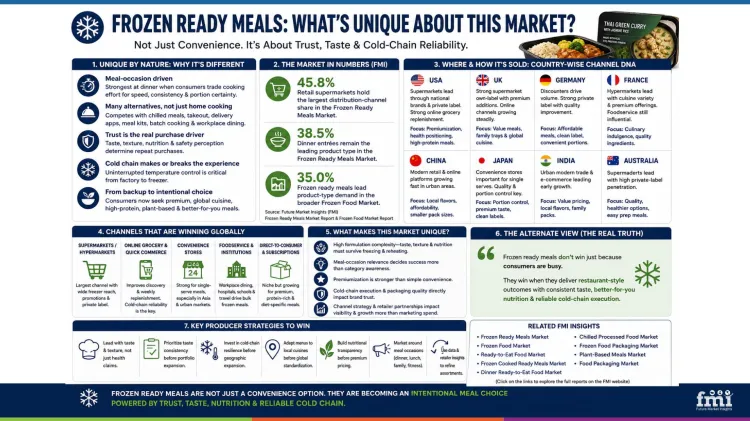
The frozen food market is projected to grow from USD 489.1 billion in 2026 to USD 827.6 billion by 2036, at a CAGR of 5.4%. Individual Quick Freezing will dominate with a 42.0% market share, while frozen ready meals will lead the product type segment with a 35.0% share.
The Plant-Based Meals Market is segmented by Product Type, Source, Distribution Channel, End User, and Region. Forecast for 2026 to 2036.
The Frozen Cooked Ready Meals Market is segmented by Product Format, Meal Type, Consumer Group, Sales Channel, and Region. Forecast for 2026 to 2036.
About Future Market Insights (FMI)
Future Market Insights, Inc. (FMI) is an ESOMAR-certified, ISO 9001:2015 market research and consulting organization, trusted by Fortune 500 clients and global enterprises.
With operations in the U.S., UK, India, and Dubai, FMI provides data-backed insights and strategic intelligence across 30+ industries and 1200 markets worldwide.
Contact Us:
Future Market Insights Inc.
Christiana Corporate, 200 Continental Drive,
Suite 401, Newark, Delaware – 19713, USA
T: +1-347-918-3531
Why FMI: https://www.futuremarketinsights.com/why-fmi
Website: https://www.futuremarketinsights.com
LinkedIn| Twitter| Blogs | YouTube