

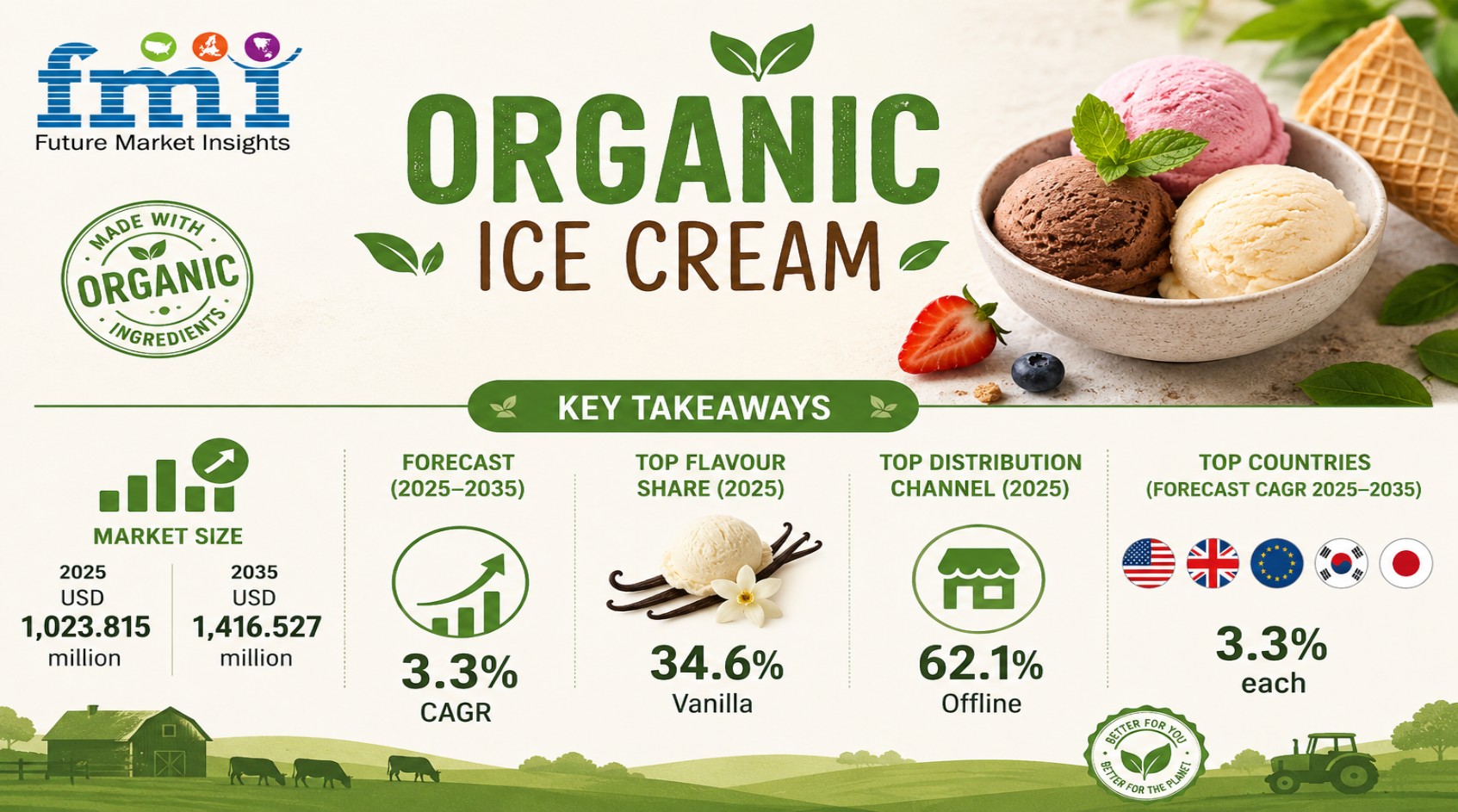
The global organic ice cream market is experiencing steady growth as consumers increasingly seek clean-label indulgence, premium dairy products, and sustainably sourced frozen desserts. While demand continues to rise across developed and emerging markets, manufacturers face growing challenges associated with organic dairy feedstock volatility, certification compliance costs, premium ingredient sourcing, and cold-chain logistics management.
The market’s evolution reflects a broader transformation within the food and beverage industry, where consumers are willing to pay a premium for products that align with organic, ethical, and environmental values. However, maintaining profitability remains challenging as fluctuating organic dairy prices, ingredient cost inflation, and regulatory compliance requirements continue to pressure margins throughout the value chain.
Organic ice cream producers are increasingly investing in procurement optimization, sustainable sourcing programs, and operational efficiency improvements to balance premium positioning with consumer affordability.
Featured Snippet: Key Market Answer
Q: What are the primary factors driving pricing and margin pressure in the organic ice cream market?
A: Pricing and margin pressure in the organic ice cream market are primarily driven by volatile organic dairy feedstock costs, premium organic ingredient sourcing, certification compliance expenses, cold-chain logistics requirements, and energy-intensive manufacturing processes. These factors collectively increase production costs while limiting manufacturers’ ability to pass on the full cost burden to consumers.
Quick Stats of Organic Ice Cream Market
- Organic Milk Price Premium: 60%–90% Above Conventional Dairy
- Organic Dairy Seasonal Volatility: 25%–45%
- Certification Cost Addition: 12%–18% of Manufacturing Cost
- Premium Ingredient Cost Differential: 30%–50%
- Cold-Chain Logistics Contribution: 18%–28% of Delivered Cost
- Artisanal Producer Gross Margin: 40%–55%
- FMCG Brand Gross Margin: 22%–35%
- Fastest Emerging Trend: Premium Organic and Functional Frozen Desserts
Market Overview: The Economics of Organic Frozen Indulgence
Organic ice cream represents one of the fastest-growing premium segments within the global frozen dessert industry.
Unlike conventional ice cream, organic products require certified ingredients, dedicated processing environments, traceable supply chains, and strict regulatory compliance. These requirements create significant cost differentials that influence pricing strategies and profitability.
The market encompasses:
- Organic dairy ice cream
- Organic gelato
- Organic frozen yogurt
- Organic premium frozen desserts
- Organic artisanal ice cream
- Organic functional ice cream products
As consumer demand for transparency and sustainability continues to increase, manufacturers are balancing premium product positioning with rising operational costs.
The industry’s success increasingly depends on the ability to manage feedstock volatility while maintaining product quality and brand value.
Key Growth Drivers
Growing Consumer Preference for Clean-Label Products
Consumers are actively seeking products free from synthetic pesticides, artificial additives, hormones, and genetically modified ingredients.
Organic ice cream aligns with broader health-conscious purchasing behaviors while maintaining indulgence and taste appeal.
Premiumization of Frozen Desserts
The premium dessert category continues to expand as consumers seek higher-quality ingredients, artisanal production methods, and ethically sourced products.
Organic certifications contribute significantly to premium brand positioning.
Sustainability and Ethical Sourcing Trends
Consumers increasingly associate organic products with environmental stewardship, animal welfare, and sustainable agriculture practices.
Brands emphasizing responsible sourcing continue to gain market share across premium retail channels.
Expansion of Specialty Retail and E-Commerce
Natural food retailers, specialty grocery chains, and online grocery platforms are improving access to organic frozen desserts, supporting category growth globally.
Key Cost Drivers Impacting Market Economics
Organic Dairy Feedstock Volatility
Organic milk and cream remain the largest cost components within organic ice cream production.
Prices fluctuate due to:
- Pasture availability
- Organic feed costs
- Seasonal production cycles
- Limited herd expansion flexibility
- Weather-related disruptions
Organic milk often commands premiums of 60%–90% compared to conventional dairy products.
Premium Organic Ingredient Sourcing
Manufacturers face significant cost increases when sourcing:
- Organic vanilla
- Organic cocoa
- Organic cane sugar
- Organic berries
- Organic almonds and pistachios
- Organic sweeteners and stabilizers
Organic vanilla represents one of the most volatile ingredients, often costing 200%–400% more than conventional flavor alternatives.
Certification and Compliance Costs
Organic certification programs require:
- Annual audits
- Documentation management
- Supplier verification
- Traceability systems
- Compliance monitoring
These activities increase manufacturing costs by approximately 12%–18%.
Cold-Chain Logistics Complexity
Frozen product distribution requires uninterrupted refrigeration from production to retail display.
Cold-chain requirements include:
- Refrigerated transportation
- Freezer warehousing
- Temperature monitoring
- Retail freezer storage
These activities account for approximately 18%–28% of total delivered costs.
Market Trends Shaping the Industry
Functional Organic Ice Cream
Manufacturers are increasingly incorporating:
- Probiotics
- Adaptogens
- Protein enrichment
- Plant-based nutrients
- Reduced-sugar formulations
These innovations support premium pricing and attract health-conscious consumers.
Sustainable Packaging Adoption
Organic brands are investing in recyclable, biodegradable, and compostable packaging solutions to align with consumer sustainability expectations.
Localized Ingredient Sourcing
Companies are reducing supply chain risks by sourcing ingredients closer to production facilities whenever possible.
Localized sourcing also strengthens brand authenticity narratives.
Direct-to-Consumer Expansion
Premium organic brands are increasingly utilizing subscription models, home delivery services, and digital commerce channels to improve profitability.
Premium Flavor Innovation
Exotic flavors and limited-edition offerings continue to differentiate organic ice cream brands from conventional competitors.
Segment Insights
Leading Ingredient Segment: Organic Dairy
Organic dairy remains the largest cost contributor and the foundation of product differentiation.
Advantages include:
- Premium taste profile
- Consumer trust
- Regulatory compliance
- Clean-label positioning
- Strong nutritional perception
Leading Product Segment: Premium Organic Ice Cream
Premium organic ice cream dominates the category due to:
- Strong consumer demand
- Higher average selling prices
- Retailer preference for premium offerings
- Brand differentiation opportunities
Regional Insights
North America
North America remains one of the largest organic ice cream markets due to:
- High organic food consumption
- Established certification frameworks
- Strong premium retail infrastructure
- Growing consumer awareness
The United States continues to lead regional demand.
Europe
Europe demonstrates strong market growth supported by:
- Mature organic food sectors
- Consumer sustainability preferences
- Robust regulatory standards
- Expanding premium dessert consumption
Germany, France, and the United Kingdom remain major markets.
Asia-Pacific
Asia-Pacific is expected to register the fastest growth due to:
- Rising disposable income
- Urbanization
- Increasing premium food consumption
- Growing awareness of organic products
China, Japan, South Korea, and Australia represent key opportunities.
Emerging Markets
Latin America and the Middle East are witnessing increased demand as premium food consumption expands among affluent consumer groups.
Competitive Landscape
The organic ice cream market remains highly competitive, with multinational corporations and artisanal producers competing for premium consumer spending.
Key Players
- Ben & Jerry’s
- Unilever PLC
- Danone S.A.
- Organic Valley
- Straus Family Creamery
- Horizon Organic
- Alden’s Organic
- Three Twins Ice Cream
- Whole Foods Market Private Label
- Häagen-Dazs Organic Product Lines
Competitive Differentiation Factors
- Organic ingredient sourcing
- Flavor innovation
- Sustainability credentials
- Ethical supply chains
- Certification transparency
- Retail distribution strength
- Direct-to-consumer capabilities
Recent Developments
- Increased investment in regenerative organic dairy sourcing
- Expansion of organic functional frozen dessert portfolios
- Growing adoption of renewable energy in manufacturing facilities
- Strategic partnerships with certified organic ingredient suppliers
- Enhanced supply chain traceability and sustainability reporting initiatives
- Rising investment in premium and artisanal organic product lines
Expert Insight
The organic ice cream market is entering what can be described as the “Premium Sustainability Era,” where profitability increasingly depends on managing supply chain complexity rather than simply achieving organic certification.
While consumers continue to demonstrate willingness to pay premium prices, manufacturers must navigate volatile dairy costs, premium ingredient sourcing challenges, and rising logistics expenses.
Organizations that successfully integrate procurement optimization, sustainable sourcing strategies, and operational efficiency initiatives will be better positioned to protect margins while maintaining premium brand value.
FAQs
Why are organic ice cream prices higher than conventional products?
Organic ice cream requires certified ingredients, dedicated production processes, compliance audits, and specialized supply chains, resulting in significantly higher production costs.
How much do certification requirements increase costs?
Certification, auditing, traceability, and compliance management typically increase manufacturing costs by approximately 12%–18%.
Which ingredients create the greatest cost volatility?
Organic vanilla, cocoa, berries, dairy products, and specialty nuts contribute the highest levels of ingredient cost volatility.
How important is cold-chain logistics?
Cold-chain logistics are essential for maintaining product quality and can account for 18%–28% of delivered product costs.
Why do organic dairy prices fluctuate more than conventional dairy prices?
Organic dairy markets are smaller, supply is less flexible, and production depends heavily on pasture conditions and certified feed availability.
What regions offer the strongest growth opportunities?
Asia-Pacific offers the highest long-term growth potential, while North America and Europe continue to lead premium organic product adoption.
Conclusion
The global organic ice cream market continues to benefit from strong consumer demand for clean-label, sustainably produced, and premium frozen desserts. However, the industry’s profitability remains closely tied to the management of volatile organic dairy costs, premium ingredient sourcing challenges, certification requirements, and energy-intensive cold-chain operations.
As competition intensifies, manufacturers that effectively balance quality, sustainability, and operational efficiency will be best positioned to capture market share and maintain healthy margins.
The future of organic ice cream will increasingly depend on supply chain resilience, procurement sophistication, and the ability to deliver premium value propositions that justify higher consumer price points.
Related Research Reports
Organic Tea Market is gaining momentum as consumers increasingly prefer clean-label, pesticide-free beverages and wellness-focused tea blends that support healthy lifestyles.
Functional Frozen Desserts Market is gaining momentum as manufacturers introduce probiotic, protein-enriched, and wellness-oriented frozen products.
Organic Oats Market is gaining momentum as consumers increasingly embrace plant-based, high-fiber, and clean-label food products for healthier everyday nutrition.
FMI Custom Research: Strategic Intelligence for Confident Decision-Making
In today’s rapidly evolving business environment, leadership teams need more than market data they need clear, actionable intelligence tailored to their strategic objectives. FMI’s Custom Research solutions are designed around the specific business questions organizations need answered, enabling executives to evaluate growth opportunities, validate investments, assess competitive dynamics, and reduce uncertainty before making critical decisions. By combining deep industry expertise, primary research, and proprietary market intelligence, FMI delivers insights that help organizations move from assumptions to evidence-based strategies with greater speed and confidence.
Key Executive Benefits
- Decision-Ready Insights: Research tailored to your specific business challenges, growth plans, and investment priorities.
- Reduced Strategic Risk: Validate market opportunities, customer demand, and competitive positioning before committing resources.
- Market Entry Confidence: Assess opportunity size, regulatory barriers, channel dynamics, and competitive landscapes with precision.
- Competitive Advantage: Gain proprietary intelligence unavailable through syndicated reports or internal datasets.
- Faster Growth Decisions: Accelerate expansion, product development, portfolio optimization, and investment planning.
- Primary Market Validation: Access real-world customer, buyer, and stakeholder insights that support high-confidence decision-making.
- Global Industry Expertise: Powered by 100+ analysts, 20,000+ published reports, and 1.6 million+ hours of research experience.
- Proven Track Record: Over 7,000 market-entry engagements completed across six regions and 14 industry sectors with strong client retention.
Business Impact
FMI helps organizations transform market complexity into strategic clarity, enabling leadership teams to identify growth opportunities faster, optimize resource allocation, strengthen competitive positioning, and make high-stakes business decisions with confidence.
To explore how FMI Custom Research can support your strategic priorities, please connect with our team at – sales@futuremarketinsights.com
About Future Market Insights (FMI)
Future Market Insights is a leading provider of market intelligence, consulting services, and syndicated research reports. FMI delivers actionable insights across food and beverage, healthcare, consumer goods, biotechnology, chemicals, industrial products, and emerging technologies, helping organizations identify growth opportunities and make informed strategic decisions in evolving global markets.
Contact Us:
Future Market Insights Inc.
Christiana Corporate, 200 Continental Drive,
Suite 401, Newark, Delaware – 19713, USA
T: +1-347-918-3531
Why FMI: https://www.futuremarketinsights.com/why-fmi
For Sales Enquiries: sales@futuremarketinsights.com
Website: https://www.futuremarketinsights.com