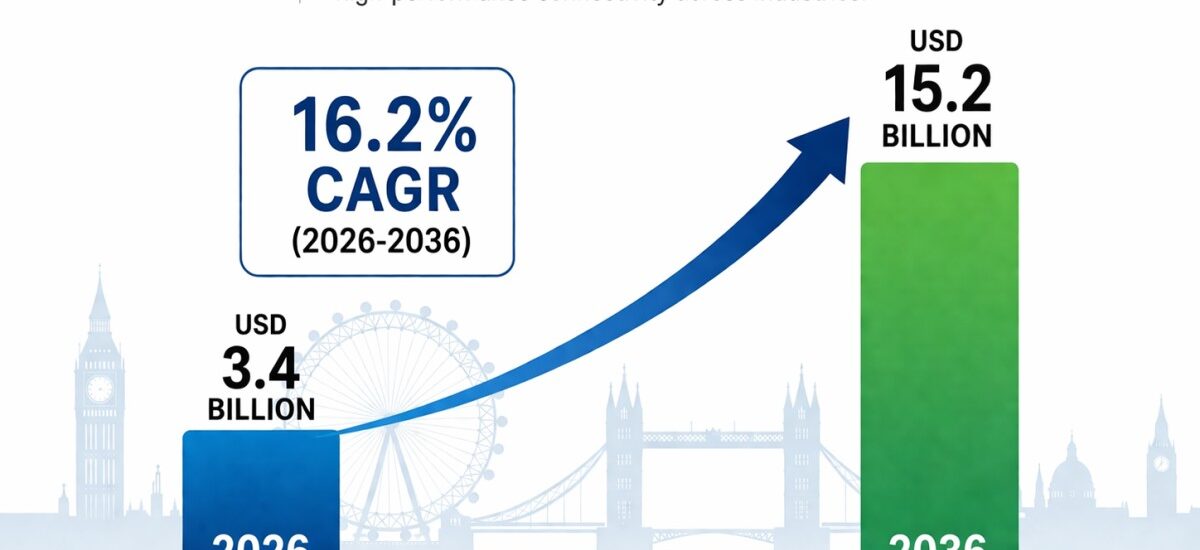
The UK USB Type C market is entering an accelerated growth phase as the country advances toward standardized, high-performance connectivity across industries. According to the latest analysis, demand is valued at USD 3.4 billion in 2026 and is projected to reach USD 15.2 billion by 2036, expanding at a robust CAGR of 16.2%.
This surge reflects a nationwide transition toward universal charging standards, high-speed data transfer, and integrated digital ecosystems, spanning consumer electronics, automotive, telecom, and industrial applications. Regulatory momentum, combined with rapid innovation in device design and connectivity infrastructure, is positioning USB Type C as a foundational technology in the UK’s digital economy.
Get detailed market forecasts, competitive benchmarking, and pricing trends
https://www.futuremarketinsights.com/reports/sample/rep-gb-31494
Featured Snippet: Key Market Answer
Q: Why is the USB Type C market growing rapidly in the UK?
A: Growth is driven by regulatory mandates for a common charging standard, rising demand for fast-charging and high-speed data transfer, and widespread adoption across consumer electronics, automotive systems, and digital infrastructure.
Quick Stats
• Market Size (2026): USD 3.4 billion
• Forecast (2036): USD 15.2 billion
• CAGR (2026-2036): 16.2%
• Leading Region: England (17.83% CAGR)
• Leading Product Type: USB Type-C Receptacle (52.0%)
• Leading Standard: USB 3.2 (38.0%)
• Leading Industry: Consumer Electronics (38.8%)
Market Overview: Transition to a Universal Connectivity Standard
The USB Type C market in the UK represents a structural shift from fragmented connectivity interfaces to a single, multifunctional standard capable of delivering power, data, and video simultaneously.
This transition is being driven by three fundamental forces:
• Regulatory alignment with common charger mandates
• Device miniaturization and performance enhancement
• Expansion of connected ecosystems, including EVs and IoT
As a result, USB Type C is no longer just a connector-it has become a core infrastructure layer for modern digital systems.
Key Growth Drivers
1. Regulatory Push for Standardization
Government-backed initiatives promoting a universal charging interface are accelerating adoption across device categories, reducing electronic waste and improving consumer convenience.
2. Surge in Consumer Electronics Innovation
Manufacturers are rapidly integrating USB Type C into smartphones, laptops, tablets, and wearables, leveraging its compact design and superior performance capabilities.
3. Convergence of Power, Data, and Video
USB Type C enables:
• Fast charging (up to 100W+)
• High-speed data transfer
• Audio/video output
This convergence simplifies hardware architecture and enhances user experience.
4. Expansion of Automotive and IoT Applications
The rise of digital cockpits, EV ecosystems, and smart devices is creating new demand for reliable, high-speed connectivity interfaces.
Market Trends Shaping the Industry
• Adoption in Electric Vehicles: USB Type C is becoming standard for in-car charging and infotainment
• Rise of High-Speed Protocols: USB 3.2 and USB4 gaining traction in premium devices
• Shift Toward Compact Hardware: Slim connectors enabling thinner, lighter devices
• Growth of Smart Ecosystems: Integration across IoT, wearables, and home automation
• Standardization Momentum: Industry-wide compliance improving interoperability
Segment Insights
Product Leadership: USB Type-C Receptacle (52.0%)
The receptacle dominates due to its role as the primary interface embedded in devices, including smartphones, laptops, and automotive systems. Its growth directly correlates with device production volumes.
Standard Leadership: USB 3.2 (38.0%)
USB 3.2 leads due to its optimal balance of:
• High-speed data transfer (up to 20 Gbps)
• Strong power delivery
• Backward compatibility
It serves as the mainstream performance benchmark across industries.
Industry Leadership: Consumer Electronics (38.8%)
Consumer electronics remains the largest demand driver, supported by:
• High production volumes
• Frequent product upgrades
• Rapid innovation cycles
Automotive and telecom sectors are emerging as strong secondary growth engines.
Speak to Analyst
https://www.futuremarketinsights.com/customization-available/rep-gb-31494
Regional Insights
Top Growth Regions (CAGR 2026-2036)
• England: 17.83% – Leading technology hub with strong R&D and manufacturing presence
• Scotland: 15.89% – Driven by semiconductor design and fintech innovation
• Wales: 14.75% – Growth fueled by advanced manufacturing and automotive tech
• Northern Ireland: 12.97% – Supported by aerospace, cybersecurity, and medtech sectors
Emerging Regional Dynamics
• England dominates due to early technology adoption and industry concentration
• Scotland benefits from innovation ecosystems and research institutions
• Wales and Northern Ireland show steady growth via industrial modernization
Market Dynamics
Growth Drivers
• Regulatory mandates for universal charging
• Rising demand for fast, multi-functional connectivity
• Expansion of EVs, IoT, and smart infrastructure
Key Restraints
• Confusion over varying cable and port capabilities
• Higher implementation costs for advanced USB Type C solutions
Opportunities
• Integration into next-generation automotive systems
• Adoption of USB4 and advanced protocols
• Growth in wearables and smart home ecosystems
Threats
• Semiconductor supply chain disruptions
• Emergence of wireless alternatives
• Fragmentation in standards and protocols
Competitive Landscape
The market is highly competitive, led by global semiconductor and connectivity solution providers focusing on performance, integration, and compliance.
Key Players
• STMicroelectronics NV
• Texas Instruments, Inc.
• NXP Semiconductors
• Infineon Technologies AG
• Analog Devices, Inc.
Competitive Differentiation Factors
• Advanced chip integration and power efficiency
• Compliance with evolving USB standards (USB4, Thunderbolt)
• Strong OEM partnerships and design wins
• End-to-end connectivity solutions
Expert Insight
The UK USB Type C market is rapidly evolving from a hardware upgrade cycle into a strategic enabler of digital transformation. As industries converge around unified connectivity standards, companies that invest in high-performance protocols, automotive integration, and scalable semiconductor solutions will lead the next phase of growth.
FAQs
1. What is the future outlook for the UK USB Type C market?
The market is projected to reach USD 15.2 billion by 2036, growing at a CAGR of 16.2%, driven by standardization and digital transformation.
2. Which segment dominates the market?
The USB Type-C receptacle leads with a 52% share, as it is the core hardware component in devices.
3. Why is USB Type C widely adopted?
It offers fast charging, high-speed data transfer, and multi-functionality, making it a universal connectivity standard.
4. What are the key challenges?
• Capability confusion across cables and ports
• Higher costs for advanced implementations
• Supply chain risks
5. Which region leads growth in the UK?
England leads due to its strong technology ecosystem and early adoption trends.
Full Report for Detailed Insights:
https://www.futuremarketinsights.com/reports/united-kingdom-usb-type-c-market
Conclusion
The UK USB Type C market stands at the center of a connectivity revolution, driven by regulatory alignment, technological convergence, and expanding digital ecosystems.
With strong growth across consumer electronics, automotive, and telecom sectors, USB Type C is set to become the default interface standard across industries. As innovation accelerates and adoption deepens, it will play a critical role in shaping the future of high-speed, universal connectivity in the UK and beyond.