The global bottom discharge valve market is entering a period of steady expansion as manufacturers across pharmaceuticals, specialty chemicals, and food processing increasingly invest in high-precision vessel discharge technologies. According to recent industry analysis, the market is projected to grow from USD 480.0 million in 2026 to USD 781.9 million by 2036, advancing at a compound annual growth rate (CAGR) of 5.0% during the forecast period.
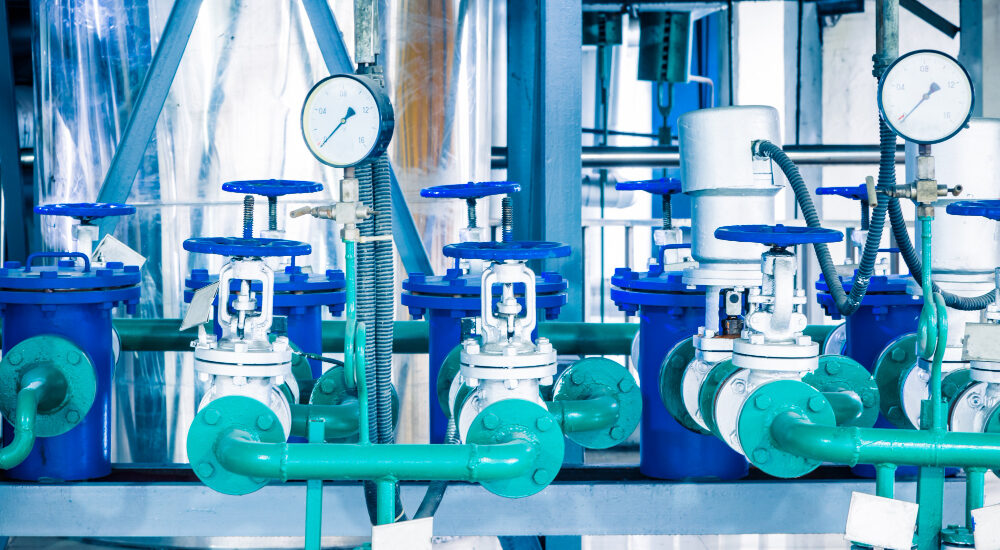
Bottom discharge valves—installed at the base of reactors, crystallizers, and mixing vessels—have become mission-critical components in modern batch processing systems. Their ability to enable residue-free discharge, minimize contamination risk, and improve material recovery is making them indispensable in high-value manufacturing environments.
While often representing a relatively small portion of total plant investment, these valves sit at a strategic operational point between batch completion and downstream processing, meaning their performance can significantly influence production yield, cycle times, and regulatory compliance.
Request a Sample Report — Unlock Key Market Insights!
https://www.futuremarketinsights.com/reports/sample/rep-gb-31427
Process Efficiency and Containment Requirements Fuel Market Growth
Industrial manufacturers are increasingly prioritizing clean and controlled vessel emptying, particularly in sectors where product purity and material recovery directly affect profitability. Bottom discharge valves enable the controlled release of powders, slurries, viscous liquids, and crystalline materials while minimizing hold-up and product loss.
Several factors are driving market expansion:
- Growing adoption of batch-based pharmaceutical and specialty chemical manufacturing
- Increasing focus on process containment and operator safety
- Rising demand for clean-in-place (CIP) and sterilize-in-place (SIP) compatible equipment
- Modernization of aging reactors and process vessels
- Expansion of global contract manufacturing operations
In regulated industries such as pharmaceuticals, valve designs must also support validation documentation, hygienic certifications, and traceable material specifications, further strengthening demand for trusted engineering suppliers.
Emerging Trends Shaping the Bottom Discharge Valve Market
Innovation in valve design and plant automation is redefining how manufacturers manage discharge operations in complex processing environments.
Key trends influencing the market include:
- Automation integration– Increasing adoption of servo-motor and pneumatic actuated valves with real-time position feedback
• Hygienic engineering – Enhanced surface finishes and zero dead-leg configurations to prevent product residue
• Advanced materials – Use of corrosion-resistant alloys and abrasion-resistant coatings to extend lifecycle performance
• Modular valve architecture – Customizable assemblies designed for faster installation and maintenance
• Smart monitoring – Integration with plant control systems for predictive maintenance and process optimization
Among valve types, flush bottom valves currently dominate the market with approximately 56% share, largely due to their ability to sit flush with the vessel base and enable complete discharge of difficult materials.
Regional Insights: Asia Pacific Leads Industrial Expansion
The Asia Pacific region continues to emerge as a primary growth engine for the bottom discharge valve market, driven by rapid expansion of pharmaceutical and chemical manufacturing infrastructure.
Notable regional trends include:
- India: Expected CAGR of 6.0%, fueled by rapid growth in pharmaceutical, agrochemical, and specialty chemical production
- China: Projected CAGR of 5.6%, supported by large-scale batch processing operations and strong domestic valve manufacturing capacity
- Vietnam: Growing at 5.5% CAGR, driven by new project-led industrial investments
- Indonesia: Expanding at 5.2% CAGR due to increasing industrial manufacturing and food processing capacity
- South Korea: Mature but stable growth at 4.7% CAGR, driven primarily by technology upgrades
Meanwhile, Europe and North America remain strong markets due to ongoing modernization of industrial equipment and strict process safety standards.
Competitive Landscape: Engineering Expertise Defines Market Leadership
Competition in the bottom discharge valve market is shaped less by price and more by engineering precision, sealing integrity, and integration capabilities.
Leading companies are differentiating through advanced materials, hygienic design, and integrated automation solutions. Key industry participants include:
De Dietrich Process Systems, GEMÜ, GEA, Spirax Sarco, Crane, IMI, Bürkert, Alfa Laval, Valmet, Flowserve
These companies compete by delivering:
- Custom-engineered valves for corrosive or high-purity environments
- Hygienic solutions for pharmaceutical and food production
- Integration with plant automation and asset management platforms
- Global service and maintenance support networks
Suppliers with strong application engineering expertise and validation-ready product documentation are gaining increasing preference during equipment specification.
Explore the Complete Industry Analysis — Get the Full Report
https://www.futuremarketinsights.com/reports/bottom-discharge-valve-market
Analyst Perspective: Strategic Component with High Operational Impact
Industry analysts note that bottom discharge valves occupy a unique position within process manufacturing systems. Despite representing a modest capital cost, they play an outsized role in protecting product quality, regulatory compliance, and production efficiency.
Because valves are integrated directly into reactors and pressure vessels, switching suppliers after installation can be complex and costly. This creates long-term supplier relationships and high switching barriers, strengthening market stability.
Looking ahead, the market is expected to benefit from automation adoption, increasing regulatory scrutiny, and continued global investment in specialty chemical and pharmaceutical production capacity.
Future Outlook: Expanding Opportunities in High-Value Manufacturing
As industrial manufacturers push toward higher batch throughput, improved material recovery, and stricter contamination control, the demand for advanced discharge systems is expected to grow steadily.
Future opportunities are likely to emerge from:
- Expansion of pharmaceutical contract manufacturing
- Growth in battery materials and advanced chemicals
- Industrial automation and smart plant upgrades
- Retrofitting older reactors with high-performance valves
These trends position bottom discharge valves as critical enablers of modern batch manufacturing efficiency, reinforcing their strategic importance across global process industries.
Why FMI:
https://www.futuremarketinsights.com/why-fmi
About Future Market Insights (FMI)
Future Market Insights, Inc. (FMI) is an ESOMAR-certified, ISO 9001:2015 market research and consulting organization, trusted by Fortune 500 companies and global enterprises. With a strong presence across the U.S., UK, India, and Dubai, FMI delivers data-driven insights and strategic intelligence across 30+ industries and over 1200 markets worldwide.
Contact Us:
Future Market Insights Inc.
Christiana Corporate, 200 Continental Drive,
Suite 401, Newark, Delaware – 19713, USA
T: +1-347-918-3531
For Sales Enquiries: sales@futuremarketinsights.com
Website: https://www.futuremarketinsights.com