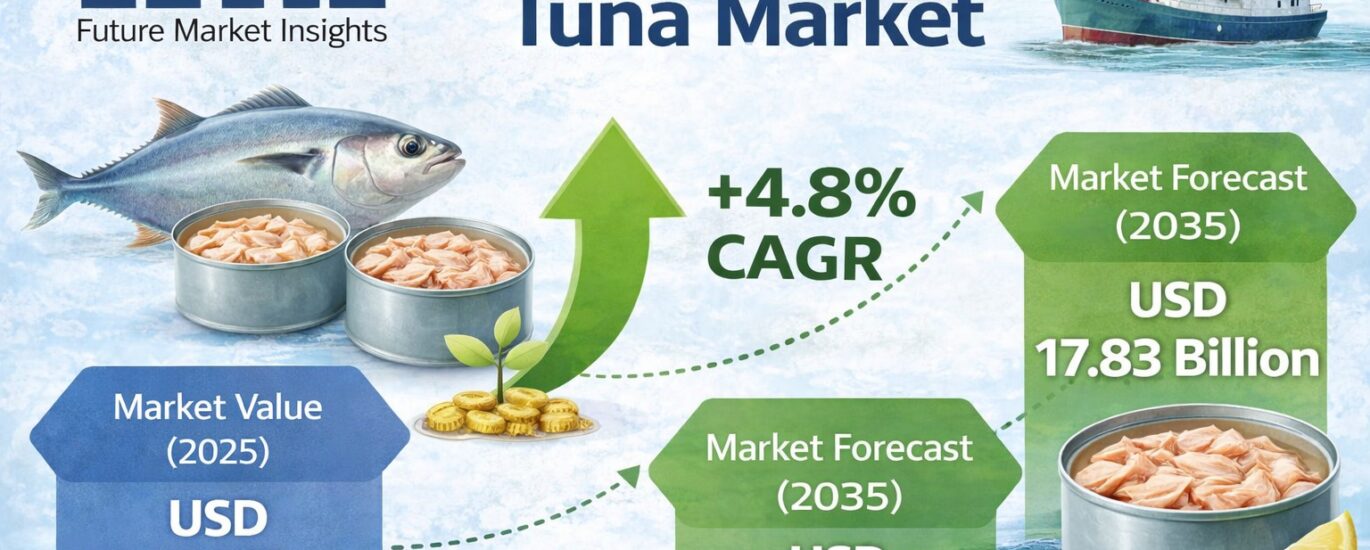
The global canned tuna market is valued at USD 11.15 billion in 2025 and is projected to reach USD 17.83 billion by 2035, expanding at a CAGR of 4.8% during the forecast period. Growth is being driven by increasing demand for convenient, protein-rich, and shelf-stable food products across both developed and emerging economies.
Rising consumer focus on affordability, nutrition, and long shelf life is positioning canned tuna as a staple protein source in households and foodservice sectors. Additionally, product innovation in flavored tuna, ready-to-eat formats, and sustainable packaging is further supporting steady market expansion globally.
Get detailed market forecasts, competitive benchmarking, and pricing trends: https://www.futuremarketinsights.com/reports/sample/rep-gb-14896
Market Overview
The canned tuna market continues to expand as consumers seek convenient and cost-effective protein alternatives. Tuna’s versatility across salads, sandwiches, pasta, and ready meals has strengthened its demand across retail and foodservice channels.
Shelf stability and ease of storage make canned tuna highly attractive, particularly in urban households and regions with limited access to fresh seafood. The market is also benefiting from the growing popularity of high-protein and low-carb diets, where tuna serves as an affordable and nutrient-dense option.
Key Growth Drivers
- Rising demand for affordable protein: Consumers are increasingly shifting toward economical protein sources amid inflation and cost pressures.
- Growth in convenience food consumption: Busy lifestyles are driving demand for ready-to-eat and easy-to-prepare meals.
- Expansion of flavored and premium products: Innovations such as gourmet fillets and flavored tuna pouches are attracting younger consumers.
- Health and wellness trends: High protein, omega-3 content, and low fat make tuna appealing to health-conscious buyers.
Speak to Analyst : Customize insights for your business strategy – https://www.futuremarketinsights.com/customization-available/rep-gb-14896
Supply Chain and Pricing Trends
The canned tuna supply chain involves fishing fleets, processors, canning manufacturers, distributors, and retailers.
- Fishing operations: Tuna is sourced primarily from the Pacific and Indian Oceans.
- Processing and canning: Raw fish is cleaned, cooked, and packed into cans or pouches.
- Distribution networks: Products are supplied to supermarkets, online platforms, and foodservice providers.
Segment Analysis
By product type, canned light tuna dominates the market, accounting for nearly 50% share in 2025 due to its affordability, mild flavor, and widespread availability. It is widely used across household and foodservice applications.
By product form, chunk tuna leads with around 40% market share, driven by its convenience and versatility in cooking. Pre-cut pieces make it ideal for quick meal preparation.
Flavored tuna is emerging as the fastest-growing segment, supported by increasing demand for value-added and ready-to-eat products with diverse taste profiles.
Regional Outlook
- Asia-Pacific remains the largest production hub due to strong fishing infrastructure and cost advantages.
- North America and Europe lead in premium and value-added product consumption, supported by high consumer awareness and established retail networks.
- Emerging markets such as India, Brazil, and China are witnessing gradual growth due to rising urbanization and income levels.
Unlock 360° insights for strategic decision making and investment planning – https://www.futuremarketinsights.com/checkout/14896
Competitive Landscape
The canned tuna market is moderately to highly consolidated, with leading players focusing on sustainability, product innovation, and global expansion strategies.
Key players include: Thai Union Group, Bumble Bee Foods, Starkist Co., Dongwon Industries, Bolton Group, Century Pacific Food Inc., and Wild Planet Foods.
- Strategic focus areas include:
- Sustainable sourcing and certifications (MSC, Dolphin Safe)
- Product innovation in flavored and ready-to-eat formats
- Expansion of e-commerce and direct-to-consumer channels
- Investment in traceability technologies such as blockchain
Analyst Outlook
The canned tuna market is expected to witness steady and resilient growth over the next decade. Increasing consumer demand for convenient, nutritious, and affordable protein sources will continue to drive adoption.
However, challenges such as raw material price volatility, regulatory pressures on fishing practices, and concerns over mercury and microplastics may impact market dynamics. Companies that invest in transparency, sustainability, and product innovation are likely to gain a competitive edge.
Future Opportunities
- Expansion of premium and gourmet tuna products
- Growth in flavored and ready-to-eat meal formats
- Rising demand for sustainable and certified seafood
- Increasing penetration of online retail and subscription models
- Development of low-mercury and clean-label product lines