Market Overview: Automation-Led Growth Transforming Material Handling
According to industry analysis, the global robotic palletizers & de-palletizers market is projected to grow from USD 2.7 billion in 2025 to USD 4.5 billion by 2035, registering a CAGR of 5.0% during the forecast period. The increasing need for automation across manufacturing, warehousing, and logistics operations is driving this steady expansion.
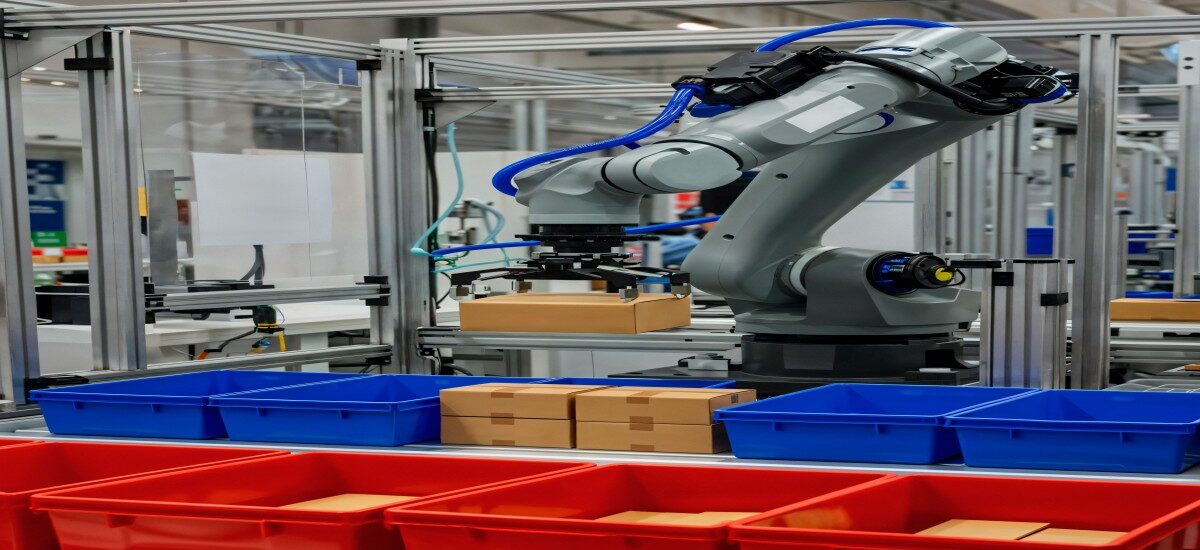
Robotic palletizing systems are becoming essential in modern industrial environments due to their ability to enhance operational efficiency, reduce labor dependency, and ensure consistent handling of goods. These systems are widely deployed in industries such as food & beverage, pharmaceuticals, chemicals, and industrial manufacturing.
With rising labor costs and increasing SKU complexity, companies are rapidly adopting robotic palletizers to optimize stacking, reduce product damage, and improve throughput. Additionally, sustainability considerations such as energy efficiency and reduced waste are further accelerating adoption.
Key Market Metrics
Market Size (2025): USD 2.7 Billion
Forecast Value (2035): USD 4.5 Billion
CAGR (2025–2035): 5.0%
Dominant Robot Type: Articulated Robots (39.2% share)
Leading End Use Segment: Food & Beverage (33.8% share)
Leading Region: North America
Get detailed market forecasts, competitive benchmarking, and pricing trends:
https://www.futuremarketinsights.com/reports/sample/rep-gb-12681
Key Demand Drivers
- Rising Labor Costs & Workforce Challenges
The increasing cost of labor and shortage of skilled workers are pushing industries toward automation. Robotic palletizers reduce dependency on manual labor while ensuring higher productivity and safety.
- Growth in FMCG, Chemicals, and Packaging Industries
High-volume industries such as food processing, chemicals, and consumer goods require efficient end-of-line packaging solutions. Robotic systems enable faster and more accurate palletizing of diverse product formats.
- Sustainability & Energy Efficiency
Modern robotic palletizers are equipped with energy-efficient actuators and intelligent systems that minimize power consumption. These solutions also reduce product damage and rework, contributing to lower carbon emissions.
- Expansion of E-commerce & Logistics
The surge in e-commerce has increased the complexity of warehouse operations. Robotic palletizers help manage mixed SKU handling, optimize storage, and improve order fulfillment efficiency.
Supply Chain Analysis: Who Supplies Whom
The robotic palletizers market operates within an integrated automation ecosystem:
Component Suppliers: Provide motors, sensors, actuators, and control systems
Software Providers: Deliver AI-based vision systems, digital twin platforms, and automation software
Robot Manufacturers: Companies like ABB, FANUC, and KUKA design and manufacture robotic palletizing systems
System Integrators: Customize and deploy solutions for specific industrial applications
End Users: Industries such as food & beverage, chemicals, and logistics adopt these systems for operational efficiency
Pricing Trends & Cost Dynamics
High Initial Investment: Capital expenditure for robotic systems remains significant, especially for SMEs
Cost Reduction via Automation: Long-term savings through reduced labor and improved efficiency
Premium for AI-Enabled Systems: Advanced systems with AI and vision capabilities command higher prices
Modular Systems Gaining Popularity: Plug-and-play robotics reduce installation and integration costs
Segmentation Insights
By Robot Type
Articulated Robots (leading segment)
SCARA Robots
Cartesian Robots
Collaborative Robots (Cobots)
Gantry Robots
Articulated robots dominate due to their flexibility, multi-axis movement, and ability to handle heavy payloads across complex operations.
By Configuration
Inline Palletizers
Layer Palletizers
Mixed-Case Palletizers
De-Palletizing Systems
Hybrid Systems
By Operation Type
Manual
Semi-Automatic
Fully Automatic
By End Use
Food & Beverage (largest segment)
Pharmaceuticals
Consumer Goods
Chemicals & Materials
E-commerce & Logistics
Regional Analysis
North America: The Automation Leader
North America leads the global market due to widespread adoption of automation in warehousing and manufacturing. Major retailers and logistics giants are investing heavily in robotic systems to improve efficiency and reduce labor dependency.
The region also benefits from advanced AI integration, predictive analytics, and strong infrastructure supporting automated systems.
Europe: Sustainability-Driven Innovation
Europe is witnessing steady growth driven by strict labor laws and sustainability regulations. Countries such as Germany, France, and Italy are focusing on energy-efficient robotic systems and green automation practices.
Asia-Pacific: High Growth Potential
Asia-Pacific is emerging as a key growth region due to rapid industrialization, expanding e-commerce, and increasing investments in smart factories. Countries like China, India, Japan, and South Korea are driving demand.
Japan & South Korea: Technology Powerhouses
These countries are leading innovation in robotics, with advanced AI integration, precision engineering, and digital twin technologies enhancing robotic palletizing capabilities.
Unlock 360° insights for strategic decision making and investment planning: https://www.futuremarketinsights.com/checkout/12681
Competitive Landscape
The market is highly competitive, with global players focusing on innovation, AI integration, and modular system development.
Key Players
ABB
FANUC
KUKA
Universal Robots A/S
BEUMER Group
Honeywell Intelligrated
Columbia Machine, Inc.
Technology & Innovation Trends
AI-Powered Vision Systems: Enable real-time object detection and sorting
Digital Twin Technology: Simulates operations to optimize performance
Cloud-Integrated Robotics: Enables remote monitoring and fleet management
Collaborative Robots (Cobots): Designed for safe human-robot interaction
Energy-Efficient Systems: Reduce operational costs and environmental impact
Challenges
High Initial Investment Costs: Limits adoption among small and medium enterprises
Skilled Workforce Requirement: Need for trained personnel to operate and maintain systems
Integration Complexity: Customization and system integration can be time-consuming
Competition from Traditional Systems: Manual and semi-automated solutions still persist in cost-sensitive markets
Opportunities & Investment Outlook
AI & Machine Learning Integration: Enhances accuracy and efficiency
Expansion in Emerging Markets: Asia-Pacific and Latin America offer strong growth potential
E-commerce Boom: Increased demand for automated warehousing solutions
Chemical & Materials Industry Adoption: Growing need for safe and efficient handling of hazardous goods
Modular Robotics: Easier deployment and scalability for diverse applications
Speak to Analyst: Customize insights for your business strategy: https://www.futuremarketinsights.com/customization-available/rep-gb-12681
Future Outlook (2025–2035)
The robotic palletizers & de-palletizers market is expected to evolve into a highly intelligent, software-driven automation segment. As industries prioritize efficiency, safety, and sustainability, robotic systems will become indispensable in end-of-line operations.
Key future trends include:
Increased adoption of AI-driven autonomous systems
Growth of smart warehouses and Industry 4.0 integration
Expansion into chemical and materials handling applications
Greater use of collaborative robots in mid-sized enterprises
Advancements in energy-efficient and eco-friendly robotics
By 2035, competitive advantage will depend on technological innovation, software capabilities, and the ability to deliver scalable, cost-effective automation solutions across industries.
Why FMI: https://www.futuremarketinsights.com/why-fmi
About Future Market Insights (FMI)
Future Market Insights, Inc. (FMI) is an ESOMAR-certified, ISO 9001:2015 market research and consulting organization, trusted by Fortune 500 clients and global enterprises. With operations in the U.S., UK, India, and Dubai, FMI provides data-backed insights and strategic intelligence across 30+ industries and 1200 markets worldwide.
Contact Us:
Future Market Insights Inc., Christiana Corporate, 200 Continental Drive, Suite 401, Newark, Delaware – 19713, USA
T: +1-347-918-3531
For Sales Enquiries: sales@futuremarketinsights.com
Website: https://www.futuremarketinsights.com
LinkedIn| Twitter| Blogs | YouTube