

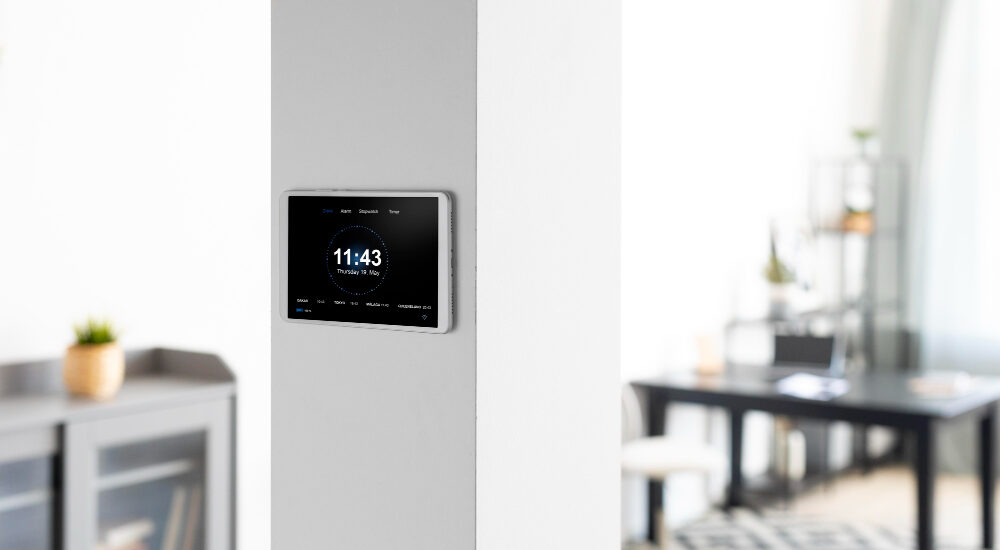
The global net-zero apartment multi-zone thermostats market is entering a pivotal growth phase, driven by the convergence of stringent energy regulations, rising retrofit activity, and the accelerating adoption of intelligent building technologies. According to recent market analysis, the industry is projected to grow from USD 693.1 million in 2026 to USD 1,301 million by 2036, registering a CAGR of 6.5% over the forecast period.
This steady expansion reflects a structural shift in how residential developers, property managers, and energy strategists approach climate control in multi-family housing. As buildings transition toward net-zero energy performance, the demand for precise, zone-level temperature control systems is becoming critical.
See What the Full Report Offers — Get the Sample Copy!
https://www.futuremarketinsights.com/reports/sample/rep-gb-30854
Market Growth Driven by Compliance and Energy Efficiency Mandates
A primary catalyst for market growth is the tightening of building energy codes and performance standards across key regions. Regulatory frameworks increasingly require audit-ready energy systems, pushing developers toward advanced thermostat solutions that ensure both compliance and operational efficiency.
Key growth drivers include:
- Rising demand for energy-efficient residential infrastructure
- Expansion of net-zero and low-energy apartment developments
- Increasing retrofit investments in aging building stock
- Integration of thermostats with building management systems (BMS) and HVAC networks
- Growing focus on reducing operational costs and carbon emissions
In compliance-heavy environments, vendors that offer certified, interoperable, and low-risk deployment solutions are gaining a competitive edge. This has made “approved ecosystems” more attractive than standalone devices, particularly in large-scale apartment portfolios.
Emerging Trends Reshaping the Market Landscape
The market is witnessing rapid technological evolution, with smart zoning control emerging as the dominant segment, accounting for approximately 36% of total demand. These systems enable independent temperature control across multiple zones, optimizing energy usage based on occupancy and usage patterns.
Notable trends include:
- AI-driven learning thermostats that adapt to occupant behavior
- Growth of connected and IoT-enabled HVAC systems
- Increasing preference for wired retrofit solutions (46% share) due to reliability and compliance ease
- Expansion of cloud-based energy monitoring platforms
- Integration with renewable energy systems and heat pumps
Wired retrofits, in particular, are gaining traction in multi-family buildings where stable connectivity, easier verification, and long-term maintenance are critical for regulatory compliance.
Regional Insights: Europe and North America Lead Adoption
From a regional perspective, Europe and North America remain at the forefront of adoption, supported by strong regulatory enforcement and high awareness of energy efficiency standards.
- Germany leads with a CAGR of 6.5%, driven by strict building regulations and extensive retrofit activity
- United States follows at 6.2%, fueled by smart apartment construction and HVAC modernization
- United Kingdom records 6.0% growth, supported by decarbonization targets
- Australia shows steady expansion at 5.8%, driven by urbanization and rising energy costs
Meanwhile, Asia Pacific is emerging as a high-potential market, supported by rapid urban development and increasing adoption of smart building technologies.
Competitive Landscape: Innovation and Integration Define Market Leaders
The competitive landscape is shaped by companies focusing on precision control, system interoperability, and scalable deployment across multi-family housing portfolios.
Key players operating in the market include:Honeywell Home, Schneider Electric, Siemens, Johnson Controls, Ecobee, Tado
These companies are differentiating themselves through:
- Advanced multi-zone control algorithms and AI integration
- Seamless BMS and HVAC system compatibility
- Strong installer networks and certification capabilities
- Scalable solutions tailored for large residential complexes
For instance, established players like Honeywell Home, Schneider Electric, and Siemens leverage deep expertise in building automation, while Ecobee and Tado focus on user-centric smart controls and app-driven optimization.
Analyst Perspective: Compliance and Interoperability Will Define Future Growth
Industry analysts highlight that success in this market will depend less on standalone innovation and more on the ability to navigate complex compliance frameworks while ensuring seamless integration with existing infrastructure.
“Vendors that reduce deployment friction—through standardized submittals, proven interoperability, and strong service networks—are best positioned to secure repeat contracts across multi-building portfolios,” notes a senior market analyst.
Additionally, the shift toward audit-ready, cyber-secure, and performance-verified systems is expected to further reshape vendor selection criteria.
Future Outlook: A Decade of Opportunity in Smart Residential Energy Systems
Looking ahead, the net-zero apartment multi-zone thermostats market is poised for sustained growth as governments, utilities, and developers intensify their focus on energy efficiency and carbon reduction.
Future opportunities are expected to emerge in:
- Large-scale retrofit programs in urban housing
- Integration with renewable energy and storage systems
- Development of AI-powered predictive climate control
- Expansion of smart city and connected building ecosystems
As residential buildings evolve into intelligent energy hubs, multi-zone thermostat systems will play a central role in balancing comfort, efficiency, and compliance.
Why FMI: https://www.futuremarketinsights.com/why-fmi
About Future Market Insights (FMI)
Future Market Insights, Inc. (FMI) is an ESOMAR-certified, ISO 9001:2015 market research and consulting organization, trusted by Fortune 500 clients and global enterprises. With operations in the U.S., UK, India, and Dubai, FMI provides data-backed insights and strategic intelligence across 30+ industries and 1200 markets worldwide.
Contact Us:
Future Market Insights Inc., Christiana Corporate, 200 Continental Drive, Suite 401, Newark, Delaware – 19713, USA
T: +1-347-918-3531
For Sales Enquiries: sales@futuremarketinsights.com
Website: https://www.futuremarketinsights.com
LinkedIn| Twitter| Blogs | YouTube




