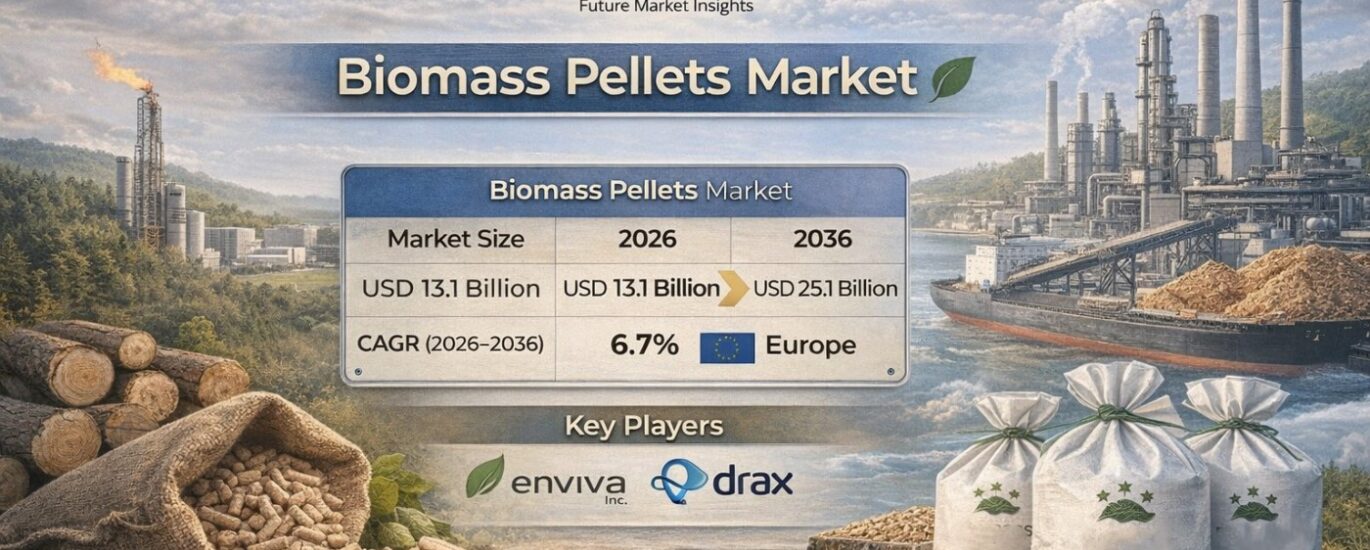
The global Biomass Pellets market is projected to grow from USD 13.1 billion in 2026 to USD 25.1 billion by 2036, registering a CAGR of 6.7% over the forecast period. Growth is driven by rising demand for renewable heating, power generation, and low-carbon fuel alternatives across residential, commercial, and industrial sectors.
The industry is evolving from a traditional solid biofuel segment into a strategic renewable energy solution, supported by global decarbonization goals, coal replacement strategies, and expanding pellet-based energy infrastructure.
Key Market Drivers
- Transition from Fossil Fuels to Renewable Energy
- Increasing replacement of coal and fuel oil in power plants
- Strong push toward carbon neutrality and emission reduction targets
- Growing use of pellets in co-firing and standalone biomass plants
- Rising Residential Heating Demand
- Expanding adoption of pellet stoves and boilers
- High demand in cold climate regions across Europe and North America
- Cost-efficient and cleaner alternative to traditional fuels
- Expansion of Global Pellet Trade
- Growth in long-term supply contracts between producers and utilities
- Increasing cross-border pellet exports
- Improved supply chain reliability and scalability
Get detailed market forecasts, competitive benchmarking, and pricing trends: https://www.futuremarketinsights.com/reports/sample/rep-gb-7175
Market Segmentation Analysis
By Product Type
- Wood Pellets – dominant (~65.9% share)
- Agricultural Pellets
- Industrial Pellets
- Others
Wood pellets lead due to high energy density, consistent quality, and established certification systems.
By End Use
- Residential Heating – 39.0% (leading segment)
- Energy & Power Generation
- Industrial Processing
- Commercial Buildings
- Agriculture
Residential heating dominates due to widespread adoption in household heating systems.
Supply Chain Analysis (Who Supplies Whom)
The biomass pellets market operates through a globally integrated renewable energy value chain:
Upstream
- Forestry residues, sawdust, and agricultural biomass suppliers
Midstream Manufacturers
- Key companies such as Enviva Inc., Drax Group plc, and Pinnacle Renewable Energy
Distribution & Logistics
- Bulk shipping operators and storage facilities
- Energy distributors and pellet traders
End Users
- Power utilities
- Residential consumers
- Industrial heating users
Pricing Trends and Cost Dynamics
- Prices influenced by feedstock availability and transportation costs
- Premium pricing for certified sustainable pellets
- Long-term contracts help stabilize pricing volatility
However, competition from coal, natural gas, and alternative biofuels continues to impact cost competitiveness.
Regional Analysis
Dominant Region: Europe
- Strong demand from district heating and biomass power plants
- Strict carbon reduction regulations
- Established pellet import and distribution infrastructure
Key Growth Regions
- North America – residential heating and export-driven production
- Asia Pacific – rapid growth in Japan and South Korea for power generation
Top Growth Countries
- Brazil (6.9% CAGR)
- India (6.8% CAGR)
- China (6.7% CAGR)
- Japan (6.6% CAGR)
- Canada (6.5% CAGR)
Competitive Landscape
The market is moderately concentrated, with leading players controlling a significant share through integrated supply chains.
Leading Players
- Enviva Inc.
- Drax Group plc
- Pinnacle Renewable Energy
Key Competitors
- Fram Renewable Fuels
- Graanul Invest
- Green Circle Bio Energy
Regional Players
- Zilkha Biomass Energy
- Biopower Ltd
- Sumitomo Corporation
Key Trends Shaping the Market
- Increasing adoption of wood pellets for large-scale energy generation
- Growth in residential pellet heating systems
- Rising focus on sustainable sourcing and certification standards
- Expansion of export-oriented production hubs
Market Restraints and Risks
- Fluctuations in raw material (biomass feedstock) availability
- High logistics and transportation costs
- Competition from pulp, paper, and wood industries
- Regulatory challenges related to sustainability compliance
Investment Opportunities
- Expansion of pellet production capacity near demand centers
- Development of advanced pelletization technologies
- Growth in export infrastructure and global trade networks
- Increasing investment in renewable heating solutions
Future Outlook
The biomass pellets market is expected to witness robust, policy-driven growth, supported by:
- Increasing global focus on renewable energy adoption
- Expansion of pellet-based power generation and heating systems
- Rising demand for sustainable and low-carbon fuels
Future growth will be shaped by:
- Sustainable feedstock sourcing and certification systems
- Technological advancements in pellet production
- Expansion into emerging energy markets
As the global energy transition accelerates, biomass pellets will play a critical role in reducing carbon emissions and supporting sustainable energy systems across residential, industrial, and utility-scale applications.