

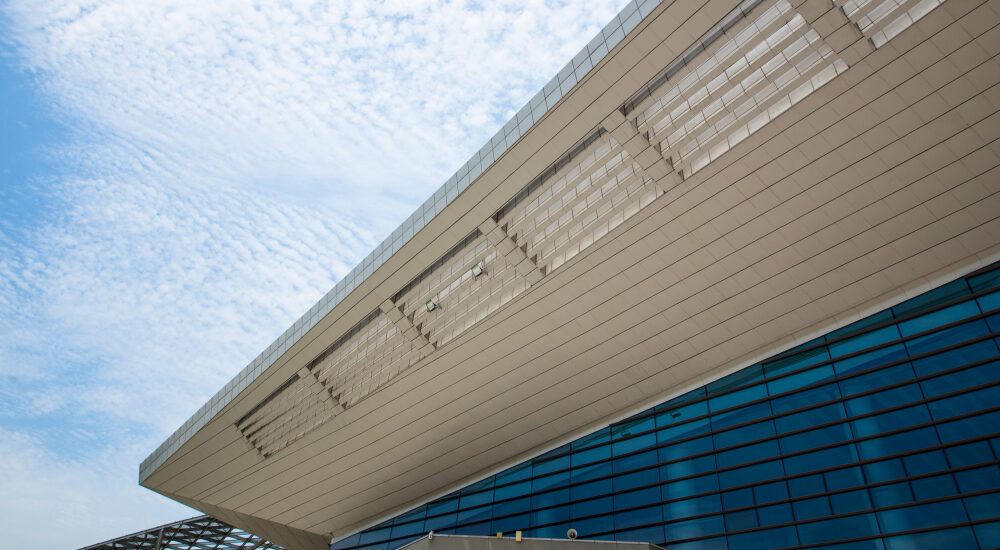
The global rainscreen cladding market is entering a high-growth phase, driven by the rapid transformation of modern construction practices toward sustainability, resilience, and performance-based design. According to recent industry analysis, the market is projected to grow from USD 2,733.5 million in 2025 to USD 5,327.1 million by 2035, registering a robust CAGR of 6.9% over the forecast period.
This growth reflects a structural shift in the global construction ecosystem, where building envelopes are no longer passive components but critical systems influencing energy efficiency, durability, and long-term operational costs.
View the Sample Study — Discover Market Trends Instantly!
https://www.futuremarketinsights.com/reports/sample/rep-gb-15209
Market Momentum Driven by Sustainability and Regulatory Push
The increasing adoption of sustainable construction materials remains a primary growth catalyst. Governments and regulatory authorities worldwide are enforcing stricter building codes focused on energy efficiency, fire safety, and environmental performance.
Rainscreen cladding systems are gaining traction due to their ability to:
- Enhance thermal insulation and reduce energy consumption
- Improve moisture management and prevent structural damage
- Deliver superior aesthetic flexibility for modern architecture
The push toward green buildings and carbon reduction targets is further compelling developers and architects to adopt high-performance façade solutions.
Emerging Trends Reshaping the Industry
The rainscreen cladding market is undergoing a technological transformation, with innovation redefining material science and façade engineering. Key trends include:
- Rise of composite materials: Lightweight, durable, and weather-resistant composites continue to dominate due to their design flexibility and low maintenance requirements
- Integration of smart technologies: AI-enabled climate-responsive façades and IoT-based moisture monitoring systems are gaining adoption
- Shift toward fire-resistant materials: Increased regulatory scrutiny is accelerating demand for non-combustible solutions such as fiber cement and aluminum
- Prefabrication and modular construction: Faster installation timelines and cost efficiency are boosting prefabricated cladding systems
Looking ahead, the emergence of carbon-neutral materials, self-healing coatings, and photovoltaic-integrated façades is expected to redefine competitive dynamics.
Regional Insights Highlight Diverse Growth Trajectories
North America remains a high-value market, supported by stringent building regulations and strong demand for energy-efficient infrastructure. The United States and Canada continue to witness increased adoption of ventilated façade systems, particularly in high-rise developments.
Europe commands a significant market share, driven by strict compliance with Nearly Zero-Energy Building (NZEB) standards. Countries such as Germany, the United Kingdom, and France are at the forefront of sustainable urban redevelopment and façade innovation.
Asia-Pacific is projected to be the fastest-growing region, fueled by rapid urbanization, infrastructure expansion, and rising investments in smart cities. China and India are key contributors, with increasing demand for modern, durable, and energy-efficient building materials.
Competitive Landscape: Innovation and Strategic Positioning Take Center Stage
The global rainscreen cladding market is moderately fragmented, with leading players focusing on product innovation, lightweight materials, and advanced installation technologies to gain a competitive edge.
Key players operating in the market include: Kingspan Insulation plc, Carea Ltd., M.F. Murray Companies, Inc., Celotex Ltd., CGL Facades Co., Centria International, Trespa International B.V., Rockwool International A/S, Arconic Inc., Etex Group, Fundermax GmbH.
Market leaders are actively investing in:
- Development of fire-resistant and eco-friendly cladding systems
- Expansion of composite and fiber cement product portfolios
- Strategic partnerships with architects and real estate developers
- Digital tools for façade design and performance optimization
Analyst Perspective: A Decade of Transformation Ahead
Industry analysts highlight that the next decade will be defined by the convergence of sustainability, digitalization, and advanced materials.
“The rainscreen cladding market is transitioning from conventional façade solutions to intelligent building systems,” notes a senior analyst. “As climate resilience and energy performance become non-negotiable, manufacturers are expected to innovate rapidly, particularly in AI-driven façade technologies and recyclable materials.”
Future Outlook: Unlocking Opportunities in Smart and Sustainable Construction
The outlook for the rainscreen cladding market remains highly promising, underpinned by global megatrends such as urbanization, climate change mitigation, and infrastructure modernization.
Key opportunity areas include:
- Smart cities and green building initiatives
- Retrofitting and renovation of aging infrastructure
- Expansion of commercial and mixed-use developments
- Adoption of advanced materials with enhanced durability and sustainability
While challenges such as high initial costs and installation complexity persist, ongoing advancements in prefabrication and material engineering are expected to improve affordability and scalability.
Why FMI:
https://www.futuremarketinsights.com/why-fmi
About Future Market Insights (FMI)
Future Market Insights, Inc. (FMI) is an ESOMAR-certified, ISO 9001:2015 market research and consulting organization, trusted by Fortune 500 companies and global enterprises. With a strong presence across the U.S., UK, India, and Dubai, FMI delivers data-driven insights and strategic intelligence across 30+ industries and over 1200 markets worldwide.
Contact Us:
Future Market Insights Inc.
Christiana Corporate, 200 Continental Drive,
Suite 401, Newark, Delaware – 19713, USA
T: +1-347-918-3531
For Sales Enquiries: sales@futuremarketinsights.com
Website: https://www.futuremarketinsights.com




