

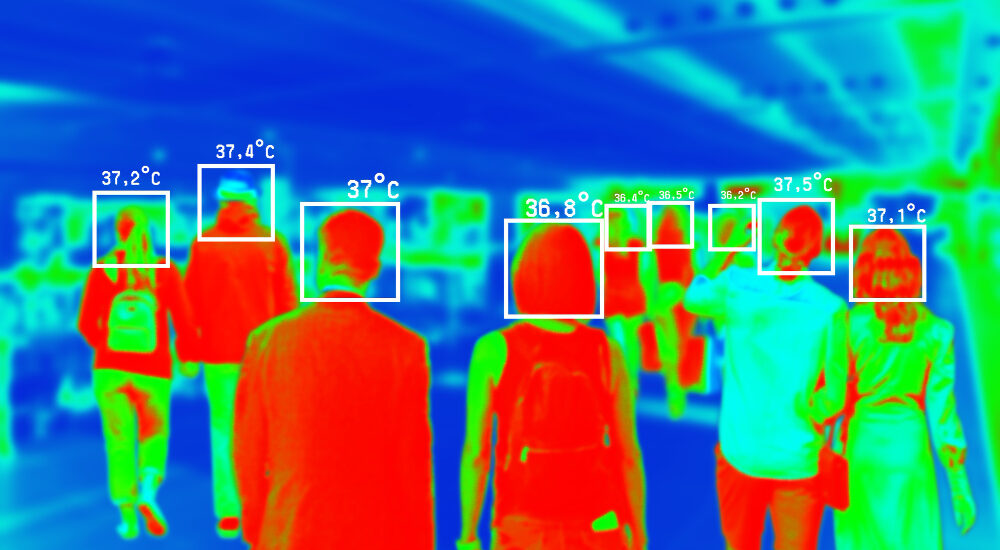
The global thermal imaging components market is entering a high-growth phase, projected to expand from USD 6.8 billion in 2026 to USD 15.2 billion by 2036, registering a steady CAGR of 8.40%. The growth trajectory reflects a decisive shift from defense-led demand toward diversified commercial applications, with industries increasingly embedding thermal sensing capabilities into critical systems.
This expansion is underpinned by rising adoption in industrial automation, automotive safety systems (ADAS), infrastructure monitoring, and smart surveillance, where thermal components are becoming essential for real-time decision-making in low-visibility environments.
View the Sample Study — Discover Market Trends Instantly!
https://www.futuremarketinsights.com/reports/sample/rep-gb-31277
Market Drivers: From Defense Dominance to Commercial Scale
Thermal imaging technology is no longer confined to military applications. The market is witnessing strong momentum due to:
- Expansion of industrial automation requiring predictive maintenance and heat anomaly detection
- Automotive safety integration, including night vision and driver assistance systems
- Infrastructure surveillance growth, especially in smart cities and energy grids
- Defense modernization programs, sustaining baseline demand
At the same time, regulatory frameworks such as ITAR, EAR, and automotive safety certifications are reshaping supplier dynamics. Compliance has evolved into a competitive differentiator, favoring companies with established certification capabilities and long-term supply reliability.
Emerging Trends Redefining Product Development
The market is being reshaped by a new generation of innovation focused on miniaturization, efficiency, and system-level integration. Key trends include:
- Uncooled microbolometer advancements enabling lower cost and wider adoption
- Wafer-level optics improving scalability and reducing manufacturing complexity
- Compact, modular architectures tailored for drones, vehicles, and IoT devices
- AI-integrated thermal systems enhancing detection accuracy and analytics
Thermal cameras and modules continue to dominate, accounting for over 55% of market share, as OEMs increasingly prefer ready-to-integrate solutions that reduce development timelines.
Regional Insights: Asia Pacific Leads, India Emerges as Growth Engine
Asia Pacific remains the fastest-growing region, driven by large-scale manufacturing ecosystems and increasing deployment of surveillance and automation technologies.
- China (9.0% CAGR) leads in volume-driven demand and localization strategies
- India (8.5% CAGR) is emerging as a strategic growth hub, supported by defense procurement, infrastructure expansion, and domestic manufacturing initiatives
- United States (7.8% CAGR) maintains leadership in high-performance, specification-driven applications
- Europe, particularly Germany and the UK, emphasizes precision engineering and long-term reliability
India’s market evolution is particularly notable, transitioning from limited adoption to broad-based deployment across defense, transportation, and industrial safety sectors, creating new opportunities for component manufacturers and system integrators.
Competitive Landscape: Control of Core Technologies Defines Market Leaders
Competition in the thermal imaging components market is increasingly centered around control of critical subsystems such as detectors, optics, and signal processing units.
Key players shaping the competitive environment include:
Teledyne FLIR LLC, L3Harris Technologies Inc., RTX Corporation, Honeywell International Inc., BAE Systems PLC, Leonardo S.p.A., Axis Communications AB, Fluke Corporation, Hikvision Digital Technology Co., Ltd., Testo SE & Co. KGaA, InfraTec GmbH, Lynred, InfiRay (IRay), Thermoteknix Systems Ltd, Workswell s.r.o.
Leading companies are differentiating through:
- Vertical integration of detector technologies
- Long-term supply commitments for OEMs
- Advanced calibration and sensitivity optimization
- Compliance readiness for defense and industrial standards
The competitive edge is shifting away from finished devices toward component-level innovation and integration capabilities.
Analyst Insight: Integration and Compliance Will Shape the Next Decade
Industry analysts highlight that the next phase of growth will be defined by integration readiness, supply chain resilience, and regulatory alignment.
Manufacturers that can deliver:
- High-volume, standardized components
- Customization flexibility for OEM applications
- Strong documentation and traceability
- Localized production and dual sourcing strategies
…will be best positioned to capture long-term contracts across defense, automotive, and industrial sectors.
Future Outlook: Expanding Beyond Traditional Boundaries
Looking ahead, the thermal imaging components market is set to unlock new opportunities across:
- Smart infrastructure and energy monitoring
- Autonomous mobility and connected vehicles
- Healthcare diagnostics and wearable thermal devices
- Commercial electronics and consumer applications
As thermal imaging becomes more accessible and cost-efficient, its integration into everyday technologies is expected to accelerate, transforming it from a specialized tool into a mainstream sensing solution.
Why FMI:
https://www.futuremarketinsights.com/why-fmi
About Future Market Insights (FMI)
Future Market Insights, Inc. (FMI) is an ESOMAR-certified, ISO 9001:2015 market research and consulting organization, trusted by Fortune 500 companies and global enterprises. With a strong presence across the U.S., UK, India, and Dubai, FMI delivers data-driven insights and strategic intelligence across 30+ industries and over 1200 markets worldwide.
Contact Us:
Future Market Insights Inc.
Christiana Corporate, 200 Continental Drive,
Suite 401, Newark, Delaware – 19713, USA
T: +1-347-918-3531
For Sales Enquiries: sales@futuremarketinsights.com
Website: https://www.futuremarketinsights.com




