For years, the narrative surrounding the paper and forest-products industry was one of decline. As the world moved toward a paperless, digital-first existence, traditionalists feared that fiber-based materials were a relic of the past. However, 2026 has proven that rumors of paper’s demise were greatly exaggerated. Instead of disappearing, paper is filling the massive void left by the global retreat from single-use plastics.
Among the various heroes of this transition—paper bags, tapes, and paperboard jars—one humble component has quietly emerged as a high-growth powerhouse: the paper core. As the structural foundation of the packaging and textile worlds, the paper core is proving that even the most “traditional” products can be the catalyst for future-forward innovation.
Navigating the Post-Pandemic Supply Chain
The journey to 2026 hasn’t been without its turbulence. The COVID-19 pandemic rendered many traditional forecasting models irrelevant, forcing a radical reassessment of supply chain resilience. Manufacturers initially faced a crisis as revenue dipped and dependencies on China-based production lines became significant liabilities.
However, the industry did not just survive; it evolved. Today, we are seeing the results of “structural muscle-building.” Companies have diversified their sourcing, moved production hubs closer to end-markets, and pivoted away from a state of emergency toward a strategy of proactive stability. While the global economy still faces inflationary pressures, the paper core market has found its footing, supported by a world that has fundamentally changed its consumption habits.
Exhaustive Market Report: A Complete Study
https://www.futuremarketinsights.com/reports/paper-cores-market
The E-Commerce and Sustainability “Double-Helix”
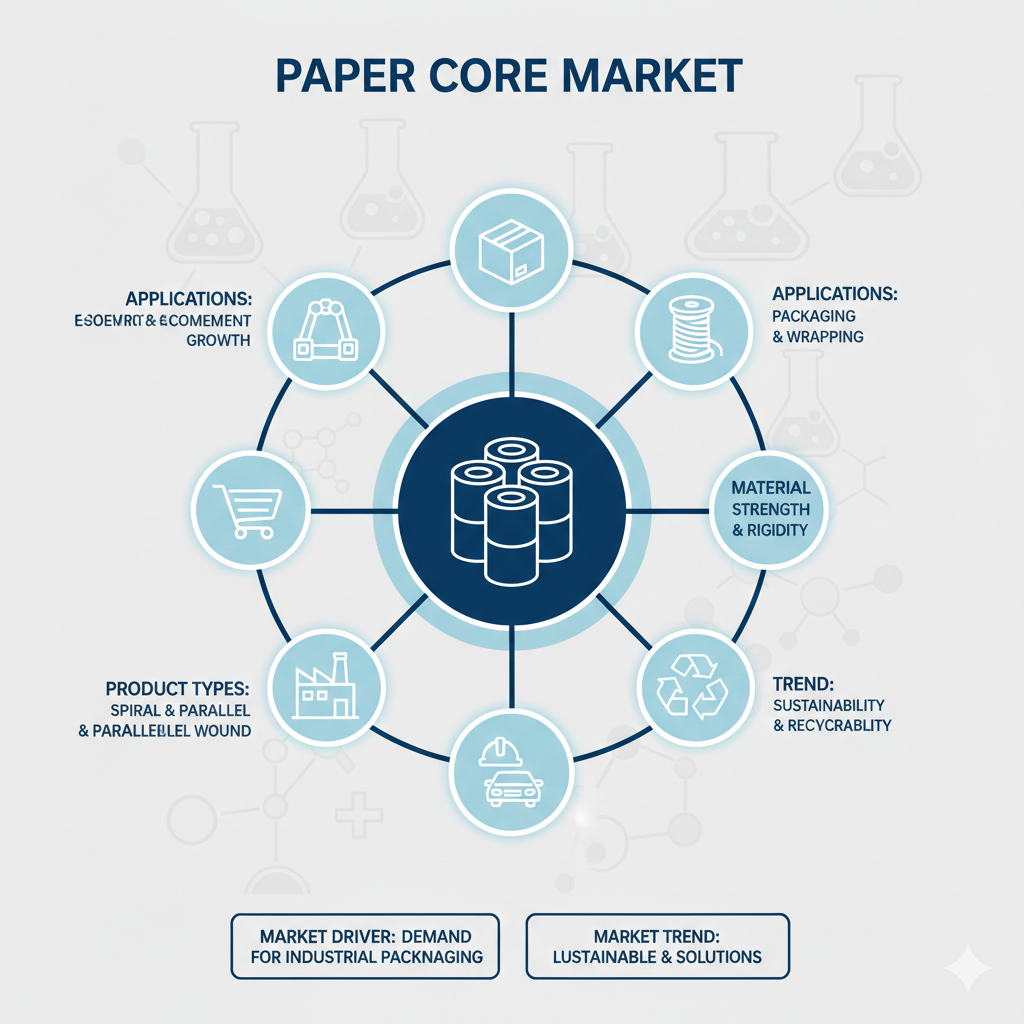
Two major forces are propelling the paper core market to reach a projected USD 5.2 billion by the end of 2026:
- The E-commerce Explosion: As online retail penetration continues to climb, the demand for parcel protection and wrapping materials has surged. Whether it is stretch film, flexible packaging, or protective paper-wrap, almost every material used to secure our packages is wound onto a paper core.
- The Great Plastic Pivot: With nations like India and the UAE implementing full-scale plastic bans in 2025 and 2026, the industry is seeing a massive substitution of plastic packaging with fiber-based alternatives. Paper cores are the natural choice: they are renewable, easy to recycle, and composed of fibrous materials that can be reincarnated into new products with minimal energy loss.
Customization: Not Just a Commodity
The “commodity” tag that once haunted the paper core is being stripped away. In the FMCG (Fast-Moving Consumer Goods) and textile sectors, customization is the new standard. Manufacturers are no longer just producing tubes; they are creating multi-functional, precision-engineered tools tailored for high-speed automated winding lines.
We are seeing a rise in multi-functional cores that feature:
- Precision ply control for high-torque applications.
- Customized finishes for delicate textiles and high-end beverage labels.
- RFID Integration: One of the most exciting developments is the embedding of radio-frequency identification (RFID) tags directly into the paper core. This allows companies to track inventory from the factory floor to the final consumer, transforming a passive piece of packaging into a source of real-time supply chain intelligence.
What Lies Ahead of the Curve?
As we look toward 2030, the paper core market is set to bring value-creating disruption to the intersection of technology and sustainability. The focus has shifted from “how many can we produce?” to “how smart can they be?”
The integration of AI in manufacturing is already helping factories reduce material waste and optimize adhesive application, while “green RFID” tags—made from paper rather than plastic—ensure that even the tracking technology is biodegradable.
The humble paper core is no longer just a support structure; it is a symbol of a resilient, circular economy. By embracing digitization instead of fearing it, the forest-products industry has ensured its place at the heart of the modern supply chain.
Why Choose FMI: Empowering Decisions that Drive Real-World Outcomes: https://www.futuremarketinsights.com/why-fmi
About Future Market Insights (FMI)
Future Market Insights, Inc. (FMI) is an ESOMAR-certified, ISO 9001:2015 market research and consulting organization, trusted by Fortune 500 clients and global enterprises. With operations in the U.S., UK, India, and Dubai, FMI provides data-backed insights and strategic intelligence across 30+ industries and 1200 markets worldwide.