Automotive manufacturing, even the simplest components—like pumps—hide a complex story of costs, technology, and strategy. For both seasoned manufacturers looking to expand and new players eager to make their mark, understanding the true cost drivers and regional differences is essential. Navigating these challenges with smart insights can unlock growth opportunities and help businesses stay competitive in an ever-changing global market.
Why Understanding Pump Cost Teardowns Matters More Than Ever
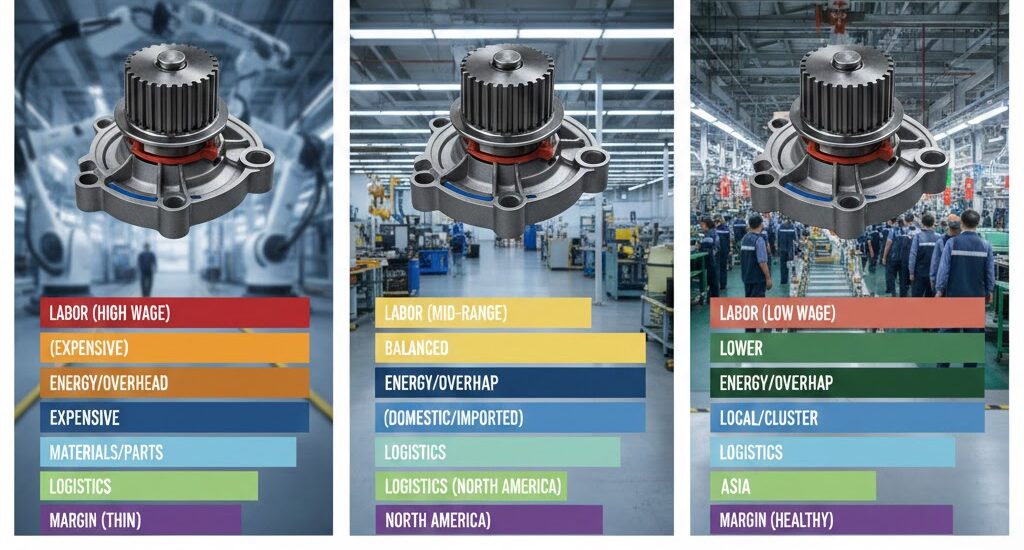
At first glance, an automotive pump looks straightforward. But the economics behind it are anything but. Across different countries, the same pump design can have dramatically different cost structures due to variations in labor, materials, energy, and overhead. For example:
- Germany carries some of the highest automotive labor costs globally—averaging over €62 per hour—alongside steep energy prices. This dual pressure means German plants must focus on producing complex, high-value pumps close to OEM customers to justify higher overhead.
- The United States sits in the middle ground, balancing moderate labor and energy costs with strong logistics advantages to North American vehicle plants.
- China enjoys a still-significant labor cost advantage, though rising wages and geopolitical risks mean manufacturers must be vigilant in managing these benefits sustainably.
This variance means manufacturers can no longer rely on traditional pricing or sourcing decisions. Instead, they need a transparent, data-driven cost teardown approach—a detailed breakdown of materials, labor, overhead, and margin that reveals exactly what drives costs in each location.
Procurement: The Biggest Lever for Cost Control
Materials and procurement costs often make up half or more of total manufacturing expenses for automotive pumps. Factors like alloy selection, casting routes, machining complexity, seals, electronics, and logistics dominate the cost profile. Small design changes—such as simplifying machining steps or standardizing parts across platforms—can reduce costs far more than incremental wage savings.
For manufacturers looking to scale or innovate, this highlights an essential truth: engineering and procurement must work hand-in-hand. By collaborating early in product design, they can target cost efficiency without compromising quality.
Labor and Overhead: The Silent Margin Eroders
While labor costs in high-wage countries grab headlines, overhead expenses—utilities, maintenance, certifications, and depreciation—quietly chip away at margins. In Germany, for example, rising energy costs have increased overhead burdens, forcing manufacturers to rethink plant automation and footprint strategies.
For expanding manufacturers, understanding this overhead “hidden cost” is crucial. Optimizing automation and energy efficiency becomes not just a sustainability goal, but a survival strategy.
OEM vs. Aftermarket: Different Margins, Different Strategies
Automotive pumps often sell through two main channels: OEM (original equipment manufacturer) line-fit programs and aftermarket service or replacement parts. OEM margins tend to be razor-thin due to high volume and tight contracts. In contrast, aftermarket products and repair kits offer significantly higher margins, as customers pay a premium for convenience and uptime.
Manufacturers looking to grow their businesses should therefore develop dual pricing and service strategies—one focused on volume and platform relevance, the other on value-added aftermarket offerings.
Regional Realities Shape Global Footprints
The differences in cost structures across Germany, the US, and China don’t just affect pricing—they dictate where pumps should be manufactured.
- German plants excel at producing complex, high-value pumps requiring proximity to European OEMs.
- US facilities benefit from logistics advantages and moderate costs but face decisions about how much to automate versus outsource.
- Chinese factories remain competitive with lower labor and material costs but must monitor wage inflation and geopolitical factors closely.
This means manufacturers need a strategic footprint and sourcing plan tailored to each region’s strengths and risks. A “one-size-fits-all” global price rarely works; instead, prices and margins must reflect the cost realities on the ground.
What Forward-Looking Manufacturers Should Do Now
- Adopt transparent should-cost models that break down costs by materials, labor, overhead, and margin for every pump family and plant. This turns vague “factory costs” into actionable insights.
- Integrate procurement with engineering to simplify designs, standardize platforms, and optimize sourcing footprints. Connect design decisions directly to cost and margin outcomes.
- Align pricing and footprint strategies based on country-specific cost stacks. Decide which plants specialize in which pumps and which markets to target for OEM versus aftermarket sales.
By turning cost teardown from a one-off exercise into an ongoing management tool, manufacturers can proactively defend margins and make smarter investment decisions.
New Technologies: The Game Changer for Expansion
Innovations such as advanced materials, additive manufacturing, and automation technologies offer manufacturers fresh ways to lower costs and improve product performance. For example:
- Using lighter, more durable alloys or plastics can reduce raw material expenses.
- Additive manufacturing (3D printing) allows rapid prototyping and small-batch production without costly tooling.
- Automation reduces dependency on high labor costs, especially in high-wage countries like Germany.
For new entrants or established players seeking growth, investing in these technologies can provide a competitive edge and enable entry into higher-value segments.
How Future Market Insights Supports Manufacturers
Future Market Insights (FMI) offers comprehensive benchmarking and cost analysis tools to help manufacturers:
- Compare manufacturing costs across key regions like Germany, the US, and China
- Develop reusable cost and price frameworks linked to product design and sourcing
- Model scenarios for raw material price swings, energy costs, and tariffs
- Align manufacturing footprint, pricing, and channel strategies for maximum margin protection
By partnering with FMI, manufacturers gain a data-driven roadmap to navigate the complex global pump market and seize opportunities for expansion.
Final Thoughts
The automotive pump market is a microcosm of the broader manufacturing challenge: balancing rising costs, volatile inputs, and customer expectations while embracing innovation. Whether you’re an established manufacturer refining your global footprint or a new player ready to disrupt the market with fresh technology, mastering cost teardown and regional dynamics is your key to sustainable growth.
Access the Full Article – https://www.futuremarketinsights.com/articles/cost-teardown-of-an-automotive-pump