Dual Clutch Transmission (DCT) technology has become a cornerstone of modern automotive performance, blending the efficiency of manual gear shifts with the smoothness of automatics. But behind the sleek gear changes lies a complex ecosystem of manufacturers, supply chains, and evolving technologies shaping how these systems are priced, produced, and positioned in the market. Both established industry giants and innovative newcomers are playing pivotal roles as the DCT market evolves—driven by new manufacturing techniques, software advancements, and shifting global supply chains.
Why Do Premium DCTs Command Higher Prices?
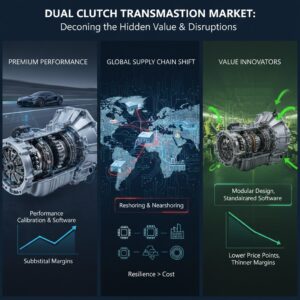
One of the most striking trends in the DCT space is the stark pricing gap between premium brands and value-focused manufacturers. At first glance, it may seem that high-performance DCTs should cost roughly what their core components—clutches, gears, and control units—do. However, pricing is influenced more by performance calibration, software integration, and platform-specific customization than by hardware costs alone.
Premium brands invest heavily in developing proprietary control algorithms and advanced calibration techniques that fine-tune the driving experience. These technologies deliver faster, smoother shifts, enhanced durability, and integration with hybrid powertrains that simply cannot be matched by off-the-shelf solutions. This engineering excellence allows premium manufacturers to capture substantial margins. In contrast, value-focused OEMs and aftermarket suppliers operate on razor-thin margins, often using similar core mechanical parts but prioritizing reliability and cost efficiency over ultra-high performance.
Supply Chain Challenges and Their Impact on DCT Pricing
The global disruptions triggered by recent events—like the pandemic—have revealed vulnerabilities in the automotive supply chain, especially for components critical to DCTs. Semiconductor shortages have driven up prices for Transmission Control Units (TCUs), while specialized materials like high-grade steel and precision-forged gears have faced increased costs due to logistical bottlenecks and energy price hikes.
Interestingly, while materials and semiconductor costs make up only a fraction of the final DCT price, these disruptions have forced even premium manufacturers to absorb higher expenses or delay platform launches. This has pushed the industry toward reshoring and nearshoring production—moving assembly closer to OEM plants in regions such as Eastern Europe, North Africa, and Mexico. These locations offer a balance of skilled labor, political stability, and proximity to assembly lines, despite sometimes higher logistics costs compared to traditional low-cost Asian bases.
New Entrants Disrupting the Status Quo
A wave of new manufacturers and specialized suppliers from emerging markets is shaking up traditional pricing models by proving that functional, reliable DCTs can be produced at significantly lower costs without compromising basic quality. These players emphasize design-for-manufacture and supply chain simplification, focusing on modular, platform-agnostic designs that reduce vehicle-specific engineering and costly software calibration efforts.
By standardizing control software and vertically integrating key production steps—such as gear cutting and assembly—these companies capture margins traditionally flowing to third-party suppliers. This lean approach allows them to offer competitive prices that pressure established Tier 1 suppliers to justify their premium through brand heritage, integration capabilities, and superior performance tuning.
The Three Layers of Margin Capture in the DCT Market
Understanding where the real value lies in DCT pricing reveals why premium brands maintain their edge despite competition:
- Performance Calibration and Software Integration: The sophisticated software and tuning that differentiate a high-performance DCT from a generic one require massive R&D investments. These proprietary algorithms influence shift behavior, fuel efficiency, and drivability, driving perceived value far beyond mechanical parts.
- Proprietary Control Algorithms: Advanced control units enable manufacturers to create unique driving experiences. These algorithms are closely guarded intellectual property, acting as a major barrier for newcomers aiming to replicate premium driving dynamics.
- Long-term Service Contracts: Beyond the initial sale, aftermarket service agreements provide manufacturers with recurring revenue, locking customers into their ecosystem and strengthening brand loyalty.
Manufacturing Shifts and Industry Trends
Manufacturing DCTs today is no longer about simply chasing the lowest labor costs. Instead, it involves a complex blend of automation, precision engineering, and strategic proximity to assembly plants. Eastern Europe and North Africa are increasingly attractive for module assembly, combining skilled labor and favorable logistics with access to major OEM hubs.
This shift reflects a broader industry trend where manufacturers balance cost, quality, and supply chain resilience. Investing in local supply chains helps reduce risks associated with geopolitical instability and transport delays, even if it means higher upfront costs.
What’s Next for DCT Technology and Manufacturers?
The future of the DCT market is a fascinating blend of tradition and innovation. Established players continue to push the envelope with next-generation control units, hybrid integration, and enhanced thermal management. Meanwhile, new entrants disrupt with cost-effective, scalable designs tailored for emerging markets and mass-market vehicles.
For manufacturers looking to expand, embracing modular platforms and software-based differentiation will be key. Investment in R&D to refine control algorithms and build brand heritage around performance and reliability will remain crucial for premium segments. At the same time, streamlining supply chains and adopting flexible manufacturing footprints will allow companies to navigate global uncertainties and maintain competitive pricing.
Final Thoughts
The Dual Clutch Transmission market is a dynamic battlefield where performance, price, and innovation intersect. Whether you’re an established manufacturer defending your premium position or a new entrant capitalizing on efficient design and cost advantages, the evolving landscape demands agility and technological prowess. By understanding the hidden layers of value and the shifting supply chain dynamics, companies can better position themselves to capture growth and lead in the future of automotive transmission technology.
Access the Full Article – https://www.futuremarketinsights.com/articles/how-dual-clutch-transmission-suppliers-and-automotive-oems-control-pricing-while-new-entrants-disrupt-the-hardware-cost-stack