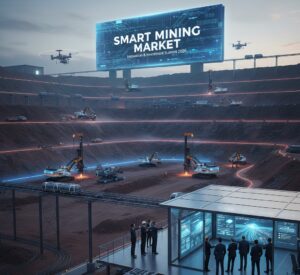
Smart mining is no longer a future concept—it is rapidly becoming the defining factor that separates industry leaders from those struggling to compete. As mining operations shift from labor-intensive models to technology-driven platforms, the real story lies not just in innovation, but in where costs accumulate and who can afford to absorb them.
For established mining majors, smart mining delivers scale-driven advantages. For new and mid-sized manufacturers, it opens doors to niche innovation, partnerships, and specialized technology development—if they understand the economics correctly.
Where Smart Mining Costs Really Add Up
- Unlike traditional mining investments, smart mining is not about purchasing a single piece of equipment. It is an interconnected ecosystem of hardware, software, connectivity, and analytics—each layer adding complexity and long-term financial commitments.
- The foundation layer is autonomous equipment and robotics. Fleets of autonomous haul trucks, drilling rigs, and loaders require massive upfront capital investment. Beyond the vehicles themselves, companies must build dedicated haul roads, charging infrastructure, safety systems, and specialized maintenance facilities. Studies consistently show that these supporting systems can cost several times more than the base equipment.
- Connectivity and IoT infrastructure form the hidden cost multiplier. Thousands of sensors across remote sites generate continuous data streams that require private cellular networks, satellite connectivity, and edge computing platforms. While often underestimated, these systems create ongoing operational expenses that compound over time—particularly for mines operating in remote or harsh environments.
- The highest potential value sits in control and analytics platforms. Centralized remote operations centers allow a small group of skilled operators to manage multiple mine sites simultaneously. This improves safety, consistency, and equipment utilization—but only after heavy investment in visualization software, redundant communications, cybersecurity, and highly paid technical talent.
- Finally, integration and maintenance costs frequently exceed initial projections. Smart mining systems must work alongside legacy equipment, regulatory compliance platforms, and environmental monitoring systems. As data volumes grow, so do storage, processing, and analytics costs, making scalability both an opportunity and a challenge.
Why Rio Tinto and BHP Capture Outsized Value from Automation
Mining giants like Rio Tinto and BHP dominate smart mining economics because automation rewards scale—and they have plenty of it.
Their fleet size allows costs to be spread across multiple sites, maximizing utilization of autonomous equipment and centralized operations centers. A single control room can oversee dozens of mines, dramatically improving return on investment.
These leaders also benefit from vertical integration. Instead of buying fully packaged solutions, they co-develop hardware and software with equipment manufacturers. This reduces licensing fees, improves system compatibility, and accelerates innovation cycles—advantages smaller players rarely enjoy.
Data is another powerful differentiator. Large miners generate vast datasets that continuously improve machine learning models for predictive maintenance, safety, and utilization. Over time, these data network effects create competitive moats that are extremely difficult for new entrants to replicate.
The Structural Challenges Facing Mid-Tier and Smaller Miners
For mid-tier miners, smart mining adoption often feels like an uphill battle.
The technical complexity alone can exceed internal capabilities, forcing reliance on external consultants and increasing costs. High fixed infrastructure requirements—private networks, control centers, and specialized maintenance—create minimum scale thresholds that smaller operations struggle to justify.
Vendor dynamics further widen the gap. Technology suppliers naturally prioritize large customers for customization, pricing, and technical support. Smaller miners often pay higher per-unit costs for standardized solutions with limited flexibility.
Talent acquisition is another major hurdle. Automation engineers, data scientists, and integration specialists command premium salaries. While large miners offer long-term career pathways, smaller operators face higher turnover and skills shortages.
What This Means for New and Emerging Manufacturers
While smart mining economics favor scale, they also create opportunities for new manufacturers and technology providers. Large miners increasingly rely on specialized partners for niche innovations—advanced sensors, AI-driven analytics, cybersecurity, energy-efficient automation components, and modular connectivity solutions.
Mid-tier miners, unable to build everything in-house, are actively seeking flexible, interoperable technologies that reduce upfront costs and improve ROI. This opens space for emerging manufacturers to differentiate through affordability, specialization, and faster innovation cycles.
How Smart Mining Is Redefining Competitive Positioning
Smart mining is reshaping competition across the industry. Automation enables continuous operations, reduces downtime, and increases productivity—but only for those who can implement it effectively.
Capital intensity is shifting away from traditional equipment toward technology infrastructure and data platforms, changing how mining companies evaluate risk and return. Early adopters accept higher short-term risk in exchange for long-term dominance, while late adopters may find themselves permanently behind.
Ultimately, smart mining is creating a two-tier industry. Scale determines viability—but collaboration, partnerships, and targeted innovation allow smaller players and new manufacturers to remain competitive in a rapidly evolving market.
Access the Full Article – https://www.futuremarketinsights.com/articles/how-rio-tinto-and-bhp-control-smart-mining-infrastructure-costs-while-smaller-players-struggle-with-technology-barriers