

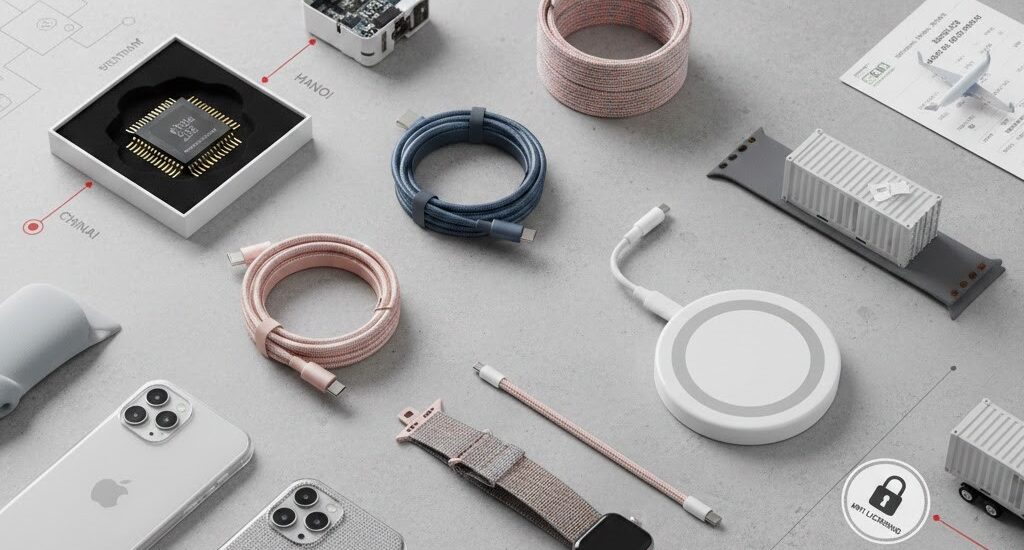
Apple accessories are more than just add-ons—they’re a booming business generating over USD 10 billion annually. From cables and chargers to Watch bands and the cutting-edge MagSafe parts, these products have become essential companions to Apple’s iPhone and wearable ecosystem. For both established manufacturers and newcomers, this market presents exciting opportunities fueled by consistent consumer demand and evolving technologies. But it also comes with challenges—geopolitical risks, stringent quality requirements, and complex supply chains—that shape the competitive landscape.
Why Apple Accessories Remain a Goldmine
Apple’s massive user base for iPhones and wearables creates a steady flow of accessory sales. Whether consumers are buying accessories for new devices or replacing worn-out cables or cases, the market benefits from high attachment rates and repeat purchase cycles. This ongoing demand makes it an attractive space for manufacturers looking to grow or diversify their business.
Who’s Leading Production? The Role of China and Vietnam
The lion’s share of Apple accessory manufacturing is concentrated in China, accounting for about 60 to 70% of total output. This region’s manufacturing hubs, particularly in Kunshan and the Pearl River Delta, offer suppliers proximity to key component producers like connector makers and magnet suppliers. This tight ecosystem supports rapid production cycles and just-in-time inventory management.
Vietnam has emerged as an important secondary hub, contributing around 15 to 25% of accessory production. It’s an appealing location for companies looking to diversify manufacturing to reduce tariffs and geopolitical risks. However, Vietnamese factories rely heavily on imported components, mostly from China and Taiwan, which adds complexity and cost.
Major contract manufacturers like Luxshare Precision, Foxconn Technology Group, and Goertek dominate the landscape. Luxshare, for example, reported over RMB 150 billion in revenue in 2022, with a strong focus on cables, AirPods cases, and connectivity products. Foxconn, globally known for iPhone assembly, also runs accessory lines for power adapters and premium cases. For new players, these giants set a high bar in production scale and technical expertise, but also illustrate potential partnerships or subcontracting opportunities.
Proprietary Technology and Quality Control: A Barrier and an Opportunity
Apple’s proprietary technologies, like MagSafe chargers and Watch band magnetic clasps, require specialized components—particularly MFi-certified chipsets—that only approved suppliers can source. These chipsets add significant cost (up to $4 per unit) but ensure device compatibility and security, creating high entry barriers for accessory makers.
Additionally, strict quality, safety, and environmental standards shape accessory margins and supplier pools. Materials like medical-grade elastomers for Watch bands and rare-earth magnets for MagSafe chargers demand precise certifications and compliance with regulations like RoHS and REACH. For manufacturers, investing in these certifications and engineering capabilities is essential—but once achieved, it offers a strong competitive advantage and brand trust.
Navigating Supply Chain Complexity and Cost Sensitivities
Apple’s accessory supply chain reflects a blend of vertical integration and outsourced commodity production. High-tech products with Apple-designed electronics involve close collaboration with semiconductor partners such as Broadcom and Texas Instruments, while simpler cables and cases see wider supplier participation through Apple’s Made for iPhone (MFi) licensing program.
Geopolitical risks and tariffs also influence where and how accessories are made. The ongoing U.S.-China trade tensions and Section 301 tariffs impose significant costs on Chinese-made goods, pushing manufacturers to explore “China Plus One” strategies by expanding production in Vietnam, India, and Malaysia. However, these new locations often come with higher labor costs and supply chain inefficiencies.
Freight logistics further impact pricing. The surge in ocean and air freight rates during the COVID-19 pandemic highlighted the vulnerability of global supply chains, especially for time-sensitive launches. Today, while rates have stabilized, logistics costs remain a critical factor for accessory makers to manage.
Emerging Trends and What This Means for Manufacturers
For both established companies and newcomers, the Apple accessory market’s complexity offers unique opportunities:
- Innovate with Proprietary Tech: Investing in R&D for MagSafe-compatible products or enhanced charging technologies can unlock premium pricing and loyal customers.
- Expand Production Geographically: Diversifying manufacturing footprints beyond China, such as increasing capacity in Vietnam or other Southeast Asian countries, can mitigate tariff and geopolitical risks.
- Focus on Sustainability and Compliance: Meeting Apple’s stringent environmental and safety standards is not just a requirement but a chance to differentiate with green credentials and quality assurance.
- Leverage Licensing Programs: The MFi program, while costly, provides access to a lucrative market segment that values certified and guaranteed-compatible accessories.
New entrants should note that supplier qualification takes time—often six to twelve months—with rigorous audits and testing. Yet, successful certification opens doors to partnerships with one of the world’s most influential tech ecosystems.
Conclusion
Apple’s accessory ecosystem is a dynamic blend of innovation, stringent quality standards, and evolving global supply chains. For manufacturers, this means balancing technological investment, compliance, and strategic geographic decisions. Established giants like Luxshare and Foxconn set the pace, but new players with innovative products and smart production strategies can carve out their share in this multibillion-dollar market.
As the accessory market continues to grow alongside Apple’s expanding product lineup, manufacturers poised to navigate these complexities will find exciting opportunities to expand their businesses and push the boundaries of what Apple-compatible accessories can achieve.
Read the Full Article Today – https://www.futuremarketinsights.com/articles/how-does-supply-chain-localization-and-component-sourcing-shape-pricing-and-competitive-dynamics-in-the-apple-accessories-ecosystem




