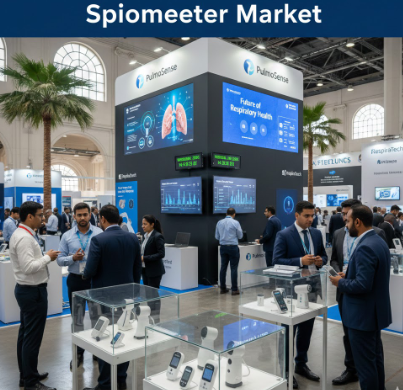
The global spirometry market is undergoing a fundamental transformation as both established veterans and new market entrants rethink how respiratory diagnostic devices are positioned, valued, and adopted in clinical and remote care settings. A recent analysis of lifecycle reliability strategies reveals how leading manufacturers are leveraging reliability and long-term performance to sustain premium pricing — while new players push the boundaries of smart technologies and market accessibility.
At the forefront of this evolution is Hillrom, a long-standing leader in spirometry solutions, which has pioneered a lifecycle-based pricing approach that reframes spirometers as essential clinical infrastructure rather than commodity devices. By emphasizing the total cost of ownership, uptime assurance and long-term service continuity, Hillrom’s strategy resonates with large hospital systems that prioritize operational certainty over low upfront costs.
“Purchasing a spirometer is no longer just about hardware cost,” said a senior industry analyst. “Providers increasingly treat these devices as mission-critical equipment, akin to imaging or patient monitoring systems, where durability and service support are paramount.”
Lifecycle Reliability: A New Era of Value in Medical Procurement
Hillrom’s approach emphasizes lifecycle reliability — ensuring devices operate with minimal downtime, predictable maintenance schedules and robust post-sale support. Lower failure rates and extended calibration stability significantly reduce interruptions in clinical workflows, which translates into measurable benefits for patient throughput and hospital revenues. Service contracts and consumable streams — including calibration kits, sensors, and software support — convert a traditional capital expenditure into a predictable operational cost, aligning with budgetary frameworks in complex healthcare systems.
For health systems facing hundreds of respiratory tests weekly, even brief equipment failure can lead to appointment cancellations, administrative overload and lost clinical revenue — often outstripping the cost savings from cheaper devices. As a result, procurement teams now weigh lifecycle performance and operational resilience more heavily than upfront price alone.
Market Growth and Emerging Innovation
The spirometry market is projected to grow substantially over the next decade, with forecasts estimating an increase from approximately USD 684.3 million in 2025 to over USD 1.1 billion by 2035, at a compound annual growth rate (CAGR) of 5.4%.
This growth is underpinned by a rising global burden of chronic respiratory diseases — such as COPD, asthma and long-term post-COVID conditions — alongside broader public health initiatives emphasizing early detection and disease monitoring. At the same time, technological innovations are rapidly reshaping what spirometry devices can do:
- Bluetooth and connectivity features enable seamless integration with mobile and electronic health record (EHR) systems, improving both clinical workflows and remote patient engagement.
- AI-driven analytics enhance diagnostic accuracy and standardize spirometry results, reducing operator variability and supporting decentralized use in outpatient or home care environments.
- Cloud-based data management allows clinicians to access and share lung function data securely across care settings, fostering more personalized and proactive disease management.
These trends have created fertile ground for emerging manufacturers and startups to enter the market with differentiated products that emphasize portability, usability and cost-effective performance. In particular, smaller companies developing telehealth-enabled and remote monitoring spirometers are tapping into a rapidly expanding segment driven by consumer demand for home-based health tracking.
New Market Entrants Complement Established Players
While Hillrom continues to dominate the premium segment, other established industry participants are innovating vigorously:
- Schiller AG is gaining traction with high-precision clinical spirometry solutions that integrate with broader pulmonary testing systems.
- MIR’s smart spirometers feature Bluetooth and smartphone linkage, catering to both clinical and community care environments.
- Emerging innovators are introducing AI-assisted spirometers tailored for telemedicine applications, enabling clinicians and patients to monitor respiratory health more frequently and conveniently outside traditional settings.
These developments reflect a dynamic market where new technologies and business models — from lifecycle reliability pricing to digitally empowered devices — coexist and reinforce each other, expanding both the reach and value of spirometry solutions.
A Future Built on Reliability and Innovation
As chronic respiratory diseases remain a global public health challenge, and as healthcare systems emphasize resilience and cost-efficiency, the spirometry market stands poised for continued expansion. Manufacturers that blend proven reliability, forward-looking technologies, and flexible value propositions will be well placed to meet the evolving needs of healthcare providers and patients alike.
Get Full Report: https://www.futuremarketinsights.com/articles/how-does-lifecycle-reliability-enable-hillrom-to-sustain-premium-pricing-in-spirometry