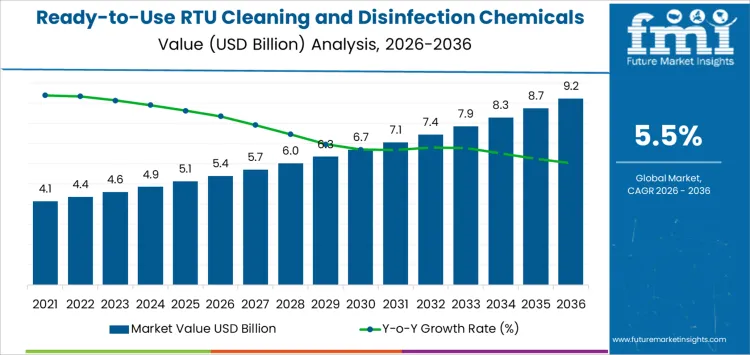
The global ready-to-use (RTU) cleaning and disinfection chemicals market is projected to grow significantly from USD 5.4 billion in 2026 to approximately USD 9.2 billion by 2036, driven by rising demand across commercial, institutional, and residential sectors. This expansion reflects a growing preference for pre-mixed sanitation solutions that combine convenience, safety and operational efficiency. As hygiene standards continue to heighten worldwide, a diverse range of established and emerging manufacturers are innovating with novel formulations, sustainable solutions and advanced technologies to address evolving consumer and institutional requirements.
Industry leaders such as Clorox, Reckitt, Procter & Gamble, SC Johnson Professional, Ecolab and Diversey remain at the forefront of this market, leveraging trusted brands and extensive distribution networks to maintain strong global presence. These companies continue to invest in research and development to refine product efficacy, broaden surface compatibility and reduce environmental impact. Their robust product portfolios now span RTU disinfectants, surface cleaners, specialty cleaners and degreasers, packaged in convenient formats like spray bottles, wipes and refill packs designed for immediate use without dilution or preparation.
In parallel, newer players and regional innovators are gaining momentum by embracing niche positioning and technology-driven differentiation. Manufacturers focusing on green chemistry, biodegradable formulations, ultra-low VOC solutions and eco-labelled products are carving out space in both professional and consumer segments. These emerging brands are not only broadening the competitive landscape but also pushing established companies to elevate sustainability commitments and transparency in product claims.
The demand for RTU cleaning and disinfection chemicals is underpinned by a clear shift in sanitation practices. Facilities with high foot traffic — including hospitals, schools, airports, retail stores and commercial offices — are increasingly adopting pre-mixed sanitation products to minimize errors in chemical dilution, improve safety for cleaning personnel and streamline routine cleaning tasks. Meanwhile, households are showing sustained interest in RTU triggers and pre-saturated wipes that offer fast and predictable results for everyday surface hygiene.
Established manufacturers are responding with innovative packaging advancements and ergonomic designs that support ease of application. Trigger spray systems with optimized ergonomics and consistent spray patterns are winning preference among professional cleaners, while consumer-focused redesigns highlight convenience, long shelf life and compatibility with refillable systems. The surge in demand for refill packs and concentrated refills also reflects both cost consciousness and environmental considerations among buyers seeking to reduce packaging waste.
To access the complete data tables and in-depth insights, request a sample report here
Across the industry, advancements in formulation technology are enabling manufacturers to deliver enhanced antimicrobial performance without compromising on safety. Products integrating advanced chemistries now offer faster kill times, broad-spectrum efficacy and improved residue profiles that meet diverse regulatory standards. These innovations are particularly significant in settings where infection control is critical, such as healthcare facilities and foodservice environments.
The competitive landscape is witnessing strategic expansions and partnerships that aim to strengthen market reach and accelerate technology adoption. New entrants are tapping into digital platforms and e-commerce channels to expand distribution, build brand awareness and engage directly with professional end users. Collaborative initiatives with contract cleaning firms and institutional buyers are also opening new avenues for repeat purchases and long-term supply agreements.
Emerging technologies in sanitation — such as eco-friendly formulations, automated dispensing systems, and surface-specific solutions — are gaining traction as manufacturers seek to balance performance with user convenience and sustainability. These technologies support the integration of RTU cleaning protocols into standardized hygiene programs, helping organizations maintain consistent results across multiple sites with varied staff experience levels.
Regional market dynamics further exemplify the growing significance of RTU cleaning and disinfection chemicals. In Asia Pacific, rapid infrastructure growth and heightened hygiene awareness are fueling adoption in high-traffic public spaces, while in North America and Europe, stringent compliance requirements and institutional cleaning standards continue to sustain demand. Across Latin America and the Middle East, increasing outsourcing of janitorial services and rising investments in sanitation technology present new opportunities for both established and emerging brands.
Looking ahead, industry experts anticipate that the synergy between product innovation, sustainability focus and expanded distribution capabilities will drive continued market growth. As organizations strive for higher operational efficiency and consumers prioritize health and hygiene, the RTU cleaning and disinfection chemicals market is expected to remain a dynamic and competitive arena. Manufacturers that can blend technological advancement with pragmatic solutions for diverse end-use scenarios will be best positioned to capitalize on long-term growth prospects.