

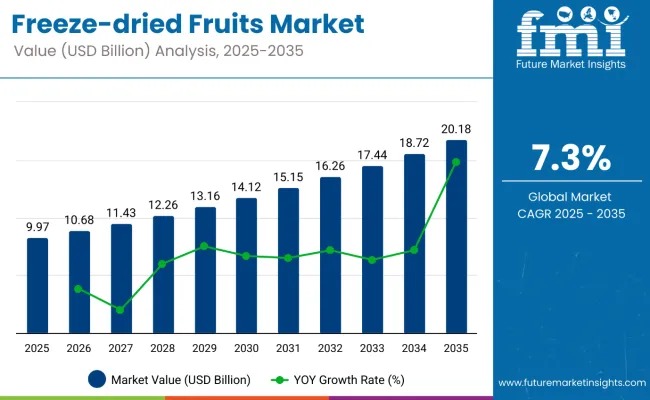
The global freeze-dried fruits market is entering a high-growth phase, driven by shifting consumer preferences toward healthy, convenient, and long-shelf-life food solutions. The market is projected to expand from USD 9.97 billion in 2025 to USD 20.18 billion by 2035, registering a robust CAGR of 7.3% during the forecast period. This growth reflects the increasing alignment between modern lifestyles and demand for foods that offer nutrition without compromising on convenience or taste.
Freeze-dried fruits retain most of the original fruit’s nutrients, flavor, texture, and color while offering superior shelf stability and portability. These characteristics make them highly attractive to health-conscious consumers, athletes, travelers, and busy urban populations seeking functional snack alternatives. As awareness around sugar reduction, clean labels, and minimally processed foods grows, freeze-dried fruits are transitioning from niche health products to mainstream pantry essentials.
Explore trends before investing – request a sample report today!
Consumer demand is being further fueled by the clean-label movement. Freeze-dried fruits typically contain no added preservatives, artificial flavors, or sweeteners, aligning strongly with global trends favoring transparency and natural ingredients. Their versatility across applications—snacks, cereals, smoothies, bakery products, confectionery, and functional foods—continues to broaden their commercial appeal across food and beverage segments.
The rapid growth of e-commerce and direct-to-consumer channels is also reshaping the market landscape. Online platforms have improved global accessibility, enabling both established brands and niche producers to reach health-focused consumers directly. At the same time, packaging innovation—including resealable, lightweight, and sustainable formats—is enhancing product usability while supporting environmental commitments.
Expanding Product Diversity and Strategic Industry Moves
Manufacturers are expanding portfolios to meet rising demand for variety, offering freeze-dried strawberries, blueberries, apples, mangoes, bananas, and blended fruit combinations tailored to regional tastes. Product innovation is increasingly focused on organic certification, sugar-free positioning, and functional nutrition benefits.
Strategic acquisitions are strengthening market capabilities. Kerry Group’s acquisition of a 70% stake in Kerry Dairy Ireland in December 2024 has enhanced its processing capabilities and supply chain synergies relevant to freeze-dried and value-added food ingredients. The company also reported a 38% reduction in food waste in 2024, highlighting how sustainability initiatives are becoming integral to competitive positioning in the freeze-dried fruits market.
Regional Consumption Patterns and Trade Dynamics
Per capita consumption of freeze-dried fruits varies widely. Developed markets such as the United States, Canada, Germany, the UK, and Japan exhibit higher consumption due to strong health awareness, mature retail networks, and established snacking cultures. In contrast, emerging economies including India, China, Brazil, and South Africa are witnessing rising interest, supported by urbanization and Western dietary influences, though price sensitivity and limited local production remain constraints.
Globally, trade flows are shaped by agricultural strength and processing infrastructure.
- Major exporters include the United States, China, Poland, Germany, and Chile, supplying berries, apples, mangoes, and bananas.
- Major importers such as Japan, the UK, Canada, South Korea, and the UAE rely on freeze-dried fruits for cereals, snack bars, bakery products, and retail consumption.
Investment Hotspots: Organic and Whole Freeze-Dried Fruits
Organic freeze-dried fruits dominate the nature segment with an estimated 55% market share in 2025, driven by rising demand for pesticide-free, environmentally responsible food products. Consumers increasingly associate organic sourcing with better health outcomes and sustainable farming practices.
Whole freeze-dried fruits lead the product type segment with a 48% share, valued for their convenience, minimal processing, and near-complete nutrient retention. Their extended shelf life and ease of use make them a preferred choice for premium snacks and breakfast applications.
Market Challenges and Emerging Opportunities
High production costs remain a key challenge. Freeze-drying requires advanced equipment, high energy input, and precise processing, keeping prices above those of conventionally dried fruits. Seasonal availability of high-quality raw fruit and supply chain disruptions further add to operational complexity.
However, opportunities outweigh constraints. Rising demand for healthy snacking, plant-based diets, and functional foods is accelerating innovation. Freeze-dried fruit powders and inclusions are increasingly used in sports nutrition, baby food, dietary supplements, and meal replacement products, unlocking new revenue streams.
Country-Level Growth Outlook
- United States: CAGR 7.5% (2025–2035), driven by organic snacks, advanced processing technologies, and eco-friendly packaging.
- United Kingdom: CAGR 7.1%, supported by clean-label demand, sustainability initiatives, and functional food adoption.
- European Union: CAGR 7.2%, led by Germany, France, and Italy with strong regulatory support and premium product positioning.
- Japan: CAGR 7.4%, reflecting demand for premium, portion-controlled, and functional freeze-dried fruit products.
- South Korea: CAGR 7.3%, fueled by innovation in food technology, e-commerce growth, and superfood-based snacks.
Competitive Landscape
The market features a blend of multinational corporations and specialized producers. Global players leverage scale and distribution, while niche companies focus on clean-label quality, ethical sourcing, and customized ingredient solutions. Competition increasingly centers on innovation, sustainability, shelf-life optimization, and premium branding.
With strong fundamentals, expanding applications, and sustained consumer interest in health-forward convenience foods, the global freeze-dried fruits market is well positioned for long-term growth through 2035.




