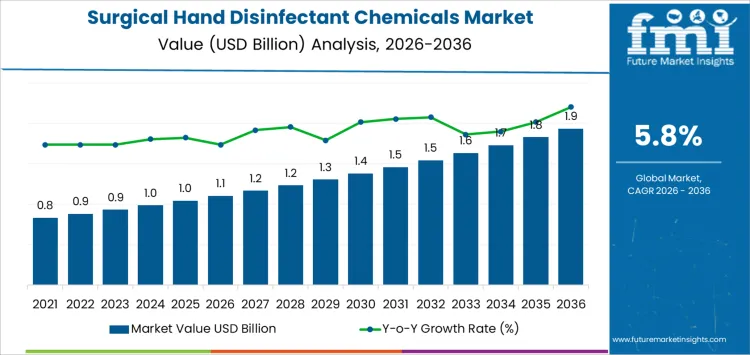
The global surgical hand disinfectant chemicals market is currently valued at approximately USD 1.1 billion in 2026, and it is projected to expand steadily over the next decade, reflecting robust demand and continuous innovation across healthcare settings worldwide. Fueled by heightened awareness of infection control, stringent hygiene protocols in surgical environments, and technological advancements in formulation science, the market presents abundant opportunities for established players and new manufacturers alike to grow and diversify their offerings.
Healthcare facilities across the globe—from leading hospitals in North America and Europe to rapidly expanding care centers in Asia Pacific and Latin America—are increasingly prioritizing infection prevention. This has created strong and sustained demand for high-performance surgical hand disinfectants that ensure rapid antimicrobial action while maintaining skin health for healthcare professionals. The growing prevalence of surgical procedures, along with rising regulatory emphasis on reducing hospital-acquired infections, underscores the importance of advanced disinfectant solutions in clinical practice.
Industry giants such as Ecolab, 3M, Becton Dickinson, Reckitt, Henkel, STERIS, Diversey, GOJO Industries, Kao Corporation, and Paul Hartmann continue to dominate the market with proven products that deliver reliability, effectiveness, and compliance with global hygiene standards. These companies have built strong reputations by consistently improving their chemical formulations, enhancing user-friendly formats such as alcohol-based hand rubs and surgical scrubs, and expanding distribution networks to meet the needs of hospitals, ambulatory surgery centers, and other healthcare delivery points. Their ongoing investments in R&D have led to products that not only kill a broad spectrum of pathogens but also address concerns around skin irritation and repeated use.
However, beyond the established leaders, the surgical hand disinfectant market is witnessing a surge of interest from emerging manufacturers and technology-driven challengers who aim to reshape the industry. New entrants are exploring next-generation chemistries, including alcohol-free formulations, enhanced antimicrobial agents, and skin-conditioning blends that offer differentiated value propositions. These innovations are designed to meet niche clinical requirements and appeal to healthcare providers seeking alternatives to traditional products without compromising infection control efficacy.
To access the complete data tables and in-depth insights, request a sample report here
In particular, several agile startups and regional chemical manufacturers are entering the fray with eco-friendly, dermatologically tested solutions that align with broader sustainability goals in the healthcare sector. By combining botanical extracts, novel antimicrobial compounds, or biodegradable carriers with proven disinfectant bases, these next-gen products are positioned to attract customers who seek both performance and environmental responsibility. This trend is gaining momentum as healthcare institutions increasingly factor in environmental impact and worker safety when selecting their disinfectant portfolios.
Asia Pacific has emerged as a key growth engine, driven by expanding healthcare infrastructure, rising surgical volumes, and government initiatives to improve clinical hygiene standards. Markets in China, India, and Southeast Asia are witnessing notable interest from both multinational enterprises and local manufacturers aiming to scale production and innovate for local demand profiles. Similarly, emerging players in Latin America and the Middle East are capitalizing on increased healthcare investment and regional collaborations to introduce competitive products that address specific regional challenges.
Innovation in product formats and delivery systems is another area where companies are seeking differentiation. Beyond liquids and gels, manufacturers are exploring brush-integrated applicators, foam variants, and single-use dispensation systems that enhance convenience and compliance among medical staff. Digital integration, such as smart dispensers and usage tracking, is also gaining traction as healthcare facilities seek to optimize hygiene practices and accountability.
To support this rapid evolution, many manufacturers are engaging in strategic initiatives—ranging from capacity expansions and joint ventures to acquisitions and strategic partnerships with research institutions. These moves aim to accelerate product development cycles, broaden geographic reach, and ensure supply chain resilience in an increasingly competitive market.
Looking ahead, the surgical hand disinfectant chemicals market is expected not only to grow in size but also to transform in quality and capability. With a blend of traditional strengths from established leaders and fresh perspectives brought by innovative newcomers, the industry is well positioned to meet the complex demands of modern healthcare. As infection control remains a central priority for patient safety and clinical outcomes, the collaborative efforts of all market participants will be critical in shaping the future of surgical hygiene and advancing global health standards.