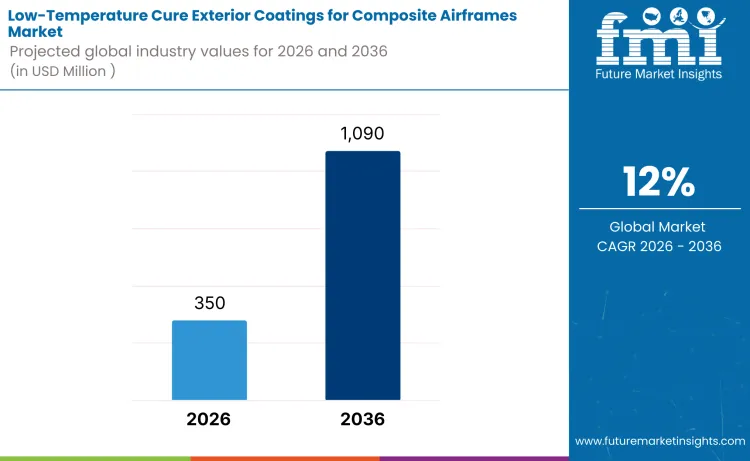
The global Low-Temperature Cure Exterior Coatings for Composite Airframes market is entering a defining growth phase, with industry value poised to expand significantly over the coming decade. From an estimated base in the mid-2020s, the market is on track to achieve substantial revenue gains by the mid-2030s as aircraft manufacturers and maintenance providers increasingly adopt advanced coating systems designed to protect composite airframes while reducing energy use and production costs.
Low-temperature cure exterior coatings are rapidly becoming indispensable in modern aircraft manufacturing and maintenance. As aerospace designers shift toward lightweight composite materials to enhance fuel efficiency and reduce operating costs, the need for coatings that can be cured at reduced temperatures — thereby protecting sensitive composite substrates — has never been greater. These advanced coatings deliver robust adhesion, long-term weather protection, and excellent performance across a range of operational environments, making them key enablers of next-generation aircraft design and sustainability goals.
Market Trajectory & Value Growth
The market is forecast to grow at an impressive compound annual growth rate (CAGR) through the next decade, reflecting heightened demand from commercial aviation, business jets, aftermarket services, and defense applications. This robust outlook is underpinned by the broad adoption of composite-intensive airframes and the need for exterior coatings that offer durability without the high thermal budgets associated with traditional curing processes.
Industrial stakeholders — including aircraft OEMs, suppliers, and coating manufacturers — recognize the strategic importance of low-temperature cure systems both as a production enabler and as a driver of operational efficiency. These coatings reduce curing cycle times, lower energy consumption in paint facilities, and support compliance with emerging environmental and safety standards.
Technological Advances & Innovations
At the heart of this market transformation are cutting-edge coating technologies that blend performance with sustainability. Epoxy-based low-temperature cure systems currently anchor the segment, prized for their strong adhesion and resistance to environmental stressors while enabling effective curing at reduced temperatures. Their balanced performance and processing characteristics have made them the backbone of many aerospace coating programs.
Beyond traditional epoxy systems, a wave of innovation is emerging across multiple fronts. Hybrid polymer formulations, next-generation polyurethane systems, and nano-enhanced coatings are expanding the range of options available to aircraft manufacturers and MRO providers. These technologies aim to combine rapid cure profiles with enhanced surface resilience, improved environmental protection, and compatibility with diverse composite substrates — delivering expanded functional benefits while supporting leaner manufacturing workflows.
The trend toward nano-engineered and hybrid chemistry coatings is particularly notable, as these solutions are designed to improve scratch resistance, weathering performance, and adhesion properties without raising cure temperatures. As composite materials continue to evolve, such innovations will be critical in enabling coatings that can match the performance needs of future aircraft platforms.
To access the complete data tables and in-depth insights, request a sample report here
Key Players Driving Market Growth
Several well-established coatings manufacturers currently lead the industry, leveraging extensive R&D capabilities, global manufacturing footprints, and deep aerospace expertise:
- PPG Aerospace continues to be a benchmark supplier, offering a suite of low-temperature cure exterior systems trusted by major aerospace OEMs.
- AkzoNobel Aerospace Coatings brings decades of surface coating expertise and is expanding its portfolio to include more energy-efficient formulations.
- Sherwin-Williams Aerospace is enhancing its global support infrastructure while adapting coating technologies to the demands of composite airframes.
- Axalta Coating Systems has broadened its offerings with advanced coatings that balance adhesion, coating durability, and production efficiency.
- Hentzen Coatings remains a niche innovator, delivering tailored solutions that support both manufacturing and maintenance environments.
In addition to these established leaders, a new wave of emerging manufacturers and specialty chemical firms is poised to expand market competition. These innovative players, often focused on sustainable materials, advanced polymer chemistries, and application-specific technologies, are broadening the competitive landscape and enabling faster adoption of next-generation coatings worldwide.
These entrants are developing unique formulations — from eco-friendly coatings with reduced volatile emissions to adaptive cure systems that intelligently respond to temperature and humidity conditions — empowering aerospace participants to meet both performance and regulatory expectations.
Market Drivers & Expansion Catalysts
Growth in the low-temperature cure exterior coatings space is being driven by several key forces:
- The increasing use of composites in aircraft structure design to improve fuel economy and reduce emissions.
- Greater emphasis on energy-efficient manufacturing processes that cut operational costs and enhance throughput.
- Rising demand for coatings that deliver superior weather and UV resistance across diverse flight conditions.
- Expansion of aerospace production in emerging regions, creating new demand hubs.
- Innovation in coating chemistry that pushes the boundaries of performance at lower cure temperatures.
Looking Ahead
As global aerospace activity continues to accelerate, particularly in commercial and business aviation, the low-temperature cure exterior coatings market will remain at the forefront of technological and commercial growth. With both established manufacturers and new technology leaders advancing their offerings, the industry is primed for sustained expansion that aligns with broader trends in aircraft design, sustainability, and production innovation.