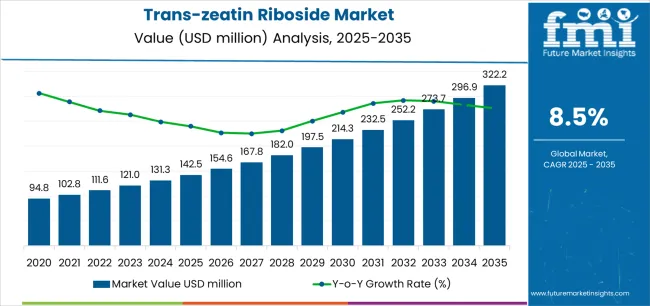
The global Trans-Zeatin Riboside market is entering a dynamic growth phase with an estimated valuation of USD 142.5 million in 2025 and projected expansion over the coming decade. This growth reflects a combination of expanding research applications, increasing adoption in plant science and agricultural innovation, and a surge in technological developments that are reshaping how this important plant hormone is synthesized, marketed, and utilized across the world.
Trans-Zeatin Riboside, a key cytokinin used extensively in plant biology, biotechnology research and agricultural studies, is capturing stronger interest from both established biochemical suppliers and emerging technology innovators. As institutions and commercial entities seek more precise tools for plant growth regulation, yield improvement, and experimental accuracy, this market is transforming into a hub of strategic activity and technological evolution.
Over recent years, demand for Trans-Zeatin Riboside has grown steadily across university laboratories and agricultural research centers, where high-purity formulations are highly prized for their reliability and performance. Researchers focused on plant tissue culture, genetic studies, and crop improvement are increasingly turning to advanced cytokinin products that offer consistent formulation quality and integrate with modern laboratory workflows. Meanwhile, agricultural scientists are applying these compounds in field trials and plant growth optimization projects that aim to enhance crop resilience, boost yield potentials, and tackle environmental stress challenges.
Established Leaders Expand Their Footprint
Several well-known biochemical companies have been instrumental in driving market maturity. These established manufacturers have developed broad portfolios of cytokinin products with varying purity levels and research-grade specifications. Their deep experience in synthesis technology and quality control has allowed them to build strong relationships with academic and industrial research partners globally.
These industry leaders are investing heavily in refining production processes, automating purification systems, and enhancing compound stability — all with the aim of delivering reliable, high-performance Trans-Zeatin Riboside to a wide range of scientific users. Their market position is further strengthened by well-developed distribution networks and a track record of compliance with rigorous laboratory standards.
In response to growing demand, these established players are also exploring ways to extend their reach into new geographies. Asia Pacific, in particular, has emerged as a high-growth region where expanding scientific infrastructure and agricultural research investment are creating fertile ground for growth. In regions such as Europe and North America, ongoing research funding and biotechnology initiatives continue to support adoption of advanced cytokinin tools.
To access the complete data tables and in-depth insights, request a sample report here
New Entrants Bring Fresh Technologies and Competitive Momentum
At the same time, a wave of new and innovative manufacturers is entering the Trans-Zeatin Riboside landscape. These emerging players are leveraging modern chemical engineering, novel synthesis pathways, and specialized high-purity technologies to differentiate themselves. Their focus on niche applications, customized formulations, and cost-effective solutions is helping to broaden the market beyond traditional research settings.
Innovations such as alternative purification techniques, enhanced formulation stability, and integration with automated laboratory systems are opening up new avenues of application. These advancements appeal not only to academic institutions but also to private sector research labs, biotechnology startups, and agricultural technology firms that are increasingly reliant on precise plant hormone regulation tools.
Some of these emerging manufacturers are also pioneering efforts to improve supply-chain resilience and reduce production bottlenecks, which have historically been a challenge for highly specialized compounds like Trans-Zeatin Riboside. By adopting scalable synthesis methods and partnering with regional distributors, these companies are helping to lower barriers to entry for end users in cost-sensitive markets.
Collaboration and Innovation Drive Market Growth
Collaboration between established and emerging players is another hallmark of the current market environment. Joint initiatives in research partnerships, technology sharing, and co-development projects are accelerating the pace of innovation. These alliances enable rapid refinement of product quality, faster response to evolving research needs, and cross-regional knowledge exchange that benefits the broader scientific community.
One significant trend shaping the market is the growing integration of Trans-Zeatin Riboside with automated laboratory management tools and precision agriculture platforms. As laboratories and agricultural research institutions adopt more sophisticated digital systems, there is increasing demand for compounds that can be seamlessly integrated into high-throughput workflows and data-driven experimentation.
Looking ahead, market participants anticipate sustained demand growth as the global focus on sustainable agriculture, food security, and advanced plant science research continues to intensify. With both seasoned manufacturers and agile newcomers contributing to a vibrant and competitive landscape, the Trans-Zeatin Riboside market is positioned for meaningful expansion and innovation throughout the decade.