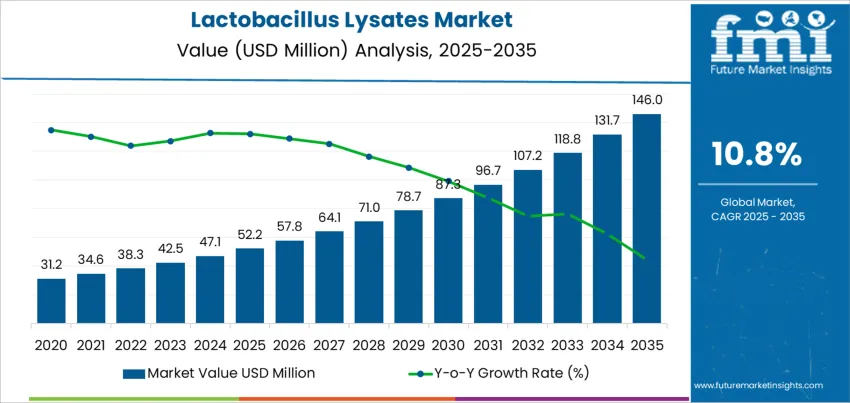
The global Lactobacillus Lysates Market, valued at USD 52.2 million in 2025, is poised for significant growth over the next decade as both legacy ingredient producers and emerging biotechnology innovators work to expand their footprints and introduce cutting-edge technologies into this rapidly developing space. Driven by rising demand for microbiome-friendly ingredients and increased application in skincare, personal care, and wellness formulations, the market is expected to climb robustly toward new revenue highs through strategic expansion and technological advancement.
Lactobacillus lysates — bioactive compounds derived from the breakdown of beneficial Lactobacillus bacteria — have gained traction for their ability to support skin barrier function, soothe irritation, and promote overall skin and gut wellness. Historically niche, these ingredients are gaining mainstream appeal as consumers increasingly seek products aligned with “clean beauty,” natural wellness, and holistic health trends. This broadening use case has spurred both established chemical and ingredient giants and nimble startups to invest in capacity expansion, R&D partnerships, and new product innovations that cater to evolving industry demands.
Established Players Strengthening Core Leadership
Industry leaders like BASF SE, Croda International, Evonik Industries, Symrise (including IFF and Givaudan actives), Dow Inc., Ashland, Clariant, and Seppic continue to hold significant market influence with wide distribution networks, well-developed fermentation and lysate processing technologies, and strategic alliances across the beauty and personal care value chain. These established manufacturers are expanding production capabilities, enhancing quality standards, and optimizing supply chains to address surging interest from cosmetics and skincare formulators.
Through targeted investments in advanced fermentation technologies, improved lysate purification processes, and formulation support services, these veteran suppliers are enabling brands to incorporate Lactobacillus lysates more seamlessly into everything from moisturizers and serums to masks and body care products. By enhancing the stability, consistency, and scalability of lysate production, these companies are facilitating broader adoption while maintaining rigorous safety and compliance standards.
Emerging Manufacturers Driving Innovation and Diversification
Alongside established names, a new generation of specialized ingredient developers and biotech startups is entering the lactobacillus lysates space with innovative approaches that challenge traditional paradigms. These emerging manufacturers are leveraging advances in microbial biotechnology, precision fermentation, and bioengineering to produce lysates with tailored bioactive profiles, enhanced functional properties, and greater versatility for formulation scientists.
Many of these newer entrants are focused on niche segments such as cruelty-free production methods, sustainability-driven supply chains, and proprietary extraction processes that maximize the efficacy of lysate-derived actives. By partnering with contract manufacturers, cosmetic brands, and research institutions, they are rapidly expanding the commercial viability of novel lysate variants that meet specific performance criteria or consumer preferences.
The influx of fresh perspectives and technological experimentation from smaller players not only fuels competitive innovation but also pushes industry incumbents to rethink and refine their product portfolios. This dynamic interplay of established expertise and entrepreneurial energy is shaping a fertile landscape in which both categories of manufacturers thrive.
Technological Advancements and Application Growth
Advances in fermentation science, bio-processing, and analytical characterization have dramatically improved how Lactobacillus lysates are produced and incorporated into end-use products. These technical improvements — including more efficient extraction methods, refined metabolite stabilization techniques, and better microbiome-friendly formulation strategies — are critical to expanding the ingredient’s range of applications across cosmetic, personal care, and wellness sectors.
For instance, the trend toward microbiome-focused skincare has opened new pathways for lysates to be integrated into barrier-supporting serums, hydrating moisturizers, and soothing formulations aimed at sensitive skin. Meanwhile, the general wellness and nutraceutical industries are exploring opportunities to harness lysate properties in dietary supplements, functional beverages, and other ingestible formats that capitalize on gut health narratives.
To access the complete data tables and in-depth insights, request a sample report here
Global Demand and Regional Momentum
Market expansion is not confined to any single geography. Regions such as Asia-Pacific, North America, and Europe are witnessing accelerated interest in probiotic and postbiotic ingredients. Increasing consumer awareness of skin health, rising disposable income, and a proliferation of e-commerce channels are driving demand in both mature and emerging markets. Local manufacturers and multinational companies alike are tailoring strategies to capture regional nuances in consumer behavior and regulatory landscapes — from premium skincare in urban markets to clean beauty adoption in younger demographics.
Outlook and Industry Implications
The future of the Lactobacillus lysates market hinges on continued collaboration between established ingredient suppliers and innovative new entrants, sustained investment in technological advancement, and expanded consumer education around the benefits of microbiome-friendly formulations. With market value set to grow significantly beyond its current base, the industry is at a pivotal moment defined by rapid innovation, competitive expansion, and diverse application opportunities.
As both traditional manufacturers and agile newcomers intensify efforts to bring differentiated solutions to market, stakeholders across the value chain — from ingredient producers to brand formulators — are positioned to benefit from this dynamic period of growth and transformation.