

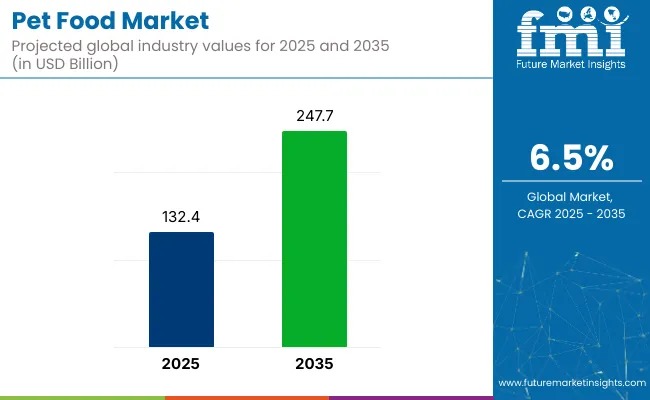
The global pet food market is entering a decisive growth phase, reflecting how deeply pets are embedded into modern households. Valued at USD 132.4 billion in 2025, the market is projected to almost double to USD 247.7 billion by 2035, expanding at a steady CAGR of 6.5%. This momentum is underpinned by rising pet ownership, increasing disposable incomes, and a structural shift toward nutrition that mirrors human food trends—premium, functional, and personalized.
Explore trends before investing – request a sample report today!
At a macro level, pet food currently represents 3.6% of the USD 72 billion animal nutrition market and 1.73% of the USD 150 billion global pet care industry, underscoring its growing strategic importance. While still a niche within the broader USD 3.6 trillion packaged food sector, pet food continues to outperform many traditional food categories due to emotional spending patterns and long-term commitment from pet parents.
Premiumization and Humanization Reshape Demand
The market’s expansion is strongly linked to pet humanization, with owners increasingly treating pets as family members. This behavioral shift has accelerated demand for diets that support digestive health, joint mobility, immune strength, and life-stage nutrition. Functional ingredients such as probiotics, omega-3 fatty acids, antioxidants, and glucosamine are no longer niche—they are becoming mainstream value drivers across both mass and premium segments.
Product innovation is also addressing breed-specific and age-specific requirements, particularly in dogs and cats. As a result, tailored nutrition is emerging as a key differentiator for brands seeking pricing power and long-term loyalty.
Regulatory Oversight Ensures Quality and Trust
Globally, regulatory frameworks play a central role in shaping the pet food landscape. In the United States, the FDA’s Center for Veterinary Medicine governs ingredient approvals and nutritional compliance. Across Europe, EFSA regulations and FEDIAF guidelines enforce strict safety assessments and standardized formulations. Countries such as Japan maintain rigorous oversight through their Ministries of Agriculture, particularly around labeling transparency and ingredient sourcing.
These regulations, while increasing compliance costs, enhance consumer trust and create barriers to entry, favoring established manufacturers with robust quality systems.
Segment Insights Highlight Investment Hotspots
Kibble and dry food remains the backbone of the market, projected to account for 42.5% of total sales in 2025. Its dominance is driven by affordability, convenience, long shelf life, and compatibility with automated feeding systems—particularly in urban households.
Key advantages include:
- Dental benefits from crunchy textures
- Consistent nutrient delivery
- Continuous flavor and coating innovation to enhance palatability
From a sourcing perspective, animal-derived ingredients are expected to lead with a 22.7% market share. Chicken and fish dominate due to digestibility and supply stability, while beef, lamb, and turkey support premium and specialized diets. Fish-based proteins, in particular, are gaining traction for their omega-3 benefits linked to skin and coat health.
Dogs and Conventional Diets Drive Volume
By animal type, dogs account for over 60% of global pet food demand, supported by higher ownership rates and strong spending on treats, breed-specific diets, and senior nutrition. Puppy and adult formulations continue to dominate volumes, while senior dog food is one of the fastest-growing subcategories due to aging pet populations.
Despite rising interest in organic and monoprotein options, conventional pet food will retain approximately 70% market share in 2025, driven by affordability, wide retail availability, and trusted formulations suitable for everyday nutrition.
Regional Outlook: UK Leads Growth Momentum
Western Europe emerges as a key growth engine, with the UK projected to expand at a CAGR of 6.8% through 2035, making it the fastest-growing national market. Growth is fueled by premiumization, direct-to-consumer e-commerce, and demand for breed-specific and grain-free products.
Other notable markets include:
- France (6.6% CAGR): Strong demand for functional and eco-friendly formulations
- Germany (6.4% CAGR): Rising preference for hypoallergenic and monoprotein diets
- United States (6.2% CAGR): High spending on organic diets and dental and joint health treats
- Japan (6.1% CAGR): Growth driven by small-breed and age-specific formulations in urban households
Competitive Landscape and Innovation Focus
The market is moderately consolidated, led by Mars Petcare, Nestlé Purina PetCare, Hill’s Pet Nutrition, Blue Buffalo, and Cargill. These players are investing heavily in R&D, focusing on personalized nutrition, functional health claims, and sustainable protein alternatives such as insect-based and plant-derived sources.
Recent developments highlight the industry’s innovation trajectory. In February 2025, UK retailer Pets at Home launched lab-grown chicken dog treats, signaling a shift toward sustainable protein solutions. Earlier, Mars Petcare’s acquisition of Champion Petfoods strengthened its position in the premium segment through trusted brands like ORIJEN and ACANA.
Outlook
As pets increasingly mirror human dietary expectations, the global pet food market is poised for resilient, long-term growth. Brands that combine scientific credibility, regulatory compliance, and innovation in functional and sustainable nutrition will be best positioned to capture value in this evolving landscape.

