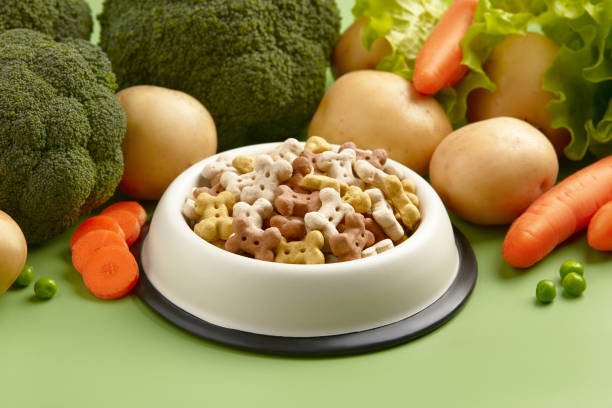
The global Plant-Based Pet Food market is entering a decisive growth phase, driven by shifting consumer ethics, rising pet humanization, and heightened health awareness. Valued at USD 26.9 billion in 2024, the market is projected to expand at a robust CAGR of 7.8% between 2024 and 2034, reaching USD 57.3 billion by 2034 and approaching USD 60–62 billion by 2035. This sustained momentum reflects a fundamental transformation in how pet owners perceive nutrition, sustainability, and responsibility toward animals and the environment.
Explore trends before investing – request a sample report today!
Ethics, Health, and Sustainability Redefining Pet Nutrition
A growing population of vegan and flexitarian pet owners is reshaping the pet food landscape. Increasingly, pets are viewed as family members, prompting owners to align pet diets with personal ethical values. Avoidance of animal-derived ingredients, concerns about animal welfare, and a desire to reduce the environmental footprint of traditional meat-based pet food are accelerating adoption of plant-based alternatives.
Post-pandemic health consciousness has further reinforced this shift. Consumers are actively choosing organic, clean-label, and natural formulations, not only for themselves but also for their pets. Plant-based pet food is gaining credibility as a functional nutrition option that can support digestion, weight management, skin health, and allergen reduction when properly formulated.
Market Snapshot and Growth Outlook
- Market size (2024): USD 26.9 billion
- Projected size (2034): USD 57.3 billion
- Value CAGR (2024–2034): 7.8%
Semi-annual performance trends highlight strengthening growth momentum. CAGR rose from 7.3% in H1 2023–2033 to 7.9% in H2 2024–2034, reflecting rising demand, premiumization, and expanding product acceptance. The market recorded a 20 basis-point increase in H1 and a 30 basis-point increase in H2, signaling accelerating revenue realization across global markets.
Transparency and Nutrition Science Take Center Stage
Modern pet owners demand more than ethical positioning. Transparency in ingredient sourcing, labeling accuracy, certifications, and nutritional adequacy has become non-negotiable. Manufacturers are responding by investing in rigorous R&D, focusing on closing nutritional gaps through fortified formulations that meet pets’ dietary requirements.
Education is equally critical. Brands that proactively communicate both the benefits and limitations of plant-based pet diets are better positioned to earn trust and encourage informed decision-making centered on pet health and long-term wellbeing.
Pet Humanization and Pandemic-Led Behavioral Shifts
Pet humanization continues to be a powerful growth catalyst, with nearly 95% of pet owners globally considering pets as family members. This mindset supports premium spending on specialized vegan meals, vegetable-based treats, and functional snacks designed to enhance physical and mental health.
The COVID-19 pandemic further accelerated plant-based adoption. Despite supply chain disruptions, manufacturers maintained operations, and demand remained resilient as consumers increasingly associated plant-based nutrition with immunity, wellness, and preventive care—for both humans and animals.
Competitive Structure Encouraging Innovation
The market features a two-tier competitive structure:
- Organized players, accounting for roughly 40% of global sales, leverage large-scale production, advanced R&D infrastructure, and global distribution networks.
- Unorganized and regional players, contributing nearly 60% of sales, operate in niche segments, offering customized solutions aligned with local dietary preferences and cultural norms.
This diversity fosters innovation, product variety, and rapid responsiveness to evolving consumer trends.
Regional Growth Hotspots
Growth trajectories vary significantly across regions:
- United States: 5.3% CAGR, driven by environmental awareness, premium retail presence, and ethical consumption
- Germany: 6.9% CAGR, supported by strict quality standards and sustainability-focused consumers
- India: 9.4% CAGR, fueled by urbanization, vegetarian cultural influence, and rising disposable incomes
- Brazil: 12.5% CAGR, led by expanding pet ownership and abundant plant-based raw materials
Category Insights Highlight Convenience and Accessibility
Dry plant-based kibbles dominate the product landscape, holding 25.3% value share in 2024, due to affordability, convenience, nutritional balance, and extended shelf life. Store-based retail remains the primary distribution channel, accounting for 86.4% of sales, with supermarkets leading purchases.
Competitive Developments Signal Market Maturity
Industry players are intensifying investments in digital presence, R&D, and capacity expansion. Strategic launches continue to reshape competition. In March 2024, PawCo Food Inc. introduced LuxBites and InstaBites, offering shelf-stable, cost-effective plant-based dog meals. In September 2023, UK-based Omni expanded its vegan dog food portfolio across Western Europe, strengthening its international footprint.
Outlook
With ethical consumption, health-driven choices, and sustainability concerns converging, the Plant-Based Pet Food market is positioned for long-term expansion. Innovation-led formulations, transparent communication, and regional customization will define competitive success as the market advances toward a USD 60+ billion valuation by 2035.
Leading Companies: Benevo, Wysong, Evanger’s Dog & Cat Food, Nature’s Recipe, My Aistra, Evolution Diet, Cannapple, Eco Dog and Cats, Nature’s Diet, Dr. Goodpet