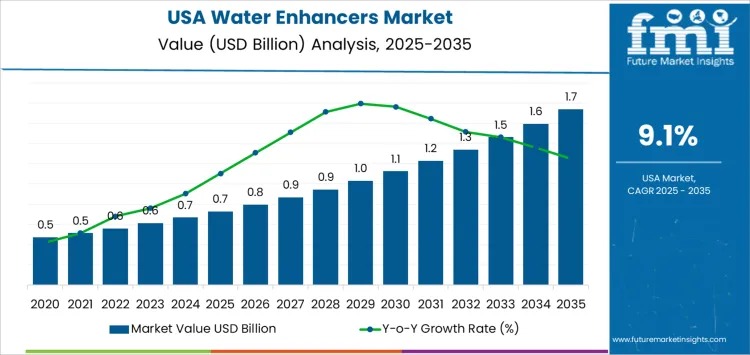
The demand for water enhancers in the USA is entering a strong growth phase, driven by changing hydration habits and a nationwide push to reduce sugar intake. Valued at USD 0.7 billion in 2025, the USA water enhancers market is forecast to reach USD 1.7 billion by 2035, registering a robust compound annual growth rate (CAGR) of 9.1% over the period. The category is increasingly positioned as an affordable and flexible alternative to carbonated soft drinks and ready-to-drink flavored beverages.
Water enhancers—available as liquid concentrates, squeezable drops, and powder sticks—allow consumers to customize flavor intensity while keeping calorie intake low. Their portability, portion control, and long shelf life align well with busy lifestyles, office routines, and on-the-go consumption. As health-conscious households shift away from sugary drinks, enhancers are becoming a daily hydration companion rather than a niche product.
PR To Explore Detailed Market Data, Segment-Wise Forecasts, and Competitive Insights, Request Sample Report!
Flavored formulations continue to dominate demand, accounting for the largest share of consumption across households and age groups. Beyond taste, manufacturers are expanding into functional profiles that include vitamins, electrolytes, caffeine, antioxidants, and plant-based actives. This functional evolution supports repeat usage among fitness enthusiasts, commuters, and younger consumers seeking convenience without compromising wellness goals.
Retail availability plays a critical role in category expansion. Water enhancers benefit from high visibility across supermarkets, hypermarkets, and convenience stores, often positioned near bottled water or checkout counters to encourage impulse purchases. At the same time, online platforms and subscription models are gaining traction, supporting recurring demand and direct-to-consumer engagement.
Market Growth Outlook Through 2035
Demand for water enhancers in the United States follows a two-phase growth trajectory. Early-period growth is driven by rapid adoption as consumers actively reduce sugary beverage consumption and experiment with zero-calorie alternatives. New flavor systems, clean-label formulations, and functional additions such as electrolytes and vitamins accelerate trial rates and household penetration during this phase.
In the later years of the forecast, growth moderates as the market matures and competition intensifies. Expansion increasingly depends on differentiated claims, including natural sweeteners, plant-based ingredients, and personalized nutrition positioning. While private-label products introduce pricing pressure, established brands maintain volumes through innovation, reformulation, and strong retail partnerships. Functional sub-segments continue to provide incremental uplift, though at a steadier pace.
Why Demand for Water Enhancers Is Rising in the USA
The growing appeal of water enhancers is closely tied to consumer demand for convenient, low-cost ways to improve hydration without added sugar. These products allow users to transform plain water into flavored beverages using a few drops or a single stick, making them well suited for work, travel, and fitness routines. Zero- and low-calorie claims resonate strongly with dieters, athletes, and consumers managing daily caloric intake.
Additional demand comes from fitness centers, outdoor recreation, and sports nutrition channels, where enhancers are used before, during, and after physical activity. However, competition from flavored bottled water, sparkling water, and ready-to-drink beverages remains a restraint. Concerns around artificial sweeteners or synthetic additives also influence purchasing decisions among clean-label focused consumers.
Leading Product Types and Distribution Channels
Flavored water enhancers represent the leading product type, supported by everyday hydration routines and broad household adoption. Energy-focused formats featuring caffeine and B-vitamins appeal to students and working professionals, while fitness-oriented variants with electrolytes and amino acids target sports and active-lifestyle users.
Key points shaping product and channel leadership include:
- Flavored enhancers dominating daily hydration use
- Energy formats serving functional, caffeine-based occasions
- Fitness-focused products growing alongside sports nutrition trends
On the distribution side, hypermarkets and supermarkets hold the largest share due to routine grocery purchasing and strong in-store visibility. Convenience stores capture on-the-go demand, while pharmacies position enhancers within wellness-focused assortments. Online retail, though smaller in share, is expanding through subscription models and direct brand engagement.
Regional Demand Patterns Across the United States
Adoption is strongest in the West, South, and Northeast, where premium hydration trends and openness to new beverage formats are highest. The West USA leads with a 10.5% CAGR, driven by health-oriented consumers, reusable bottle usage, and strong functional hydration demand. The South follows at 9.4% CAGR, supported by climate-driven hydration needs and high convenience-store penetration.
The Northeast records steady growth at 8.4% CAGR, shaped by urban lifestyles, reduced-sugar preferences, and compact packaging formats. The Midwest shows more gradual expansion at 7.3% CAGR, driven by value-focused purchasing, family-size multipacks, and youth sports participation.
Competitive Landscape and Strategic Focus
The competitive structure of the USA water enhancers market reflects a balance between large multinational beverage companies and targeted niche players. PepsiCo Inc. leads the market with a strong portfolio and extensive distribution reach, followed by The Coca-Cola Company, Nestlé S.A., The Kraft Heinz Company, and Britvic Plc.
Across the industry, strategies center on flavor innovation, sugar reduction, clean-label positioning, and partnerships with sports and wellness brands. Sustainability is also influencing product design, as water enhancers reduce packaging waste compared to single-use bottled beverages. As hydration habits continue to evolve, water enhancers are well positioned to remain a core component of the USA’s better-for-you beverage landscape.