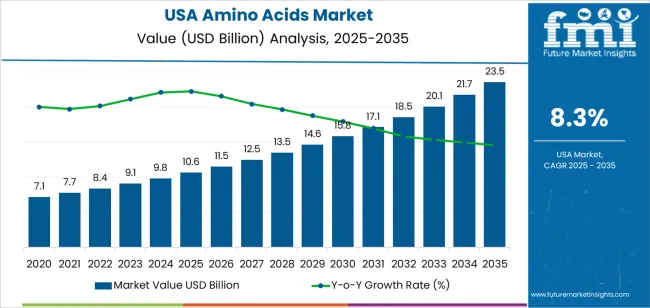
The United States amino acids market is entering an unprecedented phase of growth, driven by rising demand across diverse industries including food and beverage, pharmaceuticals, animal nutrition, and personal care. According to the latest market insights, the U.S. amino acids sector is projected to reach USD 10.6 billion in 2025, with expectations to soar to USD 23.5 billion by 2035 at an estimated compound annual growth rate (CAGR) of 8.3% over the forecast period. This remarkable expansion highlights the critical importance of amino acids as foundational bio-molecules and underscores growing opportunities for both established producers and innovative newcomers in the industry.
Amino acids serve as the building blocks of proteins and play vital roles in metabolic, nutritional, and therapeutic applications. With health-conscious consumers increasingly seeking functional foods and dietary supplements, and with animal nutrition producers demanding precision nutrition solutions, the market’s transformative growth has attracted significant attention from global and domestic manufacturers alike.
Market Drivers Support Strong Upswing
The accelerating adoption of amino acids across multiple sectors has created a fertile environment for companies to scale operations, introduce novel formulations, and invest in cutting-edge technologies. Growth drivers include expanding applications in sports nutrition, plant-based diets, clean-label food products, and advanced clinical nutrition therapies. Consumers’ rising awareness of health benefits associated with amino acid supplementation — including enhanced muscle recovery and improved immune response — has reinforced demand across age groups and lifestyle segments.
Within animal nutrition, amino acids such as lysine, methionine, and threonine are becoming indispensable in feed formulations that help livestock achieve optimal growth performance and nutrient utilization. This shift toward precision nutrition not only boosts production efficiency but also supports sustainable farming practices, aligning with broader environmental and regulatory goals.
Established Players Strengthen Market Leadership
Leading global manufacturers are actively expanding their footprint in this dynamic landscape. Companies such as Kyowa Hakko Bio Co., Ltd., Evonik Industries AG, CJ CheilJedang Corporation, and Archer Daniels Midland (ADM) have long been recognized for their deep technical expertise, robust production capacities, and broad product portfolios. These players are leveraging their manufacturing excellence to deliver high-purity amino acid products tailored for specialized applications — ranging from pharmaceutical-grade ingredients to feed-grade solutions that support large-scale agricultural operations.
Many of these established firms are also investing heavily in sustainable production technologies, including advanced fermentation processes that reduce energy consumption and enhance yield efficiency. By incorporating bio-based and plant-derived sources into their product lines, they are responding to the clear market preference for non-animal and environmentally responsible ingredients.
New Entrants and Innovators Redefine Market Possibilities
At the same time, a wave of new manufacturers and technology innovators is reshaping the competitive terrain. Startups and mid-sized producers with expertise in precision fermentation, microbial synthesis, and synthetic biology are entering the market with differentiated offerings that address emerging consumer trends.
These emerging manufacturers are pushing the boundaries of amino acid production through innovations such as tailor-made amino acid blends for personalized nutrition, next-generation fermentation processes that increase purity with lower environmental impact, and smart manufacturing platforms capable of rapid scale-up to meet fluctuating demand. This influx of technological advancement is enabling more agile responses to evolving customer needs while lowering barriers to entry for niche players across the supply chain.
Strategic Partnerships Fuel Expansion Opportunities
Strategic collaborations across the value chain are also gaining traction. Partnerships between biotech firms, academic institutions, and traditional producers are accelerating R&D efforts and supporting the commercialization of high-value amino acid solutions. For example, collaborative projects focused on precision nutrition and therapeutic applications are enabling manufacturers to unlock new revenue streams in clinical nutrition and personalized health regimes.
In parallel, investments in digital platforms, data analytics, and automation technologies are enhancing operational efficiencies. These capabilities help producers optimize fermentation cycles, improve quality control, and strengthen supply chain resilience — ultimately contributing to faster time-to-market for innovative products.
Focus on Sustainability and Consumer Centricity
Sustainability continues to be a central theme shaping competitive strategies in the U.S. amino acids market. With heightened scrutiny on ecological footprints and resource usage, manufacturers are adopting green chemistry processes and circular economy principles. These include optimizing raw material utilization, deploying renewable energy solutions, and minimizing waste — efforts that align with both regulatory expectations and consumer preferences for responsible sourcing.
Manufacturers are also prioritizing transparency and traceability, providing end-users with clear information on product origins, production methods, and certification standards. This focus on consumer centricity enhances brand trust while supporting long-term growth in sectors such as health supplements and functional foods.
Outlook: A Decade of Unmatched Growth
As demand continues to diversify and expand, the U.S. amino acids market is poised for significant transformation. With an expected trajectory that more than doubles market value over the next decade, this sector presents compelling opportunities for both legacy companies and forward-thinking innovators. Whether scaling existing technologies or pioneering new solutions, market participants are well positioned to shape the future of amino acid applications across industries.