

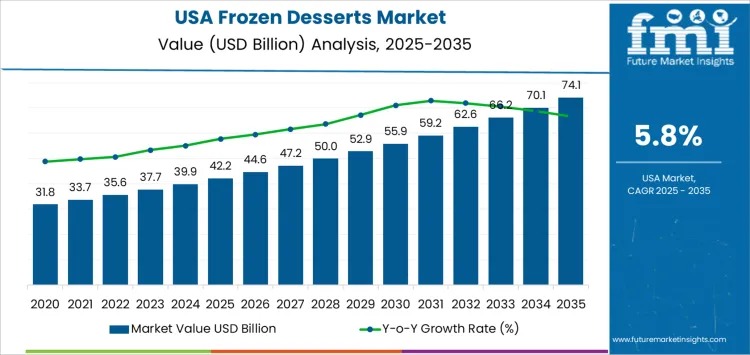
The USA frozen desserts industry is entering a sustained phase of expansion, driven by evolving consumer lifestyles, product innovation, and expanding retail accessibility. Valued at USD 42.2 billion in 2025, demand for frozen desserts—including ice cream, frozen cakes, sorbets, frozen yogurt, and novelties—is forecast to reach USD 74.1 billion by 2035. This growth reflects a steady CAGR of 5.8% over the forecast period, underlining the category’s resilience within the broader American food industry.
Frozen desserts continue to hold a unique position in U.S. households, combining indulgence, convenience, and emotional appeal. As consumers increasingly seek easy-to-serve treats for home consumption, social gatherings, and everyday indulgence, frozen desserts remain a preferred choice across age groups. The category’s ability to adapt to shifting preferences—through new flavors, textures, and dietary formats—has been central to maintaining strong demand momentum.
Explore trends before investing – request a sample report today! https://www.futuremarketinsights.com/reports/sample/rep-gb-29552
From a value growth perspective, the market is set to add USD 13.7 billion between 2025 and 2030, rising from USD 42.2 billion to USD 55.9 billion. This phase is characterized by rapid diversification in product portfolios. Demand for plant-based, vegan, gluten-free, and organic frozen desserts is increasing as health-conscious consumers look for alternatives to traditional dairy-based offerings. Non-dairy products made from almond, coconut, and oat milk are no longer niche; they are becoming mainstream options on supermarket shelves.
Between 2030 and 2035, the market is projected to generate an additional USD 18.2 billion in value, reaching USD 74.1 billion. Growth during this period will be driven by innovation-led premiumization. Reduced-calorie, low-sugar, and high-protein frozen desserts are expected to see strong uptake, particularly among younger consumers balancing indulgence with wellness goals. Premium and artisanal frozen desserts, offering gourmet flavors and clean-label ingredients, will further strengthen category value.
Ice cream remains the leading product type in the U.S. frozen desserts market, supported by its deep cultural roots and broad consumer acceptance. However, frozen cakes account for nearly 50% of total demand by product type, reflecting their popularity for celebrations and special occasions. Their long shelf life, portion flexibility, and consistent quality make frozen cakes an attractive option for both households and foodservice operators.
By category, conventional frozen desserts continue to dominate, accounting for 64% of demand in 2025. Traditional ice creams, cakes, and novelty desserts retain strong appeal due to their rich taste profiles, wide flavor availability, and affordability. While sugar-free and better-for-you options are gaining traction, conventional products remain the backbone of market volume, supported by strong brand loyalty and habitual consumption.
Regionally, demand growth is spread across all major U.S. regions, with notable variations in pace:
- West USA leads with a CAGR of 6.7%, driven by a warm climate, diverse demographics, and high adoption of plant-based and premium desserts.
- South USA follows at 6.0% CAGR, supported by year-round consumption and growing interest in reduced-sugar and dairy-free products.
- Northeast USA records a 5.3% CAGR, fueled by demand for premium, artisanal, and functional frozen desserts.
- Midwest USA grows at 4.6%, reflecting steady adoption of healthier and convenient frozen treats.
Retail accessibility is another critical growth enabler. Supermarkets, convenience stores, and online grocery platforms continue to expand frozen dessert assortments, improving visibility and availability. Advances in cold-chain logistics and e-commerce are making frozen desserts more accessible beyond major urban centers, supporting incremental demand growth.
Sustainability is also shaping purchasing decisions. Consumers are increasingly attentive to eco-friendly packaging, responsibly sourced ingredients, and reduced food waste. Manufacturers responding to these priorities are strengthening brand equity while aligning with long-term consumer values.
The competitive landscape remains dynamic, with leading players such as The Hain Celestial Group, General Mills Inc., Halo Top Creamery, Unilever, and Kellogg Company shaping category evolution. The Hain Celestial Group holds a significant share of demand, while brands like Halo Top continue to gain traction by targeting health-conscious consumers with low-calorie, high-protein offerings. Competition is increasingly centered on balancing indulgence, nutrition, and innovation.
Looking ahead, the U.S. frozen desserts market is poised for continued expansion through 2035. As consumers seek comfort, convenience, and customization in their dessert choices, frozen desserts will remain a core indulgence—evolving through innovation, sustainability, and diversified product offerings to meet changing lifestyle needs.
