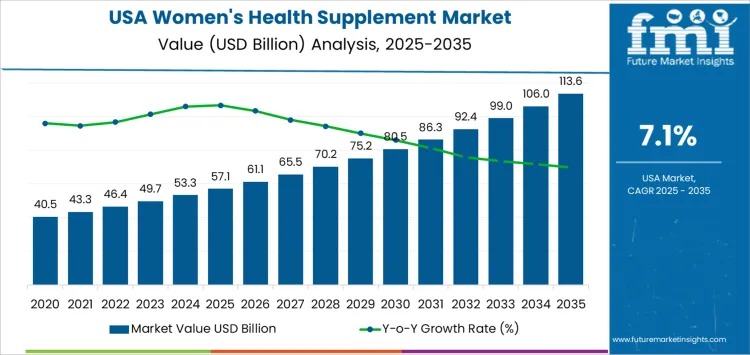
The women’s health supplements market in the USA is entering a decade of sustained, data-backed expansion as awareness of women-specific nutritional needs moves firmly into the mainstream. Valued at USD 57.1 billion in 2025, the market reflects a growing shift toward preventive healthcare, personalized nutrition, and proactive wellness management across all female age groups. Vitamins, minerals, probiotics, and targeted formulations supporting hormonal balance, bone health, fertility, and menopause are increasingly viewed as daily health essentials rather than optional add-ons.
This momentum is reinforced by demographic and lifestyle factors. Rising workforce participation, busy routines, dietary gaps, and longer life expectancy are driving women to adopt supplements as part of long-term wellness strategies. By 2026, market demand is projected to reach USD 61.1 billion, climbing to USD 65.5 billion in 2027 and USD 70.2 billion in 2028. The steady upward trajectory signals a structurally strong market with broad consumer acceptance.
Explore trends before investing – request a sample report today! https://www.futuremarketinsights.com/reports/sample/rep-gb-29565
By 2029, demand for women’s health supplements in the USA is expected to reach USD 75.2 billion, marking a pivotal phase where product specialization and life-stage targeting gain greater prominence. Supplements addressing prenatal and postnatal nutrition, menopause support, bone density, immunity, and energy management are expanding their footprint as women increasingly seek solutions tailored to their evolving physiological needs. This period also reflects deeper consumer trust in supplements as part of preventive care routines.
Beyond 2029, growth is expected to accelerate as innovation and personalization reshape the competitive landscape. By 2035, the market is forecast to reach USD 113.6 billion, underpinned by wider adoption across younger, middle-aged, and aging female populations. Advances in formulation science, cleaner ingredient profiles, and customized nutrient blends will further strengthen demand, ensuring resilience through the 2030s.
Market at a Glance: Key Demand Indicators
- Market Value (2025): USD 57.1 billion
- Forecast Value (2035): USD 113.6 billion
- CAGR (2025–2035): 7.1%
- Leading Dosage Form: Tablets (38% share)
- Top Regions: West USA, South USA, Northeast USA, Midwest USA
The primary driver behind this growth is the rising integration of supplements into preventive health and wellness routines. Women increasingly use dietary supplements to address nutritional gaps caused by lifestyle pressures, dietary patterns, or life-stage transitions. Bone health, hormonal balance, immune support, and reproductive health remain core focus areas, supported by growing awareness of nutrient deficiencies and long-term health maintenance.
Product preferences further shape market dynamics. Vitamins and minerals dominate the type segment, accounting for approximately 35% of total demand. Nutrients such as calcium, vitamin D, B-complex vitamins, magnesium, and iron play a critical role in supporting energy levels, bone density, metabolism, and overall well-being. Their established clinical relevance and broad availability make them foundational products within women’s supplement regimens.
Dosage form trends also highlight consumer priorities. Tablets lead the market with a 38% share, favored for their convenience, precise dosing, cost efficiency, and long shelf life. Multivitamin tablets, calcium supplements, and combination formulations addressing multiple health concerns remain popular among women seeking simple, reliable daily solutions. While alternative formats like gummies and soft gels are gaining visibility, tablets continue to anchor routine supplementation.
Regionally, demand growth is robust across the country, with notable variations. The West USA leads with a projected CAGR of 8.2%, driven by high health awareness, strong wellness culture, and higher adoption of preventive care. The South follows at 7.3%, supported by expanding healthcare access and a growing middle-aged female population. The Northeast is forecast to grow at 6.6%, reflecting consistent adoption among urban, health-literate consumers, while the Midwest records a steady 5.7% CAGR as awareness and distribution channels continue to expand.
The competitive landscape remains dynamic. Major players such as Amway Corporation, Herbalife Nutrition Ltd., GNC Holdings, Inc., and Nature’s Bounty (Nestlé) compete through formulation breadth, life-stage targeting, product quality, and omnichannel distribution. Brands increasingly differentiate through clean-label positioning, transparent ingredient sourcing, and tailored health claims aligned with women’s evolving expectations.
Overall, the USA women’s health supplements market represents a high-growth, resilient segment within the broader dietary supplements industry. As preventive healthcare, personalized nutrition, and female wellness continue to gain strategic importance, demand for women-focused supplements is set to remain strong, consistent, and opportunity-rich over the next decade.