

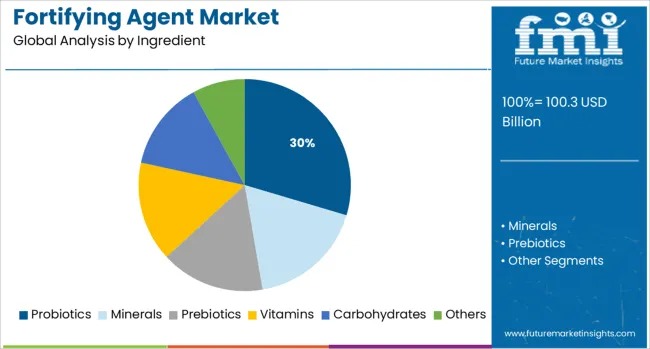
The global fortifying agent market is set to expand significantly as manufacturers align product formulations with rising consumer preference for nutrient-enriched food and preventive health solutions. Strong demand for vitamin- and mineral-rich products is boosting adoption across dairy, cereals, infant nutrition, sports supplements, functional beverages, and ready-to-eat categories.
Explore trends before investing – request a sample report today! https://www.futuremarketinsights.com/reports/sample/rep-gb-14899
Strong Forecast Signals Accelerating Preventive Nutrition Demand
The market is valued at USD 100.3 billion in 2025 and projected to reach USD 210.6 billion by 2035, exhibiting a 7.7% CAGR. The expansion reflects rising awareness of dietary gaps, demand for immunity-focused food solutions, and broader use of micronutrient fortification to improve product differentiation. Government-backed policies, advocacy by WHO and FAO, and national health programs in developing economies continue to shape mandatory and voluntary fortification strategies.
Probiotics Lead Ingredient Growth with 29.6% Share
The probiotics segment accounts for 29.6% share in 2025, driven by clinical validation of gut-supporting strains and increasing integration into functional dairy products, breakfast snacks, nutraceutical beverages, and pediatric nutrition. Growing preference for preventive care over reactive medication is enabling stronger uptake, particularly in regions with high lactose alternatives and expanding infant formula demand.
Key advantages supporting growth:
• Proven impact on immune and gut health
• Rising applications in single-strain and multi-strain blends
• Expanding consumption in dietary supplements
Powder Form Dominates with 47.8% Share
Powder-based fortifying agents represent 47.8% of market share, supported by longer stability and compatibility with large-scale processing. Their controlled dosing, convenient handling, and extended shelf life make them a preferred choice for manufacturers in cereals, baked goods, beverages, and fortified staple categories.
Growing adoption of vitamin premixes, encapsulated mineral powders, and infant formula blends reinforces demand for powdered formats as brands shift toward stable and clean-label fortification systems.
Market Drivers: Nutrition Policies, Fortified Staples & Micronutrient Innovation
The broad shift toward fortified nutrition reflects rising incidences of diet-linked chronic ailments including cardiovascular disorders, obesity, and deficiencies related to Vitamin A, D, C, calcium, and iron. The industry benefits from:
• Expansion of fortified programs for milk, cereals, edible oils, and infant foods
• Advances in bioavailability and clean-label nutrient encapsulation
• Government-led nutrition mandates addressing malnutrition risks
However, overconsumption concerns related to fat-soluble vitamins, higher production costs, and regulatory gaps across countries influence market adoption. Suppliers are therefore investing in enhanced bioavailability solutions and more cost-efficient premix technologies to support scalable fortification.
Regional Insights: U.S. Leads; China and India Accelerate Adoption
• United States: High awareness of chronic disease and nutrient deficiencies, expanded fortified beverages and breakfast products, and increasing adult consumption of gut-health supplements drive growth.
• China: Government-backed nutrition programs support demand, though income-level variations and rural accessibility challenges limit full-scale penetration.
• India: Strong adoption due to WHO-FAO-endorsed fortification programs for staples, growing packaged food industry, and rising need to bridge nutrition gaps in developing regions.
Category Outlook: Vitamins Remain Dominant
Vitamin fortification remains the largest value contributor due to increasing incidence of disorders like rickets and osteoporosis among aging and younger populations. The segment benefits from strong usage in milk fortification, infant formulas, and beverages featuring Vitamin C additives.
Mineral fortification continues expanding across calcium-rich infant formulas, phosphorus-enhanced dairy products, and iron-fortified cereals.
Competitive Landscape
The market remains fragmented, dominated by key players including Cargill, Royal DSM, Nestlé, BASF SE, Arla Foods, Tate & Lyle, Ingredion, Archer Daniels Midland, and CHR. Hansen Holdings A/S. Expansion strategies revolve around:
• Investment in nutrient premix facilities
• Partnerships with regional food producers
• Acquisition of local fortification technology companies
• Innovation in clean-label stabilizers and bioavailable blends
As competition intensifies, firms are building stronger regional supply chains and integrating clinically proven nutrient platforms.
