

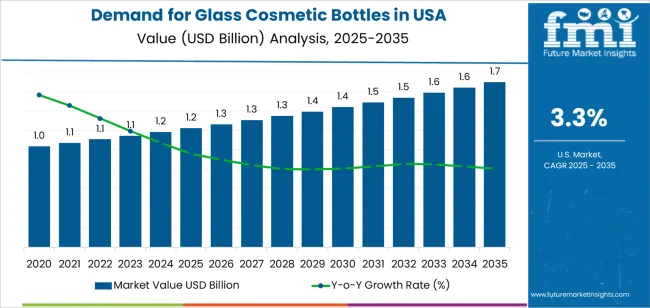
As the beauty and personal-care industry continues its rapid evolution, packaging is undergoing a quiet revolution — one where glass is reclaiming center stage. According to a recent market study, the demand for glass cosmetic bottles in the United States is projected to grow significantly over the next decade, opening a world of opportunity for both long-standing manufacturers and ambitious newcomers.
From a market value of USD 1.2 billion in 2025, demand is forecast to reach USD 1.7 billion by 2035 — a steady growth at a compound annual growth rate of 3.3%.
Why Glass — and Why Now
Glass has always carried with it a sense of quality, luxury and permanence. But today’s beauty industry — shaped by consumer emphasis on ingredient integrity, environmental consciousness and premium presentation — is reinvigorating glass packaging as the material of choice.
For premium skincare, serums, facial oils, fragrances and high-end makeup, glass bottles offer unique advantages: inertness (so formulations remain stable), durability, and an upscale aesthetic that plastic simply cannot match. As more brands embrace “clean beauty,” refillable formats, and eco-friendly credentials, glass stands out not only for its visual appeal but also as a symbol of sustainability and product integrity.
A Growing Canvas for Cosmetic Makers
The projected USD 500 million increase over the next decade represents more than just numbers — it signals substantial opportunity. The uptick isn’t limited to large, established players already servicing global beauty brands. It equally invites new entrants — boutique manufacturers, regional glass producers, or smaller packaging specialists — to stake their claim.
With demand rising particularly for premium skincare packaging (which accounts for roughly 45% of total glass-bottle demand), there is room for innovation: smaller dropper-bottles for serums, minimalist glass jars for oils, elegantly designed perfume bottles, and refillable containers designed for repeat cosmetic use.
Furthermore, the leading material type driving this growth is borosilicate glass (accounting for 55% of volume), chosen for its thermal resistance, chemical stability and high clarity — qualities that make it ideal for sensitive active formulations and luxury products.
But demand isn’t just about function; design matters. The renewed interest in glass packaging is fuelling investments in advanced manufacturing and finishing technologies. Lightweight glass production, decorative surface treatments (like frosted finishes, custom color tints, embossing), and bespoke shaping — all these are becoming more common as brands seek to distinguish themselves on the shelf and through the “unboxing” experience. For new manufacturers, having such capabilities — or investing in them — could become a differentiator.
Level-Playing Field: Established Giants and Emerging Players
Long-time industry leaders are already positioned to reap rewards. Their experience in high-precision molding, consistent quality control, established supply chains and large output can help meet growing demand for luxury skincare and fragrance brands. These firms, with decades of reputation, are likely to continue dominating the premium segment.
At the same time, the evolving landscape level-sets the market for newcomers. As consumer expectations shift toward sustainability, refillability and personalized aesthetics, niche glass producers can win business by offering flexibility, customization, and agility — attributes often harder for large firms to replicate quickly.
Smaller or regional glass manufacturers can cater to indie beauty brands, direct-to-consumer startups or small-batch product lines that favour bespoke packaging over mass-produced standard bottles. By marrying craftsmanship with modern finishing techniques, these new players can carve out meaningful segments in the marketplace.
Innovation and Sustainability at the Forefront
Glass as a packaging medium is itself evolving. Advances in lightweight glass manufacturing reduce material usage and shipping costs — addressing one of the traditional limitations of glass packaging (weight, fragility, transport and logistics overhead). Decorative technologies — surface finishes, embossing, customized coloring — allow glass bottles to become more than just containers; they become part of the brand identity and consumer experience.
Moreover, sustainability is more than a trend — it is increasingly becoming a requirement. Glass bottles, especially if produced with recycled content or designed for refillability, meet rising consumer and regulatory demands for eco-friendly, reusable packaging. That gives manufacturers — both established and new — a chance to appeal to a growing demographic of environmentally conscious consumers.
What This Means for the Industry
-
For established manufacturers: A growing U.S. market means stable long-term demand and opportunities to expand premium glass offerings. Investing in decorative technologies, lightweight glass production, and more sustainable practices can help maintain leadership — especially as brands chase luxury positioning and eco-credentials.
-
For new and emerging manufacturers: The shift toward customization, boutique packaging, refillable formats and sustainable materials creates a window to enter the market. Smaller glass producers can differentiate through flexibility, craftsmanship, design agility and willingness to cater to niche beauty brands.
-
For cosmetic brands: There is increasing scope to differentiate products through packaging. Glass bottles offer an appealing combination of product protection, upscale feel, and sustainability — attributes that resonate strongly with modern consumers.
Conclusion
The upcoming decade promises to reshape how beauty products are packaged — and who packages them. With the glass cosmetic bottles market in the USA projected to grow by nearly half a billion dollars, the incentive is strong for both established giants and nimble newcomers to expand, innovate, and compete.
As demand for premium skincare, fragrances and clean-beauty products continues to grow, manufacturers investing in glass — and the technology, design, and sustainability around it — are positioning themselves at the heart of tomorrow’s beauty industry. For both industry veterans and aspiring newcomers, the time to act is now.




