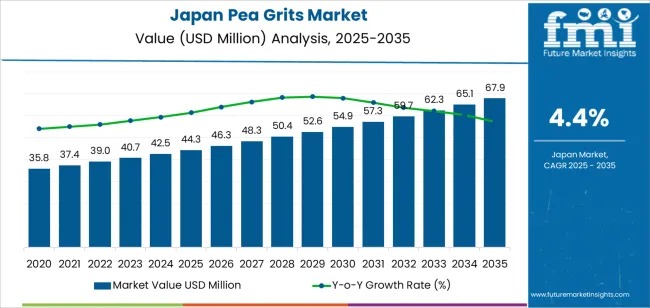
The demand for pea grits in Japan is gaining strong traction, projected to reach USD 67.9 million by 2035, an absolute increase of USD 23.6 million from its 2025 valuation of USD 44.3 million. Recording a CAGR of 4.4%, this growth reflects Japan’s accelerated adoption of plant-based proteins, gluten-free ingredients, and eco-friendly food solutions.
Pea grits—a high-value byproduct of pea protein extraction—are emerging as a preferred ingredient across Japan’s food manufacturing sector. Their nutritional density, neutral taste, and functional benefits make them suitable for bakery applications, plant-based meats, snacks, soups, and ready-to-eat products. As Japanese consumers embrace cleaner labels and sustainable diets, demand for pea-derived ingredients is rising across mainstream and premium categories.
Explore trends before investing – request a sample report today! https://www.futuremarketinsights.com/reports/sample/rep-gb-28711
Strong Growth Supported by Rising Health Awareness and Alternative Protein Adoption
Japan’s shift toward reduced animal-based protein consumption and heightened awareness of environmental impact is fueling sustained demand for pea grits. From 2025 to 2030, demand expands moderately from USD 44.3 million to USD 46.3 million, supported by early adoption in food processing and rising plant-based interest.
The period 2030 to 2035 marks a sharp acceleration, with demand surging to USD 67.9 million. This growth is underpinned by improved processing technologies that enhance texture, flavor, and application compatibility. As plant-forward diets become mainstream in Japan, pea grits are expected to be increasingly integrated into next-generation food innovations.
Quick Stats – Japan Pea Grits Demand
- 2025 Market Value: USD 44.3 million
- 2035 Forecast Value: USD 67.9 million
- Forecast CAGR (2025–2035): 4.4%
- Regional Leader: Kanto
- Top Product Type: Yellow Pea Grits
- Key End Uses: Food Processing, Poultry Feed, Food Services
- Key Distribution Channels: B2B, B2C, Hypermarkets/Supermarkets
Segment Analysis: What’s Driving Japan’s Pea Grits Market?
Yellow Pea Grits Lead with 62% Share
Yellow pea grits dominate demand due to their neutral taste, smooth texture, and ease of processing. These attributes make them essential in:
- Plant-based meat formulations
- Snacks and soups
- Protein-enriched foods
As Japan pushes toward clean-label protein sources, yellow pea grits will continue to maintain dominance.
Food Processing Accounts for 47% of Total Demand
Food processors rely on pea grits for their functional properties—binding, thickening, stabilizing—as well as nutritional advantages such as high protein and fiber content. Growing interest in gluten-free, allergen-friendly foods supports demand across bakery, snacks, and ready-meal categories.
Sweet Flavor Holds 68% Share
Sweet pea grits are widely used in:
- Breakfast cereals
- Nutrition bars
- Plant-based dairy alternatives
Their natural sweetness eliminates the need for added sugars or artificial sweeteners, aligning with Japan’s rising preference for health-forward food products.
B2B Channel Dominates with 72% Share
Bulk demand from large food manufacturers keeps B2B at the forefront. Long-term supplier partnerships and consistent ingredient requirements ensure strong, stable growth for this distribution channel.
Regional Outlook: Kyushu & Okinawa Lead with 5.4% CAGR
All major regions in Japan show positive growth, driven by food system modernization and a shift toward sustainable ingredients.
- Kyushu & Okinawa: Strongest growth (5.4% CAGR) supported by agricultural modernization and expanding plant-based manufacturing.
- Kanto: 5.0% CAGR, backed by large-scale manufacturers and high consumer demand for healthy, plant-based foods.
- Kinki: 4.4% CAGR, buoyed by urban health trends and advanced food processing infrastructure.
- Chubu: 3.9% CAGR as manufacturers expand plant-forward portfolios.
- Tohoku / Rest of Japan: Gradual but steady adoption (3.2–3.4% CAGR).
Key Market Drivers and Challenges
Drivers
- Rising adoption of gluten-free, allergen-friendly ingredients
- Growing vegan, vegetarian, and flexitarian populations
- Need for diversified plant-based protein sources beyond soy
- Expanding functional food sector targeting aging demographics
Restraints
- Limited cultural familiarity with pea-based ingredients
- Higher import and processing costs
- Formulation challenges in traditional Japanese food systems
Technological Innovation Accelerating Market Expansion
Advanced milling techniques, improved flavor neutralization, and enhanced dispersibility are making pea grits more compatible with Japanese formulations. Suppliers increasingly offer specialized pea-grit blends for bakery mixes, high-moisture plant-based meats, and Asian snack formats, unlocking new product development opportunities.
Competitive Landscape
Japan’s pea grits demand is supported by global leaders delivering high-quality, functional ingredients tailored to Japanese standards.
Key suppliers include:
- Martino Rossi SpA (approx. 25% share)
- Avena Foods
- Best Cooking Pulses
- ADM
- Ingredion
These companies are expanding technical support, application development, and supply capabilities to meet Japan’s rising need for sustainable, nutrient-dense pea ingredients.