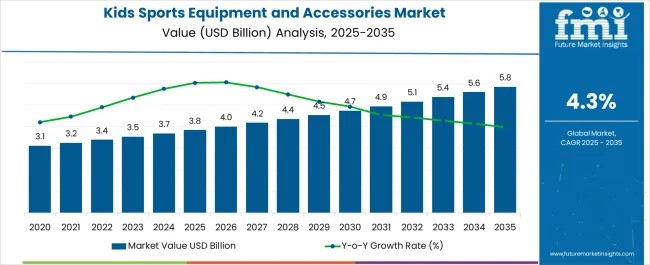
The global Kids Sports Equipment and Accessories Market is witnessing an exciting phase of growth, with its valuation expected to soar from USD 3.8 billion in 2025 to an impressive USD 5.8 billion by 2035. This remarkable expansion, driven by a steady CAGR of 4.3%, is a testament to the rising awareness around children’s physical fitness, the evolving landscape of youth sports participation, and the dynamic innovations by both established and emerging manufacturers in the industry.
Subscribe for Year-Round Insights → Stay ahead with quarterly and annual data updates – https://www.futuremarketinsights.com/reports/sample/rep-gb-1613
Market Overview: A Booming Sector with Promising Opportunities
The kids sports equipment and accessories market is evolving rapidly, spurred by increasing engagement in organized sports and recreational activities across the globe. Parents and schools alike are prioritizing quality, safety, and innovation, fueling demand for age-appropriate gear that supports healthy physical and mental development. Government campaigns promoting youth fitness and expanding sports infrastructure also reinforce this growth.
Leading brands such as Nike Inc., JD Sports Fashion Plc., Adidas A.G., PUMA S.E., and Cabela’s Inc. are not only dominating the market but are actively embracing new technologies and sustainable materials, while a fresh wave of innovative players like Kooh Sports Private Limited and Sportsjam are reshaping the industry with cutting-edge designs and youth-centric marketing strategies.
Key Segments Driving Market Growth
- By Sports Category:
- Outdoor Sports (27.6% Market Share, 2025): Outdoor sports equipment remains the largest segment, reflecting the global push for outdoor play and combating sedentary lifestyles. Innovations in protective gear, ergonomic designs, and portable accessories are attracting both parents and schools.
- Fitness Equipment – Sports Machines (34.8% Market Share, 2025): The growing trend of home-based and institutional fitness training for kids fuels the popularity of compact, safe, and child-friendly sports machines designed to improve strength and endurance.
- Age Group Focus – 10 to 12-Year-Olds (53.2% Market Share, 2025): This critical age group dominates consumption due to their high participation in structured sports. Demand here is focused on advanced, safety-certified gear that supports competitive and skill-building activities.
Regional Insights: Where Growth is Accelerating
- North America: With a 21% share, North America leads the market, especially driven by football, baseball, and basketball. The U.S. sports tourism industry also contributes significantly, with millions of children participating in tournaments yearly.
- Europe: The fastest-growing region with a CAGR of 6.4%, Europe is addressing rising childhood obesity by promoting fitness through sporty apparel and accessories. Collaborative efforts by sports associations and popular brands like Adidas and Nike are expanding market penetration.
- Asia-Pacific: With emerging economies like India and China becoming lucrative hubs, Asia-Pacific is growing rapidly at a CAGR of 5%. Rising health awareness and discretionary incomes are encouraging international brands to open new stores and launch localized products.
Innovations and New Technologies Powering Market Expansion
In today’s market, innovation is key. Established giants like Nike have transitioned to strategic distribution models in South America to optimize growth, while Adidas introduced eco-friendly shoes incorporating recycled materials, showcasing a commitment to sustainability. PUMA launched ultra-flexible trainers designed specifically for kids to enhance comfort and performance.
Emerging manufacturers are also investing heavily in R&D, developing lightweight, durable, and ergonomically sound equipment to meet the evolving needs of active children. For example, Kooh Sports focuses on inspiring youth athleticism with new-age, health-oriented products, while Sportsjam expands the market by introducing trendy kids’ sports apparel from global brands like Yonex and Wilson.
Market Challenges and Opportunities
While the growth trajectory is promising, the market faces some headwinds. Budget constraints in schools, especially in the U.S., limit access to sports programs and thus equipment demand. Rising costs of premium gear might deter some consumers, especially in developing markets. Additionally, increasing screen time among children poses a challenge to active sports participation.
However, the growing influence of major sporting events such as the World Cup, Olympics, and various international leagues continues to inspire children worldwide, fueling enthusiasm for sports. The rise of e-commerce platforms also simplifies the buying process for parents, offering access to a broader range of products and exclusive releases.
Competitive Landscape: Strategic Moves by Key Players
To capture increasing market share, leading companies are adopting multiple growth strategies, including:
- New Product Launches: Nike’s expansion into sustainable and ergonomic sports gear; Adidas’s LEGO collaboration for recyclable children’s shoes; and PUMA’s innovative trainer lines are prime examples.
- Mergers and Acquisitions: Established brands are continuously exploring partnerships to enhance technological capabilities and geographic reach.
- Geographical Expansion: Brands are aggressively entering untapped markets, especially in Asia-Pacific, to capitalize on rising disposable incomes and growing sports culture.
- Collaborations and Partnerships: Working with schools, sports clubs, and community programs to promote early sports adoption and education.
Conclusion: A Market Ripe for Innovation and Expansion
The kids sports equipment and accessories market is on a solid growth path driven by health-conscious parents, dynamic technological advancements, and increasing global participation in youth sports. Both established industry giants and new entrants are innovating rapidly, exploring new technologies, and expanding their geographical footprint to capture this growing demand.
With a forecasted market value of USD 5.8 billion by 2035, the future of kids sports equipment is vibrant and full of opportunity — encouraging active, healthy lifestyles for the next generation while delivering significant growth for industry players worldwide.
Why FMI: https://www.futuremarketinsights.com/why-fmi
About Future Market Insights (FMI)
Future Market Insights, Inc. (FMI) is an ESOMAR-certified, ISO 9001:2015 market research and consulting organization, trusted by Fortune 500 clients and global enterprises. With operations in the U.S., UK, India, and Dubai, FMI provides data-backed insights and strategic intelligence across 30+ industries and 1200 markets worldwide.
Contact Us:
Future Market Insights Inc.
Christiana Corporate, 200 Continental Drive,
Suite 401, Newark, Delaware – 19713, USA
T: +1-347-918-3531
For Sales Enquiries: sales@futuremarketinsights.com
Website: https://www.futuremarketinsights.com
LinkedIn| Twitter| Blogs | YouTube