

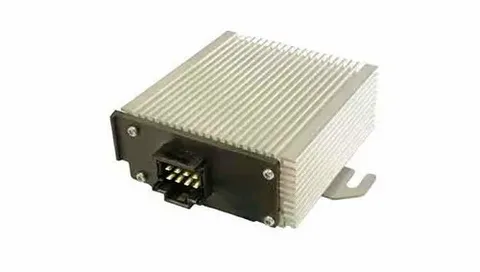
The Automotive DC-DC Converter Market is projected to grow significantly from its 2025 valuation of USD 2.8 billion to reach approximately USD 11.2 billion by 2035, expanding at a CAGR of 14.7%. The surge is primarily driven by rising electric and hybrid vehicle production, growing demand for high-voltage architectures, and the adoption of advanced power electronics for efficiency and sustainability.
Subscribe for Year-Round Insights → Stay ahead with quarterly and annual data updates
https://www.futuremarketinsights.com/reports/sample/rep-gb-15861
As the global automotive sector transitions toward electrification, DC-DC converters are emerging as critical components for efficient energy management. These devices regulate power between vehicle systems, optimizing performance and extending battery life-an essential function for electric and hybrid powertrains.
Regional Growth Highlights
APAC continues to dominate the market, accounting for nearly 47% of global revenue in 2025. China, Japan, and South Korea remain at the forefront, propelled by aggressive EV adoption policies, local OEM expansion, and technological innovation in power electronics. India’s growing EV infrastructure is also fueling demand for compact and cost-effective DC-DC converter solutions tailored to two- and three-wheeler segments.
Europe follows as the second-largest market, driven by EU carbon neutrality goals and EV incentives. Germany and France are leading adopters, with automakers integrating next-generation DC-DC converters for vehicle electrification platforms and fast-charging systems. The region is witnessing rapid growth in 800V architectures-signaling a shift toward more efficient and faster-charging EV ecosystems.
The United States market is advancing through federal EV infrastructure initiatives and accelerating EV model launches. Leading American OEMs are collaborating with semiconductor and power module manufacturers to develop high-efficiency, thermally stable converters. The integration of silicon carbide (SiC) and gallium nitride (GaN) technologies is transforming performance benchmarks and setting new efficiency standards.
Saudi Arabia represents an emerging growth frontier, as part of Vision 2030’s commitment to sustainable mobility. With increasing investments in electric mobility infrastructure, the kingdom is fostering partnerships with international EV manufacturers and power component suppliers. Local assembly and renewable-powered EV charging corridors are expected to bolster DC-DC converter adoption over the coming decade.
Technology and Market Trends
Modern automotive DC-DC converters are evolving beyond simple voltage transformation. Innovations in bi-directional conversion now enable vehicle-to-grid (V2G) and regenerative braking capabilities, improving overall energy utilization. Additionally, modular designs and enhanced thermal management systems are becoming key differentiators for OEMs seeking scalability and compact integration in EV platforms.
The rise of 48V mild-hybrid systems is further expanding market opportunities, particularly in premium and commercial vehicles. These systems require efficient DC-DC converters to manage dual-voltage architectures and reduce CO2 emissions. As vehicles incorporate more infotainment, ADAS, and electrified subsystems, demand for intelligent power conversion continues to climb.
Competitive Landscape
Global players such as TDK Corporation, Delta Electronics, Infineon Technologies, Texas Instruments, and Continental AG are intensifying R&D efforts to develop compact, lightweight, and high-efficiency converters. Partnerships with EV manufacturers are also accelerating design innovations tailored to regional requirements, especially in Asia and Europe.
Suppliers are increasingly focusing on GaN-based converter modules, which deliver higher efficiency and reduced switching losses-crucial for high-performance EVs. Meanwhile, cost optimization and standardization efforts are underway to make DC-DC technology more accessible for mid-range and mass-market EVs.
Outlook Through 2035
By 2035, the automotive DC-DC converter market will be shaped by a fusion of sustainability goals, semiconductor advancements, and mobility electrification strategies. APAC will remain the manufacturing hub, while Europe and the U.S. will drive premium innovations. Saudi Arabia’s focus on renewable energy integration is expected to create new avenues for local assembly and smart grid-linked DC-DC systems.
As EV production volumes multiply and charging networks expand, the need for efficient energy conversion will only intensify-cementing DC-DC converters as a linchpin of the electric mobility revolution.
About Future Market Insights (FMI)
Future Market Insights, Inc. (FMI) is an ESOMAR-certified, ISO 9001:2015 market research and consulting organization, trusted by Fortune 500 clients and global enterprises. With operations in the U.S., UK, India, and Dubai, FMI provides data-backed insights and strategic intelligence across 30+ industries and 1200 markets worldwide.




