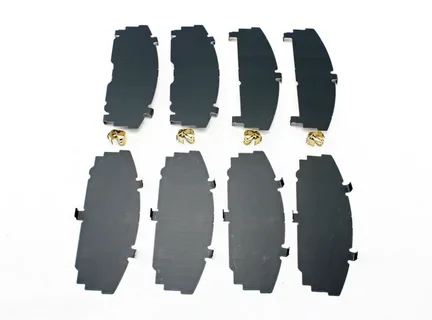
The Automotive Brake Shims Market is shifting into high gear as automakers worldwide race to deliver quieter, safer, and more efficient vehicles. According to Future Market Insights, the global market is set to expand robustly from 2025 through 2035, driven by growing adoption of electric and hybrid vehicles, heightened brake noise regulations, and advancements in multi-layer composite materials.
Subscribe for Year-Round Insights → Stay ahead with quarterly and annual data updates
https://www.futuremarketinsights.com/reports/sample/rep-gb-15664
Global Growth Momentum Across Major Automotive Regions
Across Asia-Pacific (APAC), the market is witnessing accelerated demand led by China, Japan, and South Korea. Rapid expansion of electric and hybrid vehicle manufacturing, along with the adoption of high-performance braking systems, is boosting consumption of advanced brake shims. China remains a key growth driver, with OEMs prioritizing NVH (Noise, Vibration, and Harshness) control systems in EV models to improve cabin comfort and extend component life. Meanwhile, India’s rising passenger car production and evolving safety norms are pushing Tier-1 suppliers to localize high-grade shim manufacturing.
In Europe, strong regulatory frameworks surrounding braking noise and environmental sustainability are steering innovation in brake materials. Germany, France, and Italy are at the forefront of developing lightweight, eco-friendly shims using fiber-reinforced polymers and rubber-coated steel. The ongoing transition to regenerative braking systems in EVs is further transforming shim designs to meet heat dissipation and vibration control requirements.
The United States market continues to evolve with an emphasis on performance enhancement and compliance with noise and vibration standards. As premium automakers and EV producers expand their domestic manufacturing, the demand for laser-cut, adhesive-backed brake shims is soaring. With consumers showing increased preference for high-performance, low-maintenance vehicles, brake shims are becoming a crucial differentiator in both OEM and aftermarket segments.
Meanwhile, Saudi Arabia is emerging as a promising growth hub in the Middle East due to the surge in luxury vehicle imports and a growing automotive servicing ecosystem. Supported by Vision 2030 initiatives, the country is investing in localized automotive component production, which includes brake pad and shim assembly lines. The rising popularity of premium SUVs and sports vehicles in Riyadh and Jeddah is contributing to strong aftermarket demand for high-quality composite shims that offer superior noise control in hot-weather conditions.
Material Innovation and Sustainability Lead the Transformation
Technological advancements are reshaping the market landscape. Modern brake shims are no longer simple metal inserts; they are multi-layered, noise-absorbing composites made from rubber, viscoelastic materials, and advanced coatings that prevent brake squeal and thermal distortion. Leading suppliers are developing thermal barrier shims capable of withstanding temperatures above 500°C-critical for performance vehicles and EVs where braking systems endure higher stress.
Sustainability is another defining trend. Manufacturers across Europe and North America are investing in recyclable and non-toxic coatings to comply with stringent environmental norms. The global shift toward lead-free and solvent-free adhesives has accelerated innovation in water-based and dry-film shim technologies. These advances align with broader decarbonization targets within the automotive supply chain.
OEM and Aftermarket Dynamics
OEM integration remains the dominant revenue contributor, as automakers increasingly include premium brake shims as standard equipment in mid- to high-end vehicle models. However, the aftermarket is expected to record faster growth rates due to the rising average vehicle age and the growing popularity of performance tuning. The expanding e-commerce ecosystem for automotive parts, especially in the U.S. and APAC, is facilitating the easier availability of customized shims for sports and electric vehicles.
Competitive Landscape
Leading global players such as Trelleborg, NUCAP Industries, BOSCH, and Federal-Mogul are driving innovation through advanced material science and production automation. Trelleborg’s noise-dampening multilayer technology and NUCAP’s NRS mechanical attachment systems are setting new industry standards in thermal and vibration performance. These firms are also deepening partnerships with automakers and Tier-1 brake system integrators to co-develop lightweight, high-efficiency components for EV and hybrid platforms.
Outlook: The Road Ahead
From 2025 to 2035, the automotive brake shims market is forecast to evolve rapidly, integrating with digital monitoring systems and smart braking controls. As connected vehicle platforms and predictive maintenance technologies become mainstream, intelligent shims capable of sensing heat and wear could emerge as the next frontier.
APAC will continue to dominate global production, Europe will lead innovation in sustainable materials, the USA will focus on high-performance and EV braking systems, and Saudi Arabia will grow as a regional aftermarket and assembly hub. This synchronized regional momentum underscores the global shift toward quieter, cleaner, and more efficient braking systems that define the next generation of mobility.
About Future Market Insights (FMI)
Future Market Insights, Inc. (FMI) is an ESOMAR-certified, ISO 9001:2015 market research and consulting organization, trusted by Fortune 500 clients and global enterprises. With operations in the U.S., UK, India, and Dubai, FMI provides data-backed insights and strategic intelligence across 30+ industries and 1200 markets worldwide.