The global electric cargo bike market is charging ahead, set to soar from USD 4.8 billion in 2025 to USD 18 billion by 2035, expanding at a remarkable CAGR of 14.2%, according to the latest industry assessment. Accelerating e-commerce expansion, volatile fuel prices, and government-led clean mobility programs are redefining urban transportation economics worldwide.
Across APAC, Europe, the USA, and Saudi Arabia, the surge in electric cargo bike adoption highlights a global shift toward sustainable, cost-efficient last-mile logistics. From North America’s booming parcel delivery networks to Asia’s dense megacities and Europe’s zero-emission zones, the two- and three-wheeled cargo revolution is taking center stage.
Get access to comprehensive data tables and detailed market insights – request your sample report today!
https://www.futuremarketinsights.com/reports/sample/rep-gb-7803
Macro Factors Powering the Shift
Market elasticity remains high as fuel costs, disposable income, and sustainability policies shape consumer and business choices. “Rising fuel prices and tightening emission norms are accelerating electric cargo bike demand across both mature and emerging markets,” says an FMI analyst. “By 2030, the convergence of technology, affordability, and infrastructure will solidify this category as a cornerstone of modern logistics.”
Between 2025 and 2030, global economies prioritizing green transport policies are expected to sustain double-digit growth. Beyond 2030, market elasticity is anticipated to normalize as adoption broadens and manufacturing costs decline. Urbanization trends and rising GDP in countries like India, China, and the United States will continue to drive regional differentiation in adoption rates.
Key Market Insights (2025-2035)
• Market Value 2025: USD 4.8 billion
• Forecast 2035: USD 18 billion
• CAGR (2025-2035): 14.2%
• Top Battery Type: Lithium-ion (95.5% market share)
• Leading Product Type: Two-wheeled cargo bikes (42% share)
• Fastest-Growing Segment: Three-wheeled cargo bikes (15.6% CAGR)
• Leading End User: Courier & Parcel Services (48% share)
• Top Growth Markets: USA, China, India
E-Commerce and Urban Delivery Drive Momentum
Explosive e-commerce growth continues to reshape urban delivery. Major logistics companies and startups alike are deploying electric cargo bikes to combat congestion, reduce delivery times, and meet sustainability goals.
Electric cargo bikes offer superior maneuverability, zero emissions, and low maintenance costs, allowing operators to navigate narrow streets and pedestrian zones inaccessible to vans and trucks. Cities including New York, Amsterdam, London, and Riyadh are already integrating these vehicles into last-mile delivery programs.
Government Action Accelerates Adoption
Governments across regions are supporting adoption through purchase incentives, tax credits, and urban infrastructure investments. Low-emission zones, congestion pricing, and restricted vehicle access areas-particularly across Europe and the Middle East-are pushing commercial operators toward cleaner fleets.
In APAC, robust government incentives in China and India are fostering domestic manufacturing and logistics adoption. In the United States, major urban centers are offering pilot grants and permitting advantages for cargo bike logistics. Meanwhile, Saudi Arabia’s Vision 2030 is driving mobility diversification and environmental innovation, promoting electric mobility solutions for urban transport and logistics.
Lithium-Ion Dominates Energy Landscape
The lithium-ion segment, accounting for 95.5% of the market in 2025, continues to dominate due to superior energy density, lightweight structure, and extended life cycle. Enhanced battery management systems (BMS) ensure longer range, faster charging, and better operational safety.
Ongoing innovation in thermal management, regenerative braking, and recycling initiatives further strengthens the sustainability proposition. Commercial fleets are particularly benefitting from rapid-charging infrastructure and improved total cost of ownership (TCO) economics.
Segmental Highlights
• By Product Type: Two-wheeled bikes remain the most popular for agile urban operations, while three-wheeled configurations are gaining traction for higher payload applications and corporate logistics.
• By Wheel Size: The 20-26 inch segment holds a 55% share, balancing stability and maneuverability for city deliveries.
• By End User: Courier & parcel services dominate with nearly half of total market share, closely followed by retail suppliers and municipal service operators.
Regional Growth Dynamics
• United States (12.5% CAGR): Led by Amazon, UPS, and FedEx pilot programs; strong municipal sustainability mandates in major metros.
• China (11.3% CAGR): Supported by national e-commerce ecosystems and domestic battery manufacturing capabilities.
• India (10.8% CAGR): Driven by surging gig-economy delivery services and government EV incentives.
• Europe (12.3% CAGR): Germany, Netherlands, France, and the UK spearhead zero-emission logistics expansion.
• Saudi Arabia (Emerging Market): Smart city initiatives under Vision 2030 are fostering green transport and micromobility integration.
Key Growth Drivers
1. E-commerce Expansion: Soaring online retail volumes demand efficient, emission-free last-mile solutions.
2. Government Incentives: Subsidies, tax credits, and preferential urban access zones boost adoption.
3. Technological Advancements: Smart connectivity, GPS tracking, and fleet management tools enhance commercial efficiency.
4. Sustainability Goals: Corporate and municipal climate commitments drive zero-emission fleet transformation.
Purchase Full Report for Detailed Insights
For access to full forecasts, regional breakouts, company share analysis, and emerging trend assessments, you can purchase the complete report here: Buy Full Report – https://www.futuremarketinsights.com/checkout/7803
Competitive Landscape
The market is characterized by strong innovation and brand competition.
Leading players include Rad Power Bikes, Urban Arrow, Tern Bicycles, Riese & Müller, and Douze Cycles, each expanding product portfolios through modular designs, powerful drivetrains, and fleet-oriented features.
• Rad Power Bikes (USA) focuses on affordable, scalable fleet solutions.
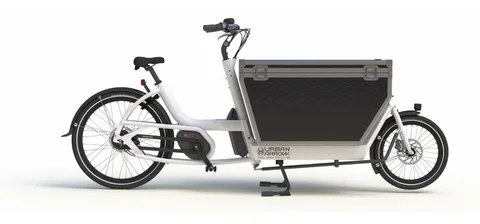
• Urban Arrow (Netherlands) leads in premium family and logistics models.
• Tern Bicycles specializes in compact urban-friendly cargo systems.
• Riese & Müller (Germany) excels in high-performance, customizable fleet offerings.
• Douze Cycles (France) pioneers modular designs with strong aesthetic appeal.
Emerging competitors such as Babboe, Bakfiets.nl, Butchers & Bicycles, Larry vs Harry, and Yuba Bicycles continue to enhance regional portfolios and segment diversity.
Future Outlook
As cities worldwide commit to zero-emission delivery systems and e-commerce volumes surge, the electric cargo bike sector is expected to play a pivotal role in next-generation logistics.
Investment from governments, fleet operators, and technology developers will shape the industry’s long-term trajectory. By 2035, electric cargo bikes are projected to displace a significant portion of short-haul delivery vans, cutting urban emissions, reducing congestion, and improving operational efficiency across continents.
About Future Market Insights (FMI)
Future Market Insights, Inc. (FMI) is an ESOMAR-certified, ISO 9001:2015 market research and consulting organization, trusted by Fortune 500 clients and global enterprises. With operations in the U.S., UK, India, and Dubai, FMI provides data-backed insights and strategic intelligence across 30+ industries and 1200 markets worldwide.