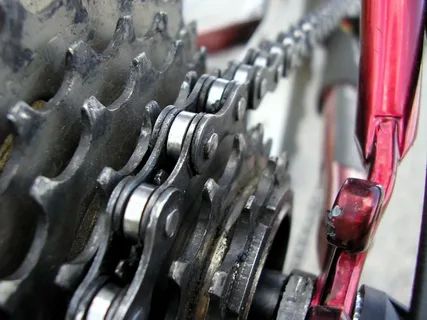
The global bicycle chain market is poised for a decade-long growth trajectory, projected to expand from USD 7.9 billion in 2025 to USD 12.6 billion by 2035, at a CAGR of 4.8%, according to Future Market Insights, an ESOMAR-accredited research organization. This surge reflects a transformative era for cycling components, driven by multi-speed drivetrain adoption, premium material integration, and rising e-bike penetration across both urban commuting and performance cycling sectors.
The market will experience two distinct growth phases. Between 2025 and 2030, the market is forecast to grow from USD 7.9 billion to USD 10.0 billion, adding USD 2.1 billion or 43.8% of the decade’s expansion. This phase is marked by rapid adoption of 11- and 12-speed chains, improved nickel-plated alloys, and carbon steel variants becoming standard rather than premium features. The latter half, 2030-2035, will witness growth from USD 10.0 billion to USD 12.6 billion-an addition of USD 2.7 billion or 56.2% of the total market value-driven by high-speed drivetrain systems, smart bicycle integration, and mass-market e-bike compatibility.
Get access to comprehensive data tables and detailed market insights – request your sample report today!
https://www.futuremarketinsights.com/reports/sample/rep-gb-10535
Market Dynamics and Growth Drivers
Three core factors are propelling bicycle chain market growth:
1. E-Bike Proliferation: Global e-bike adoption demands reinforced chains capable of handling 70-90Nm torque, compared to 40-50Nm from human-powered bicycles. This creates opportunities for specialized chains featuring thicker plates, enhanced tensile strength, and wear-resistant coatings. Germany alone recorded 1.5 million e-bike sales in 2024, while China leads globally with over 300 million e-bikes in circulation.
2. Performance Cycling Evolution: Cycling enthusiasts increasingly demand 11- and 12-speed chains for precise gear transitions, reduced friction, and weight optimization. Advanced chains with hollow pin construction, titanium nitride coatings, and optimized plate geometries deliver measurable efficiency gains of 2-5 watts over standard chains.
3. Urban Mobility Transformation: City bicycles dominate with a 25.9% market share, fueled by urbanization, municipal bike-share programs, and infrastructure investments. Reliable, low-maintenance chains ensure consistent performance for daily commuters while supporting environmentally conscious transportation initiatives.
Market Challenges include price sensitivity, particularly in emerging markets, compatibility issues with legacy drivetrains, and competition from alternative systems like belt and shaft drives. Environmental pressures also influence manufacturers to adopt sustainable production practices using recycled materials and reduced water consumption.
Segment Insights
• Chain Type: 12-speed chains dominate with a 34.4% market share, offering advanced shifting performance, optimized plate spacing, and compatibility with modern narrow-wide cassettes. Leading brands such as SHIMANO Dura-Ace/XTR, SRAM RED/XX1 Eagle, and Campagnolo Super Record leverage these innovations.
• Bicycle Type: City bicycles lead demand, driven by urban commuters, bike-sharing fleets, and municipal programs. The segment benefits from corrosion-resistant chains, low maintenance, and compatibility with hub gears.
• Material: Key materials include carbon steel, alloy steel, and nickel-plated variants, addressing durability, weight optimization, and corrosion resistance across various applications.
• Applications & Channels: Chains are deployed across city, racing, mountain, cargo, and electric bicycles, distributed through OEMs and aftermarket channels, including specialty retailers and online platforms.
Regional Outlook
• Europe: Market projected to grow from USD 2.8 billion in 2025 to USD 4.2 billion by 2035. Germany leads with 38.5% share in 2025, supported by 1.5 million e-bike annual sales and premium cycling culture. The Netherlands (22.8%) and France (18.4%) follow closely.
• Asia Pacific: China dominates through its massive installed bicycle base and component manufacturing hub, growing at a 3.8% CAGR. Emerging markets such as India exhibit 3.2% CAGR, driven by urbanization, e-bike adoption, and recreational cycling.
• North America: The United States maintains steady growth (~3.3% CAGR), with strong brand loyalty to SHIMANO and SRAM, and urban cycling infrastructure expansion across Portland, Minneapolis, and New York.
• Emerging Markets: Turkey (5.9% CAGR), Russia (4.5% CAGR), and Mexico (4.3% CAGR) lead growth through middle-class expansion, cycling infrastructure, and e-bike adoption.
Purchase Full Report for Detailed Insights
For access to full forecasts, regional breakouts, company share analysis, and emerging trend assessments, you can purchase the complete report here: Buy Full Report – https://www.futuremarketinsights.com/checkout/10535
Competitive Landscape
The bicycle chain market features moderate concentration, with 12-15 meaningful players controlling 65-72% of global market share. Key players include SHIMANO INC., KMC International, SRAM LLC, Izumi Chain, and TAYA CHAIN, who leverage global OEM relationships, R&D capabilities, and advanced manufacturing precision to maintain leadership. Technology challengers such as Connex, Wippermann, and YBN focus on niche high-performance chains, while regional specialists like D.I.D (Japan), Regina (Italy), and Sedis (France) cater to local markets and specialized applications.
Outlook & Opportunities
The market’s growth trajectory reflects broader trends in sustainable urban mobility, performance cycling, and e-bike integration. Pathways for expansion include:
• Dominance of 12-speed chains with professional-grade shifting and lightweight design.
• City bicycle applications capturing urban commuter demand.
• E-bike-specific chains capable of handling elevated torque loads.
• Emerging market penetration through infrastructure investment and middle-class adoption.
• Premium material innovation driving differentiation in competitive cycling segments.
• Aftermarket growth via component replacement cycles and upgrades.
• Smart chain integration featuring sensors for predictive maintenance and performance analytics.
As the bicycle chain evolves from a functional component to a mission-critical drivetrain element, manufacturers, OEMs, and aftermarket distributors are poised to capitalize on the intersection of e-mobility, performance optimization, and urban mobility transformation.
About Future Market Insights (FMI)
Future Market Insights, Inc. (FMI) is an ESOMAR-certified, ISO 9001:2015 market research and consulting organization, trusted by Fortune 500 clients and global enterprises. With operations in the U.S., UK, India, and Dubai, FMI provides data-backed insights and strategic intelligence across 30+ industries and 1200 markets worldwide.