

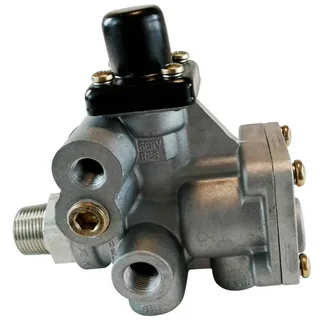
The global automotive brake valve market is on a strong growth trajectory, projected to expand from USD 14.4 billion in 2025 to USD 25.5 billion by 2035, registering a CAGR of 5.9% over the forecast period. Market expansion is being fueled by rising vehicle production, increased adoption of advanced braking systems, and stricter safety compliance regulations worldwide.
Brake valves are critical components in automotive braking systems, controlling the distribution of brake fluid or air pressure to maximize braking efficiency and vehicle safety. With global demand for safer, high-performance, and fuel-efficient vehicles accelerating, manufacturers are investing heavily in advanced technologies such as electronically controlled brake valves, anti-lock braking systems (ABS), and regenerative braking integration.
Get access to comprehensive data tables and detailed market insights – request your sample report today!
https://www.futuremarketinsights.com/reports/sample/rep-gb-3436
Advancing Braking Technologies for Modern Vehicles
The rise of electric vehicles (EVs), hybrid platforms, and autonomous driving solutions is driving the need for high-precision, electronically controlled brake valves. Manufacturers are focusing on AI-powered, smart braking solutions that respond to real-time driving conditions, improving braking performance and safety. North America, Europe, and Asia-Pacific are leading the adoption of these advanced braking technologies, driven by stringent vehicle safety regulations and growing consumer demand for innovative mobility solutions.
Regional Market Insights
North America:
North America remains a key market, with the U.S. and Canada leading the demand for complex braking systems across passenger cars, commercial trucks, and off-road vehicles. Regulatory mandates from NHTSA and FMVSS for enhanced braking performance are accelerating investments in electronic brake valves, AI-driven braking technologies, and smart mobility solutions for autonomous vehicles.
Europe:
Europe holds a significant share due to strict automotive safety standards, a growing EV ecosystem, and strong commercial vehicle production. Countries such as Germany, France, Italy, and the UK are emphasizing electronically controlled brake valves integrated with advanced emergency braking systems (AEBS) and electronic stability control (ESC). Germany, renowned for precision engineering, is driving innovations in high-performance braking solutions for hybrid and electric platforms.
Asia-Pacific:
The Asia-Pacific region is the fastest-growing market, led by China, India, Japan, and South Korea. Rapid urbanization, expanding vehicle ownership, and government-backed road safety initiatives are increasing brake valve adoption. The region is witnessing robust R&D in high-performance and regenerative braking technologies for EVs and autonomous vehicles, particularly in Japan and South Korea.
Rest of the World:
Emerging markets in Latin America, the Middle East, and Africa, including Brazil, Mexico, Saudi Arabia, and South Africa, are rapidly adopting advanced brake valve technologies. Growth is driven by rising commercial vehicle production, off-road and heavy-duty vehicle usage, and increasing regulatory focus on road safety.
Market Challenges and Opportunities
Challenges:
High R&D and Manufacturing Costs: Transitioning from traditional mechanical brake valves to AI-powered, electronically controlled systems requires substantial investment in high-precision manufacturing, lightweight materials, and software integration.
Regulatory Complexity: Varying safety standards across regions necessitate tailored product designs, certifications, and testing, increasing production complexity.
Supply Chain Disruptions: Semiconductor shortages, raw material volatility, and logistical delays continue to impact brake valve manufacturing timelines and costs.
Opportunities:
AI, IoT, and Smart Braking Integration: Next-gen brake valves use AI and IoT-enabled sensors for predictive maintenance, real-time diagnostics, and adaptive braking performance, crucial for Advanced Driver Assistance Systems (ADAS).
Electric and Autonomous Vehicles: Regenerative braking and energy-efficient brake control systems in EVs require precision-engineered valves to optimize performance and battery life.
Emerging Markets & Heavy-Duty Vehicles: Increasing commercial vehicle production and infrastructure investments in India, Brazil, Indonesia, and Mexico are driving demand for robust, high-performance brake valves.
Segment Insights
Product Types: Combination valves, quick release valves, and ABS modular valves are gaining traction due to enhanced braking efficiency, faster response, and integration with smart braking systems.
Materials: Steel remains dominant for high durability and strength, especially in commercial vehicles, while copper is gaining attention for its superior heat conductivity in luxury and high-performance vehicles.
Vehicle Types: Market coverage spans compact cars, mid-sized cars, luxury vehicles, SUVs, heavy commercial vehicles (HCVs), and light commercial vehicles (LCVs).
Purchase Full Report for Detailed Insights
For access to full forecasts, regional breakouts, company share analysis, and emerging trend assessments, you can purchase the complete report here: Buy Full Report – https://www.futuremarketinsights.com/checkout/3436
Competitive Landscape
Key players shaping the global automotive brake valve market include:
Robert Bosch GmbH (18-22% market share): High-performance valves integrating ABS and ESC systems for traditional and EV platforms.
Continental AG (15-18%): Electronic brake valves with IoT and AI analytics for real-time monitoring and predictive maintenance.
ZF Friedrichshafen AG (10-14%): Lightweight, electronically controlled valves compatible with autonomous and EV systems.
Knorr-Bremse AG (8-12%): Durable commercial vehicle brake valves with automated and predictive maintenance solutions.
WABCO Holdings Inc. (5-9%): Intelligent air brake systems for heavy-duty vehicles with adaptive braking capabilities.
Other significant players include Brembo S.p.A., Hitachi Astemo Ltd., Aisin Seiki Co., Haldex AB, Nissin Kogyo Co., ADVICS Co., Mando Corporation, Federal-Mogul Motorparts, Akebono Brake Industry Co., and Tata AutoComp Systems Ltd.
Outlook and Future Trends
Between 2025 and 2035, the market is expected to witness significant growth fueled by AI-integrated braking systems, regenerative braking for EVs, lightweight sustainable materials, and the proliferation of autonomous vehicles. Advanced braking technologies will continue to enhance vehicle safety, efficiency, and performance, while regional expansions in emerging markets will further drive adoption.
About Future Market Insights (FMI)
Future Market Insights, Inc. (FMI) is an ESOMAR-certified, ISO 9001:2015 market research and consulting organization, trusted by Fortune 500 clients and global enterprises. With operations in the U.S., UK, India, and Dubai, FMI provides data-backed insights and strategic intelligence across 30+ industries and 1200 markets worldwide.




