

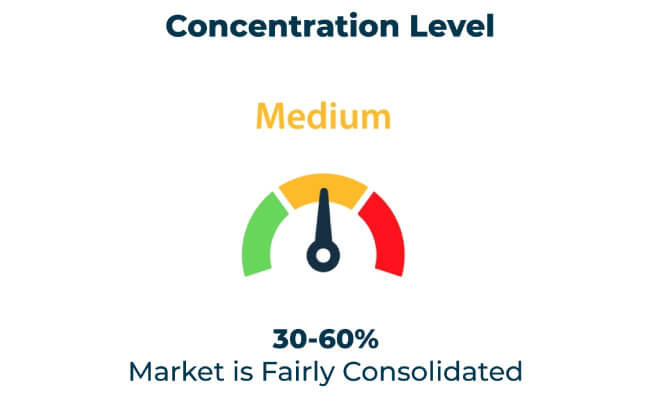
The global corrugated octabin market is entering a dynamic phase of transformation and expansion. As demand for efficient, sustainable bulk-packaging solutions surges across industries — from food and agriculture to chemicals, pharmaceuticals and industrial goods — both leading established manufacturers and nimble new players are scaling up production, deploying cutting-edge technology, and redefining what octabin packaging can deliver.
At the forefront of this growth are well-known companies such as Smurfit Kappa, DS Smith, and Mondi Group — widely recognized as Tier-1 players in the global market. Their strength lies not only in global supply network reach, but also in robust R&D capabilities that help them meet evolving customer needs. These industry leaders are pioneering eco-friendly, recyclable octabin designs, combining durability with environmental responsibility, aiming to support customers’ sustainability commitments.
In recent months, Smurfit Kappa rolled out advanced recyclable octabins with improved load-bearing capacity, while DS Smith has intensified efforts around structural reinforcement and digital printing for bulk-packaging applications. Mondi Group has expanded its fiber-based octabin production — reflecting a broader shift across the sector toward sustainable, fiber-derived packaging solutions.
Parallel to the moves by major players, the market is witnessing a vibrant surge of interest from smaller, emerging manufacturers and niche firms. These companies — often grouped under Tier-2 and Tier-3 categories — are capitalizing on gaps in the market: specializing in custom-sized octabins, heavy-duty designs for industrial use, and niche applications like hazardous material containment or specialty agriculture packaging. Their flexibility and responsiveness give them an edge when it comes to serving region-specific, specialized demands that large-scale players might overlook.
Among them, firms such as International Paper Company and WestRock (Tier-2) are expanding their geographic reach and product portfolios to offer cost-effective, customizable bulk packaging solutions for mid-sized industries. Meanwhile smaller-scale or niche manufacturers — including regional private labels and agile start-ups — are contributing meaningfully by delivering tailored designs like multi-layer heavy-duty octabins or custom-printed, eco-conscious variants.
This expanding competitive landscape reflects growing global demand: the market size, estimated at approximately USD 518.3 million in 2025, is projected to grow to roughly USD 880.2 million by 2035, representing a steady compound annual growth rate of around 5.4%. The shift toward single-wall corrugated designs is especially pronounced, forecast to account for more than 61% of the market share over the coming years, underscoring a broader industry preference for solutions that combine cost- and space-efficiency with protective strength.
The market’s end-users are diverse and expanding rapidly — from industrial bulk packaging for powders, resins, and granules; to agriculture and horticulture for fresh produce and grains; to pharmaceutical and chemical sectors requiring secure, contamination-resistant storage and transport. This broadening demand base positions octabins as a core enabler of global supply chains, capable of supporting sustainable packaging strategies across varied industries.
Looking ahead, the trajectory for the corrugated octabin industry is being shaped by a confluence of innovation, sustainability, and technology. Leading firms are embracing “smart packaging” — integrating logistics-tracking features to support supply-chain transparency and product traceability. At the same time, automation in manufacturing, use of lightweight but high-strength materials, and adoption of eco-friendly adhesives and coatings are emerging as standard practices.
For newer and smaller manufacturers, this represents an unprecedented opportunity. By focusing on niche segments — specialized packaging needs, custom sizes, high-load or heavy-duty industrial uses — they can differentiate themselves. By aligning their offerings to global sustainability trends, and investing in flexible, modular production, these companies can capture growing demand in emerging regions such as Asia-Pacific and Latin America.
“Our vision is to harness innovation and sustainability to redefine bulk packaging,” said a representative of one emerging packaging firm. “By combining agility with advanced materials and modular design, we aim to deliver octabin solutions that meet the evolving demands of industries globally — whether it’s food, agriculture, or chemicals.”
In summary, the global corrugated octabin market is entering a phase of robust growth and transformation. Established industry leaders continue to push the boundaries of scale, sustainability, and technology — while a new wave of smaller, agile manufacturers is stepping in to meet demand for niche, customizable, and cost-effective bulk packaging solutions. This convergence of scale and agility, tradition and innovation, promises to reshape the future of bulk packaging worldwide.
About This Market Update
This press release is based on a recent comprehensive industry analysis reporting global market size, growth forecast, key players, and emerging trends. It reflects the shifting dynamics of demand, production technologies, sustainability requirements, and competition intensity in the corrugated octabin segment.




