

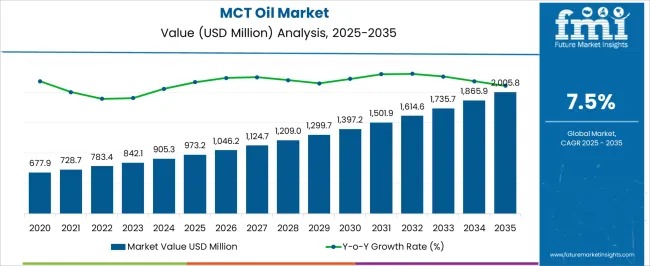
The global MCT oil market is on track for strong expansion, rising from USD 973.2 million in 2025 to USD 2,005.8 million by 2035, reflecting a robust CAGR of 7.5%. This growth is underpinned by surging demand for fast-absorbing energy sources, expanding applications in dietary supplements, and rising adoption of ketogenic diets across global consumer segments.
Crude coconut and palm kernel oils remain the foundational feedstocks for MCT oil manufacturing, contributing the largest share to production costs. Advanced processing—including molecular distillation, cold-press extraction, enzymatic fractionation, and high-purity refining—continues to elevate quality benchmarks and enhance formulation versatility. Investments in quality assurance, sustainability certification, and controlled processing further support the industry’s shift toward premium, clean-label MCT oil solutions.
Explore trends before investing – request a sample report today! https://www.futuremarketinsights.com/reports/sample/rep-gb-26089
Packaging, branding, and retail-oriented product differentiation play an increasingly vital role in value creation. Factors such as organic certification, dosage formats, flavored variants, and performance-focused labeling contribute to consumer appeal and price premiums. Meanwhile, omnichannel distribution—ranging from retail shelves to online wellness platforms—shapes logistical efficiencies and marketing spend.
By 2035, the market’s growth trajectory highlights not only rising consumption but also tighter value-chain integration, improved cost management, and strategic product positioning across sports nutrition, functional beverages, pharmaceuticals, and personal care.
Why the MCT Oil Market Is Expanding Rapidly
Demand for MCT oil is driven by heightened consumer interest in functional nutrition, energy supplementation, and weight-management solutions. The ingredient’s ability to deliver rapid metabolic conversion into ketones makes it a preferred choice for:
- Ketogenic and low-carb diets
- Sports nutrition and endurance performance
- Cognitive health and focus-enhancing formulations
- Functional beverages and fortified snacks
Clean-label trends, plant-derived sourcing, and increased awareness of the metabolic benefits of medium-chain triglycerides continue to bolster adoption. The market also benefits from growing penetration in fortified foods, ready-to-drink beverages, and meal-replacement categories.
Technological advancements in fractionation, microencapsulation, sensory optimization, and purity enhancement are enabling broader formulation compatibility and improved shelf stability. Expansion opportunities are also emerging in personal care, dermatology, and pharmaceutical excipients, widening the market’s revenue potential.
Segmental Highlights
Caprylic Acid Leads the Market
Caprylic acid remains the leading MCT oil type, accounting for around 36.2% of the segment due to its superior digestibility and rapid conversion into ketones. Its integration into medical nutrition, performance supplements, therapeutic diets, and premium functional beverages reinforces its dominant position.
Coconut Oil is the Top Source
Coconut oil accounts for approximately 52.7% of sourcing, supported by abundant availability, natural MCT concentration, established global trade flows, and strong consumer inclination toward coconut-derived functional ingredients. Asia-Pacific continues to serve as the primary production hub.
Food & Beverages is the Largest Application Area
The food and beverages segment represents about 41.6% of total demand. Applications span dairy alternatives, coffee blends, smoothies, bakery fats, energy bars, and RTD functional beverages. Brands are capitalizing on the ingredient’s clean-label profile and energy-enhancing positioning.
Key Market Drivers and Trends
Several core factors are reshaping the industry landscape:
- Sports performance and cognitive health products incorporating MCT oil for rapid energy release and mental clarity
- Growth in e-commerce and D2C wellness brands, improving accessibility and consumer education
- Innovation in flavored, powdered, emulsified, and blended MCT formats, enhancing versatility
- Sustainability-driven sourcing from certified coconut and palm plantations to meet rising ethical expectations
- Regulatory compliance and food safety certifications supporting global expansion in supplements and functional foods
These developments are strengthening manufacturer competitiveness while improving consumer trust and driving long-term adoption.
Regional Performance and Growth Outlook
Global demand remains well-distributed, with the fastest growth expected in Asia-Pacific and Europe.
- China leads with a CAGR of 10.1%, supported by expanding sports nutrition and nutraceutical consumption.
- India follows at 9.4%, driven by rising ketogenic and fitness trends and the rapid growth of online wellness retail.
- Germany (8.6%), France, and the UK (7.1%) show strong demand for certified, organic, and premium MCT oils.
- The United States maintains steady growth at 6.4%, fueled by energy-boosting beverages, keto foods, and supplement innovation.
Manufacturers across these markets focus on purity enhancement, oxidative stability, flavor-neutral formulations, and sustainable sourcing models to attract health-conscious consumers.
Competitive Landscape
The market is defined by global specialty oil manufacturers and regional producers emphasizing purity, stability, and performance. Key companies include:
Abitec Corporation, BASF, Croda International, IOI Oleo, KLK Oleo, Lonza, Stepan, Oleon, Musim Mas Holdings, Wilmar International, Nisshin Oillio Group, Kao Corporation, and Valio.
Competitors are prioritizing innovations such as odorless formulations, high oxidative stability, microencapsulation, and premium food-grade certifications to differentiate in a fast-evolving market.




