The global bulk bag conditioners market is set to witness robust growth over the coming decade, with both established industry leaders and emerging manufacturers racing to capitalize on rising demand for efficient, safe, and high-performance material handling solutions. According to recent market intelligence, the global bulk bag conditioners market is projected to swell to USD 1.9 billion by 2035, growing at a CAGR of 7.8% between 2025 and 2035.
The momentum behind this surge comes from a growing need across sectors — including food processing, chemicals, construction and pharmaceuticals — for reliable methods to handle compacted powders, granules and bulk materials. As industrial operations scale up, the demand for automated and customizable bulk bag conditioning systems is rising sharply. These systems not only ensure smoother material flow but also prevent blockages, cut down on manual labor, and reduce safety risks associated with handling heavy or compacted contents.
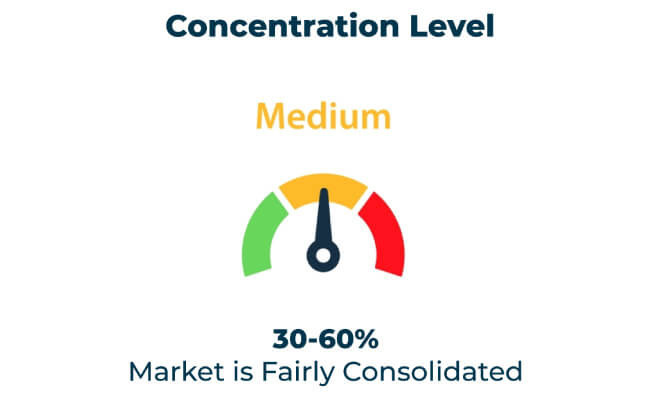
At the forefront of this expansion are established market players such as National Bulk Equipment, Flexicon Corporation and Material Transfer. These firms currently account for roughly 40% of global market share among the top segment. Their success stems from long-standing reputations for high-quality engineering, reliability, and the ability to tailor solutions to diverse industry needs. National Bulk Equipment is widely recognized for its advanced, automation-driven conditioning systems; Flexicon offers highly configurable solutions optimized for different end-use industries; and Material Transfer emphasizes operator safety and ergonomic designs for efficient bulk bag handling.
Meanwhile, rising competition from second-tier players — including companies like Hapman and Spiroflow — is reshaping the competitive landscape. With these firms contributing an additional 10% of industry share among the top five, the market is becoming increasingly diversified. Beyond this, a broad array of smaller yet innovative manufacturers across the next 20 or more names are poised to capture growing demand, holding an estimated 25% share of the market as of 2025. This signals a pronounced shift wherein newer entrants are no longer just fringe participants but are actively shaping the future direction of the industry.
Innovation remains central to this transformation. Manufacturers are embracing advanced technologies such as integrated automation with PLC control, real-time monitoring, compact and space-efficient designs, and energy-efficient, eco-friendly systems — aiming to meet evolving industrial and regulatory demands. Safety features, including interlocks, sensors, and fail-safe mechanisms, are becoming standard. Many players are also offering customizable configurations to satisfy specific industry requirements, whether for food-grade powders, chemical granules, or construction materials.
Sustainability is emerging as another key differentiator, with vendors investing in energy-efficient machines and long-lasting designs that reduce waste and support environmentally responsible operations. With rapid industrialization in regions such as Asia-Pacific and increasing infrastructure development in emerging economies, opportunities for exporters and new market entrants are significant.
Industry experts believe that the next wave of growth will be dominated by manufacturers who can offer affordable, scalable solutions tailored to small and medium enterprises — not just large industrial operations. As adoption spreads, bulk bag conditioners will no longer be niche solutions but essential tools in bulk material handling workflows.
The expanding industrial demand, rising safety and compliance standards, and growing awareness of the long-term cost and operational benefits point to a bright future for the bulk bag conditioners market. As more manufacturers — both legacy firms and up-and-coming challengers — invest in technology, automation, and sustainability, the market is poised for steady growth and transformation.