Future Market Insights (FMI) projects that the global Vulcanised Solid Rubber Market will expand from USD 13.2 billion in 2025 to USD 25.3 billion by 2035, growing at a CAGR of 6.7%. This rise underscores strong industrial, automotive, and construction demand worldwide, particularly across Asia-Pacific, Europe, the United States, and Saudi Arabia.
Vulcanised solid rubber—known for its exceptional durability, thermal resistance, and elasticity—is integral to the manufacturing of tires, gaskets, vibration mounts, industrial pads, and sealing systems. With sectors prioritizing performance, longevity, and sustainability, global adoption is set to accelerate as production efficiency, material innovation, and environmental compliance define the next decade of market leadership.
Market Overview: Growth Through 2035
| Metric | Value |
| Market Value (2025) | USD 13.2 Billion |
| Forecast Value (2035) | USD 25.3 Billion |
| CAGR (2025–2035) | 6.7% |
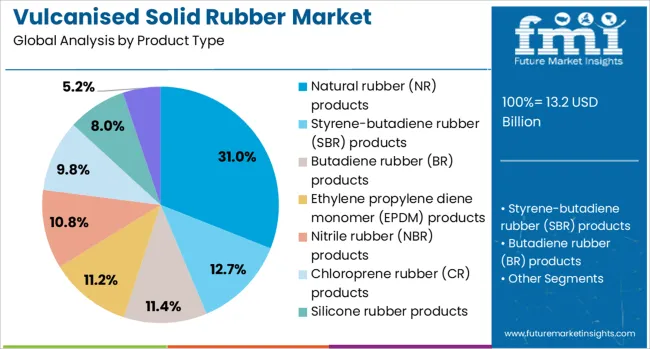
| Leading Product Segment (2025) | Natural Rubber (NR) – 31% Market Share |
| Leading Hardness Grade (2025) | Medium Shore A (50–70) – 41% Market Share |
| Top Manufacturing Process (2025) | Compression Molding – 28% Market Share |
Between 2025 and 2030, the market will advance steadily to USD 18.3 billion, achieving annual milestones of USD 14.1 billion in 2026, USD 15.1 billion in 2027, USD 16.1 billion in 2028, and USD 17.1 billion in 2029. These gains reflect rising replacement demand, industrial expansion, and strategic R&D investments across multiple regions.
Subscribe for Year-Round Insights → Stay ahead with quarterly and annual data updates: https://www.futuremarketinsights.com/reports/sample/rep-gb-23197
Why the Market Is Growing
Global industries increasingly rely on solid vulcanised rubber for applications requiring load-bearing capacity, resistance to abrasion, and thermal endurance. Growth is supported by:
- Expanding automotive and heavy equipment sectors, driving use in seals, bushings, and vibration-damping systems.
- Rising demand in infrastructure and construction, especially in bridge bearings, dock bumpers, and rail pads.
- Technological progress in rubber compounding and precision molding, enabling enhanced mechanical performance.
- Growing emphasis on eco-compliant and long-life materials, reducing maintenance and replacement frequency.
As industrial automation advances and infrastructure modernization accelerates, demand for high-quality vulcanised components continues to rise globally.
Segmental Insights
Natural Rubber (NR) Products – 31% Market Share (2025):
Natural rubber dominates the market due to its elasticity, tensile strength, and resilience—qualities essential for high-impact environments. Preferred in automotive and mining applications, NR also benefits from being renewable and biodegradable, aligning with sustainability initiatives.
Medium Hardness Grade (Shore A 50–70) – 41% Market Share:
This segment offers the optimal balance of flexibility and rigidity, widely used in mechanical seals, bushings, and protective linings. Its adaptability across dynamic and static load environments reinforces its industrial prominence.
Compression Molding – 28% Market Share:
Compression molding remains the most utilized production method, favored for its cost-effectiveness, scalability, and ability to produce large, thick components. The process delivers high structural integrity and dimensional precision, meeting stringent industrial specifications.
Regional Outlook
Asia-Pacific (APAC): China and India Drive Regional Dominance
- China (CAGR 9.0%) leads the global market with sustained growth in construction, transportation, and EV manufacturing. Demand for high-resilience rubber components in shock absorption, vibration isolation, and thermal management continues to surge.
- India (CAGR 8.4%) follows closely, fueled by urban infrastructure expansion, mining modernization, and heavy engineering. The government’s “Make in India” initiative has catalyzed new rubber processing facilities, improving domestic supply and self-reliance.
Together, China and India account for over 40% of APAC’s total market share, driven by mechanization and expanding OEM capacity.
Europe: Engineering Precision and Sustainable Manufacturing
- Germany (CAGR 7.7%) anchors European demand, supported by its automotive, machinery, and renewable energy sectors. Vulcanised rubber is extensively used in anti-vibration mounts, conveyor rollers, and sealing solutions. Sustainability-led innovation—such as low-emission curing agents and recycling initiatives—is redefining material practices.
- France (CAGR 7.0%) emphasizes eco-friendly production and advanced rubber chemistry to meet EU climate targets.
- United Kingdom (CAGR 6.4%) benefits from construction, maritime, and railway upgrades, with manufacturers focusing on flame-retardant and weather-resistant formulations.
Europe’s established regulatory framework and focus on quality assurance ensure consistent market expansion across industrial and construction sectors.
United States: Reshoring and Industrial Renewal
The U.S. market is forecast to grow at 5.7% CAGR, underpinned by aerospace, defense, oil and gas, and industrial automation. Domestic production resurgence and reshoring efforts are spurring investments in precision molding and compound innovation.
Applications in packers, seals, and vibration isolators remain core to industrial resilience, while military-grade rubber solutions support national defense and aerospace infrastructure.
Saudi Arabia: Emerging Growth in Industrial and Non-Tire Rubber Demand
Under Vision 2030, Saudi Arabia is diversifying its manufacturing base and investing heavily in industrial equipment, energy infrastructure, and transportation systems.
Rising demand for durable rubber seals, pads, and flooring materials in these projects supports steady market entry.
The region is also witnessing collaborations with global material suppliers, paving the way for localized rubber production aligned with sustainability mandates.
Need tailored insights? Request report customization to match your specific business objectives: https://www.futuremarketinsights.com/customization-available/rep-gb-23197
Key Trends and Drivers
- Industrial Equipment Demand:
Growing mining, material handling, and heavy machinery sectors generate consistent need for high-strength, abrasion-resistant vulcanised rubber. - Technological Innovation:
Advances in peroxide curing, silane crosslinking, and nanofiller incorporation enhance tensile strength and temperature stability. - Quality Standardization:
Suppliers are adapting to ISO-compliant traceability, fatigue testing, and OEM performance validation, ensuring consistency across global supply chains. - Sustainability Focus:
Material recycling and bio-based rubber formulations are gaining momentum amid tightening environmental regulations. - Cost Volatility Management:
Manufacturers are exploring bio-derived additives and supply-chain localization to offset fluctuations in natural rubber and synthetic monomer prices.
Country-Level CAGR Snapshot (2025–2035)
| Country | CAGR |
| China | 9.0% |
| India | 8.4% |
| Germany | 7.7% |
| France | 7.0% |
| UK | 6.4% |
| USA | 5.7% |
| Brazil | 5.0% |
These figures highlight the global spread of demand—rapid industrialization in APAC, engineering innovation in Europe, and steady industrial renewal in North America and the Middle East.
Competitive Landscape and Market Direction
The vulcanised solid rubber market is moderately consolidated, with leading companies focusing on custom formulations, recycling initiatives, and automated manufacturing. Industry players investing in eco-compliant, high-durability compounds and digitalized production control are well-positioned for the next growth phase.
The integration of compound analytics, sustainable sourcing, and predictive process control will define future competitiveness. FMI anticipates cumulative opportunities exceeding USD 12 billion through 2035, driven by demand from industrial modernization and resilient materials infrastructure.
About Future Market Insights (FMI)
Future Market Insights, Inc. (FMI) is an ESOMAR-certified, ISO 9001:2015 market research and consulting organization, trusted by Fortune 500 clients and global enterprises. With operations in the U.S., UK, India, and Dubai, FMI provides data-backed insights and strategic intelligence across 30+ industries and 1200 markets worldwide.
Why Choose FMI: Empowering Decisions that Drive Real-World Outcomes: https://www.futuremarketinsights.com/why-fmi