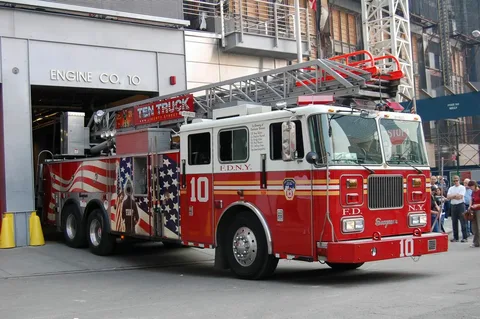
The Global Fire Truck Market is entering a decade of steady expansion, propelled by accelerated modernization of emergency response fleets, rapid adoption of electric and hybrid fire apparatus, and stringent government mandates surrounding fire safety and emissions compliance. The market is projected to grow from USD 6,376.3 million in 2025 to USD 9,192.8 million by 2035, registering a CAGR of 3.8% during the forecast period.
Industry advancements in clean propulsion technologies, predictive diagnostics, modular truck architectures, and mission-specific vehicle designs are reshaping procurement strategies across municipal, industrial, airport, and military fire services worldwide.
Electrification Gains Momentum Across North America
The transition toward low-emission fire trucks is accelerating as cities and public organizations pursue long-term decarbonization goals. In 2025, Pierce Manufacturing delivered its Volterra™ electric fire truck to King County International Airport (Boeing Field), marking a significant step in the electrification of aviation emergency response. Powered by Oshkosh’s proprietary TAK-4® independent suspension and electric drive system, the Volterra platform enhances maneuverability while reducing emissions and operating noise. King County officials confirmed that the deployment aligns with the airport’s sustainability roadmap and long-term fleet modernization initiatives.
In Canada, Rosenbauer’s RTX electric fire truck continued to gain traction. The Victoria Fire Department introduced the RTX model, configured with dual battery packs and a diesel range extender to ensure operational reliability across extended missions. Fire Chief Dan Atkinson highlighted the vehicle’s agility and sustainability features, stating that the RTX “represents the next generation of emergency response capability.”
These developments underscore growing municipal and defense agency interest in electric units capable of supporting diverse environments—from urban corridors to airport operations and industrial zones.
Subscribe for Year-Round Insights → Stay ahead with quarterly and annual data updates
https://www.futuremarketinsights.com/reports/sample/rep-gb-2732
Market Metrics (2025–2035)
| Metric | Value |
| Industry Size (2025E) | USD 6,376.3 million |
| Industry Value (2035F) | USD 9,192.8 million |
| CAGR (2025–2035) | 3.8% |
Product Diversification Strengthens Market Position
In 2024, specialty fire vehicle development gained momentum, particularly in North America. Fire Truck Center expanded its custom-built brush truck portfolio, targeting wildfire containment and rural operations. These units include reinforced aluminum bodies, dual-pump configurations, and modular storage systems—features increasingly demanded by forestry departments and rural municipalities facing rising wildfire incidence.
Modern procurement cycles continue emphasizing rugged durability, configurable platforms, and support for advanced communication, diagnostics, and emissions-control technologies. Airport fire services, industrial complexes, and petrochemical zones are also shifting toward hybrid and electric fire trucks to align with sustainability mandates.
Top Investment Segments: Diesel Dominance and Optimal Water Capacity
Diesel Engines Maintain Market Leadership
Diesel-powered fire trucks will continue to dominate with 71% market share in 2025, expanding at a CAGR of 3.6% through 2035. Their strong torque, long-range capability, and proven compatibility with heavy-duty configurations make diesel systems the preferred choice for pumpers, tankers, and aerial ladder trucks—particularly in emerging economies and rural districts.
To meet strict emissions norms, manufacturers are integrating SCR, DPF, and advanced combustion technologies. These upgrades improve drivetrain durability and reduce particulate emissions without compromising firefighting performance.
250–500 Gallon Segment Leads Water Capacity Demand
Fire trucks equipped with 250 to 500 gallons of water capacity are projected to represent 38% market share in 2025, expanding at a 4.0% CAGR through 2035. This segment is ideal for municipal departments operating in dense urban and suburban environments where maneuverability, rapid deployment, and balanced water storage are essential.
These trucks are widely used as quick-response engines and mini pumpers, making them essential to both primary and support fleet operations.
Risk Assessment: Budget Volatility, Compliance Burden, and Supply Chain Exposure
The fire truck industry faces several long-term risks:
- Dependence on public budgets: Procurement cycles remain vulnerable to political shifts, economic downturns, and emergency funding reallocations, often resulting in delayed or canceled purchases.
- Regulatory compliance: Evolving safety and emissions requirements necessitate continuous investment in R&D and testing. Noncompliance risks include recalls, fines, and reputational damage.
- Cost of eco-friendly technologies: Integrating hybrid drivetrains, electrified components, and smart control systems increases manufacturing costs—posing challenges for smaller OEMs.
- Supply chain vulnerabilities: Global disruptions affecting pumps, chassis components, electronics, and foam systems can delay production and affect contractual deliveries.
- Competitive pricing pressure: Regional manufacturers offering cost-effective alternatives intensify margin compression for global OEMs.
Mitigating these risks requires flexible supply chain strategies, regulatory intelligence, sustained innovation, and strong partnerships across global markets.
Country-Level Outlook (2025–2035)
- China (5.6% CAGR): Strongest growth worldwide, driven by urbanization, smart city programs, and bulk fleet purchases for compliance with national fire safety standards.
- USA (4.9% CAGR): Fleet modernization, wildfire response upgrades, and advancements in AI-equipped command systems fuel demand.
- Germany (4.2% CAGR): Adoption of electric fire trucks and intelligent command units accelerates across major cities.
- South Korea (4.1% CAGR): High-tech, sensor-integrated vehicles gain traction amid industrial expansion.
- Japan (3.7% CAGR): Focus on low-profile, highly maneuverable units suitable for urbanized and high-rise environments.
- UK, France, Italy, Australia, New Zealand (3.1%–3.8% CAGR): Steady investments in multipurpose, lightweight, and emissions-compliant fleets.
Personalize Your Experience: Ask for Customization to Meet Your Requirements
https://www.futuremarketinsights.com/customization-available/rep-gb-2732
Competitive Landscape
Key players shaping global competitiveness include:
Rosenbauer International AG, Oshkosh Corporation, Magirus GmbH, Morita Group, REV Group, Spartan Motors, Naffco, Ziegler Group, Zoomlion, Danko Emergency Equipment Co.
These companies are advancing:
- Electric and hybrid fire apparatus
- AI-driven incident management solutions
- Modular firefighting systems
- Lightweight materials
- High-performance foam and water suppression technologies
Strategic partnerships, acquisitions, localized manufacturing, and customized configurations continue to drive competitive differentiation.
Why Choose FMI: Empowering Decisions that Drive Real-World Outcomes:
https://www.futuremarketinsights.com/why-fmi
About Future Market Insights (FMI)
Future Market Insights, Inc. (FMI) is an ESOMAR-certified, ISO 9001:2015 market research and consulting organization, trusted by Fortune 500 clients and global enterprises. With operations in the U.S., UK, India, and Dubai, FMI provides data-backed insights and strategic intelligence across 30+ industries and 1200 markets worldwide.